Author : Ben Cluff

About the Author:

Owner and co-founder of LUX Fitness, a premium strength training studio built around smarter, more efficient fitness. With a background in sales, leadership, and personal development, Ben is passionate about helping people build strength, confidence, and discipline without spending countless hours in the gym. Through LUX Fitness, he helps members achieve meaningful results with personalized training, advanced equipment, and a high-performance approach to health and wellness.

A person walking on a treadmill in a modern gym setting, focusing on fitness.

Cardio Before or After Strength Training? A Franklin, TN Guide

It is Saturday morning in Franklin. You have a run already planned, and a strength session booked for that afternoon.

You are standing in the kitchen with a coffee, wondering whether doing both in one day is smart or slightly self-defeating.

This comes up constantly with people who already have an active life. They run, they cycle, they play tennis, and now there is a coached strength session in the calendar too.

The worry is almost always the same. Nobody wants to spend the effort twice and collect the benefit once.

One thing worth saying up front. LUX Fitness has no treadmills, bikes, or rowers on site, so this is not a question about doing cardio at the studio.

It is a question about how you sequence your own cardio around the session you already have booked.

Cardio Before or After Strength Training: What the Order Changes

The order mostly decides which effort gets your best output, not whether either one works.

You have a finite amount of fresh energy and focus inside a single training window. Whatever you do second tends to happen on tired legs and a tired nervous system.

Sports scientists describe the overlap between hard endurance work and hard strength work as the interference effect. In general terms, demanding cardio performed immediately before strength work tends to blunt how much force you can produce in that strength work.

That effect is real, but it is a matter of degree rather than an on or off switch. For most people training around a full calendar, it is a small tax, not a cancellation.

So the practical question is not whether one session ruins the other. It is which session you want to walk into fresh.

Focused young woman jogging on treadmill indoors, exuding health and vitality.

The Case for Doing Strength First

If getting stronger is your priority right now, do the strength session first.

Strength work depends on producing high force through a controlled range of motion. That is easiest when your legs are fresh, and your attention is sharp.

A hard run beforehand draws down the stored carbohydrate in your working muscles and leaves general fatigue behind. You can still train after it, but you tend to produce less than you are actually capable of, and the session records a smaller number than it should.

There is a second reason that has nothing to do with physiology. The coached session is usually the thing people quietly skip when they are tired, so putting it first protects it.

For most people whose main goal is building strength, this is the sensible default.

The Case for Doing Cardio First

If the run, the ride, or the match is the thing you genuinely care about that day, put it first.

Plenty of people training in Franklin have something specific on the calendar. A spring half marathon, a charity ride, a Saturday tennis league they do not want to show up to already flattened.

When the event matters more than the number on the strength session, the event gets the fresh slot and the strength work absorbs the fatigue instead.

The same logic applies to anything with a skill or safety component. Activities that depend on coordination and reaction time tend to go better before you are tired, not after.

You are simply choosing which effort deserves the fresh version of you.

Close-up of a man rowing indoors, showcasing fitness and determination in a gym setting.

When the Order Genuinely Does Not Matter

If there are several hours or a full day between the two, the order stops being much of a question at all.

Interference is worst when the two run back to back. Put a morning run and a late afternoon strength session on opposite ends of the day and you have mostly solved it with the calendar.

Separating them by a day works even better. A run on Saturday and a studio session on Monday means neither one is happening on the other one’s leftovers.

Easy cardio is a different category again. A walk, a relaxed spin, a round of golf. That kind of work is rarely deep enough to meaningfully change what you can produce in a strength session.

This is already how a lot of clients train, pairing their studio sessions with walking, yoga, or something recreational they actually enjoy. Everything that is actually on site is laid out on our fitness center in Franklin page.

How a Short, Controlled Session Changes the Math

The shorter and more controlled the strength session, the less the ordering question matters.

Most of this debate assumes a long, sprawling gym session with a lot of sets and a lot of standing around. Fatigue accumulates across an hour like that, so whatever came before it matters more.

An ARX session has a different shape. The resistance adapts to the effort you produce, the working time is concentrated, and you are not wandering a floor deciding what to do next.

Because the session is brief and supervised, it tends to survive a bit of pre-existing fatigue better than a long unstructured one would.

Having a coach tracking your output matters here too. When your numbers are recorded session to session, it becomes obvious if a morning run is quietly costing you, and easy to adjust.

How to Sequence Your Own Cardio Around a Studio Session

Pick the priority for the week, give it the fresh slot, and keep the other effort honest.

Start by naming what you are training for right now. General health, a specific event, or simply getting stronger. That answer decides the order more than anything else does.

Then look at spacing before you look at order. If you can put a few hours or a day between the two, do that first, and the rest of the decision gets much easier.

Finally, keep hard efforts hard and easy efforts easy. Problems usually start when every session lands in a vague middle where nothing is fresh and nothing is fully recovered.

This is general education and not medical advice. If you are managing an injury, a recent surgery, or a condition that changes how you should train, speak with your physician first.

If you are not sure where your strength currently sits, a first strength assessment gives you a baseline to sequence around instead of guessing.

Frequently Asked Questions

Should I eat differently on a day I do both?

Eat a little more, and time it around the first effort. Two sessions in a day raise the total demand, so arriving underfuelled tends to show up in whichever one comes second. A normal meal a few hours beforehand, with something small in between, covers most people.

Will strength training slow down my race times?

It tends to help rather than hurt. Stronger legs and a more stable trunk generally make a given pace feel easier, particularly late in a race when form starts to slip. Some runners feel heavier for the first few weeks, which usually settles once the training becomes routine.

Should I skip the studio session during a heavy endurance block?

Keep it, but treat it as maintenance rather than progress. Dropping strength work entirely through a big training block is what tends to cost people, since strength fades faster than it builds. A lighter maintenance schedule is generally enough while your endurance work takes priority.


Can I run the day after a strength session?

Usually yes, though the first few weeks may feel heavier than expected while your body adapts. Most people find an easy run the day after is comfortable, and save harder efforts for later in the week. Let how your legs feel guide the intensity.

Is there cardio equipment at the studio?

No. LUX Fitness is a private strength studio, so there are no treadmills, bikes, or rowers on site. Clients handle their own cardio outside the studio through running, cycling, walking, classes, or recreational sports, and we help them fit it around their sessions.

If You Are Exploring Strength Training in Franklin

Sequencing is not something you need to get perfect. You decide it once, based on what you are training for, then adjust as your goals shift.

For most people, regular, focused strength sessions alongside the running, riding, or sport they already enjoy make a workable, sustainable setup.

If you are exploring what that could look like for you, you are welcome to book a complimentary session and see how a coached strength session fits into the week you already have.


Ben Cluff September 25, 2026 Fitness Center Read more
Three adults in a gym performing stretches on floor mats, focusing on fitness and flexibility.

Do You Need to Stretch Before Lifting? What a Good Warm-Up Does

You are parked outside the studio with eight minutes to spare.

Somewhere in the back of your mind there is a high school coach with a clipboard, counting down a hamstring stretch while the whole team held it in silence.

So you wonder whether you should be doing some version of that right now. In the parking lot. In work clothes.

It feels like the responsible thing to do. It also feels slightly ridiculous.

Here is the short version. The stretch you remember was never doing the job you think it was doing, and something else was.

What Stretching Before Lifting Actually Does

Static stretching is a flexibility tool, not a warm-up.

Static stretching means holding a muscle in a lengthened position and staying there. The hamstring hold. The quad pulled back against a wall. The arm dragged across the chest.

Done regularly over weeks, that kind of work can improve how comfortable you are in a longer position. That is a real benefit and it is worth having.

What it does not do is prepare you to lift. Holding still does very little to raise tissue temperature, and it does nothing to rehearse the movement you are about to perform.

There is one more point worth knowing. Long, aggressive static holds immediately before hard effort may leave a muscle feeling slightly less responsive for the first working sets. Not dangerous, just not helpful at that particular moment.

Man doing seated stretch in gym, emphasizing fitness and flexibility training.

Why the Pre-Workout Stretch Became a Habit

Most of us learned this from someone managing a group, not from someone assessing our bodies.

A team stretch is easy to run. Everyone does the same thing at the same time, where the coach can see them, and it takes no equipment at all.

Somewhere along the way it got attached to a broader idea about preventing injuries, and it stayed attached.

The thinking has moved on since then. The habit mostly has not, which is why intelligent adults still feel a small pang of guilt for skipping the hamstring hold.

You are not being careless when you skip it. You are reaching for a different tool.

What a Warm-Up Is Actually For

A warm-up has three jobs, and static stretching does none of them well.

The first is temperature and circulation. Muscle and connective tissue behave differently once they are warm, and getting there takes gentle movement rather than stillness.

The second is rehearsal. Your body performs a pattern better when it has just done a lighter version of that same pattern.

The third is the nervous system. Strength is partly a question of how well your brain recruits the muscle, and that connection sharpens with a few progressive efforts rather than a held stretch.

Put simply, a warm-up should look like a smaller version of the thing you are about to do. Stretching sits outside that description.

What a Good Warm-Up Looks Like Before You Lift

Movement, not stillness.

Start general. Something that lifts your breathing and body temperature a little without turning into a workout of its own.

Then take your joints through their range under control. Slow and deliberate, which is close to the opposite of holding a position and waiting for a count.

Then rehearse. Take the actual movement you are about to load and perform it lighter first, with your attention on control rather than effort.

Breathing belongs in this stage too. Getting your breath organized before the first hard effort is part of the setup, and how to breathe when you lift is worth understanding before you add meaningful load.

This is general education and not medical advice. If you are managing an injury, a recent surgery, or a condition that changes how you should train, speak with your physician first.

Why a Shorter, Controlled Session Changes the Calculation

Much of the traditional warm-up exists to protect you from the gym, not from the work.

In an open gym you are balancing a loaded bar, guessing at a starting weight, and managing momentum. A long ramp-up makes sense in that environment, because there are more ways for a set to go sideways.

A session at LUX Fitness in Franklin, TN is built differently. Adaptive resistance, known as ARX, matches the machine’s force to whatever you produce on each rep, so the load meets your actual output instead of a number you guessed at beforehand.

The movement is guided, the range is controlled, and a coach has the session set up before you walk in. The session itself includes a brief warm-up, so there is nothing for you to invent in the parking lot.

That structure is also what makes the format easy to repeat week after week. The preparation is built into the appointment rather than bolted onto the front of it.

Where Stretching Still Belongs

Keep stretching. Just move it somewhere it can do its actual job.

After training is a reasonable home for it. You are already warm, and there is no heavy effort waiting on the other side of it.

A separate block on a different day works just as well, and often better, because you can give it real attention instead of thirty distracted seconds.

If mobility is genuinely a limiting factor for you, it deserves to be its own project. That sits naturally alongside strength work within a broader approach to training and wellness, rather than being squeezed into the minutes before a lift.

Frequently Asked Questions

Is it bad to stretch before lifting?

Not bad, just poorly timed. The real issue is that long static holds do not prepare you for load, and they can leave your first sets feeling slightly flat. Save the deeper work for after training, when you are already warm and nothing hard is waiting on the other side of it.

What is the difference between static and dynamic stretching?

Static means holding a lengthened position still. Dynamic means moving a joint through its range in a controlled, repeated way. Dynamic work belongs in a warm-up because it raises temperature and rehearses movement, while static work belongs with recovery and flexibility goals, where holding the position is the point.

Do I still need a warm-up if the machine controls the movement?

Yes. Guided equipment removes the balancing and load-guessing problem, but your tissue still performs better warm and your nervous system still benefits from rehearsal. That is precisely why a brief warm-up is part of the session rather than something left for you to remember.

Should I stretch at home before driving to a session?

There is no need. Arriving warm is not a requirement, because the preparation happens inside the session. If you have been at a desk all day, a short walk before you arrive is more useful than a stretch, and considerably easier to actually do.

Will skipping the stretch make me tighter over time?

Not on its own. Tightness usually tracks with how much you move across the week rather than with a pre-lift ritual. Regular strength work through a full range, plus mobility given its own dedicated time, tends to do more for how you feel than a rushed hold.

If You Are Exploring Strength Training in Franklin

You do not need to settle the stretching question before you begin.

It resolves itself the moment the warm-up becomes part of the session instead of something you improvise in the car.

If you are exploring what measured, private strength training looks like in Franklin, you are welcome to book a free intro session and see how the format works from the inside.

Ben Cluff September 25, 2026 Wellness Center Read more
Athlete tightening barbell plates in a gym, emphasizing fitness and strength.

How to Breathe When You Lift: A Guide for ARX Training in Franklin, TN

You are deep into a hard rep and the resistance has not let up once. It matches you the entire way.

Your face is warm. Your jaw is locked.

Then it registers. You have not taken a breath since your coach said go.

You let one out in a rush, and the next few seconds feel completely different. Steadier. More like something you are doing on purpose rather than surviving.

Almost nobody raises a hand mid-session to ask how they should be breathing. It feels like a thing you were supposed to have figured out years ago.

So here it is in writing, for the kind of training you are actually doing.

Why the Usual Advice on How to Breathe When Lifting Does Not Apply Here

Almost every article on this question was written for a barbell, and there are no barbells at LUX Fitness.

The standard answer goes like this. Take a big breath, brace your midsection hard, hold that pressure through the heaviest part of the lift, then release at the top. That held breath is called the Valsalva maneuver.

It exists to solve one specific problem. When a loaded bar is sitting across your back or hanging from your hands, your torso has to become rigid enough to keep your spine safe under it.

LUX Fitness has no barbells and no free weights. The ARX machines are what you train on: motor-controlled, fixed in their path, and unable to fall on you.

The problem the Valsalva maneuver was built to solve simply is not present in your session. Borrowing the answer anyway just means you hold your breath for no reason.

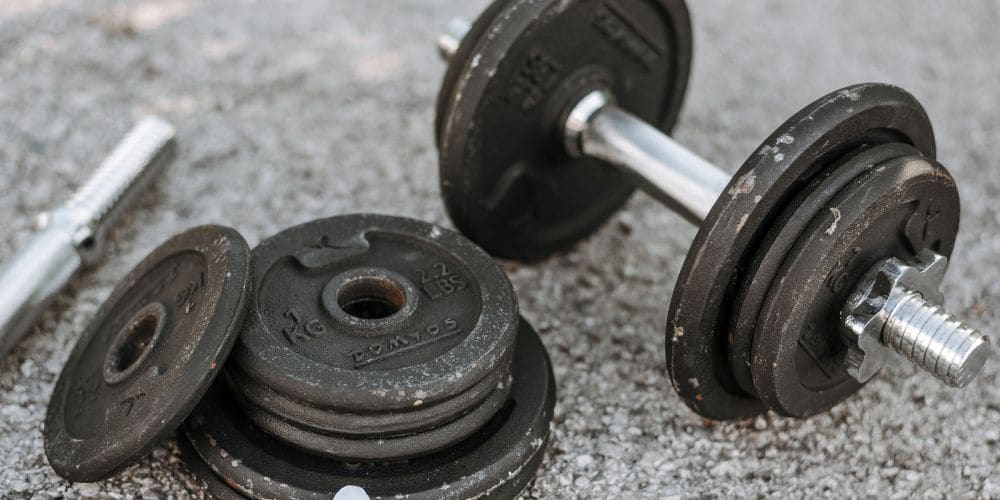
Black iron dumbbells on a paved ground, perfect for outdoor strength training and fitness routines.

What Adaptive Resistance Changes About the Way You Breathe

Adaptive resistance changes how long a rep lasts, and rep length is what really determines your breathing.

ARX matches the force you produce moment by moment. When you are strong, it pushes back harder. When you fatigue, it eases with you and stays right at the edge of your effort.

That removes the parts of a lift where you normally get a breather. There is no easy stretch at the bottom, no lockout at the top, no rack to set the weight down on.

A barbell set is a series of short efforts with recovery built into the gaps. An ARX set is closer to one long, continuous output.

You cannot hold your breath through something that long, and you should not try to.

The Breathing Pattern That Works Under Continuous Resistance

Breathe continuously, push your air out as the effort peaks, and never let the cycle stop.

Keep a steady rhythm through both directions of the movement. The pushing phase and the lowering phase are both working phases on an ARX machine, so neither one is a place to park your breath.

Exhale through slightly pursed lips as the effort builds, then let the inhale come during the less demanding portion of the range. Long, unhurried, out and in.

It will not land as a tidy one breath per rep, and that is fine. Reps here run longer than what that rule was written for, so you may take several breaths inside a single rep.

Let the rhythm find its own pace. The only requirement is that it keeps going.

Why You Hold Your Breath Without Ever Deciding To

Breath holding under effort is a reflex, not a discipline problem.

Your body braces when it senses hard work, and the diaphragm gets pulled into that bracing along with everything else. Concentration makes it worse. The harder you focus on the movement, the less of your attention is left over for breathing.

Holding your breath during exertion temporarily raises pressure inside the chest and abdomen, and blood pressure rises with it. That is well established and, for most healthy people, brief and unremarkable when it happens under a barbell for a second or two.

Over a long continuous rep, though, a sustained hold is worth avoiding. You will also just feel worse doing it, lightheaded and flushed, and you will quit the set before your muscles are actually finished.

This is general education, not medical advice. If you have a blood pressure or heart condition, are pregnant, or are returning from any medical event, speak with your physician and tell your coach before your next session.

How to Breathe When Lifting If You Are New to Adaptive Resistance

For your first sessions, the only goal is to stay audible.

If you can hear your own breathing, you are not holding it. That single test beats any counting method, and it works while you are too busy to think.

Do not time anything. Do not try to match a specific ratio. Just make noise on the way out and let the air come back in on its own.

Form, breathing, and progression are what your coach is following while you are on the machine. Breathing is the one clients are least likely to bring up on their own.

It is also one of the quieter details behind the broader wellness approach LUX Fitness takes to strength in Franklin, where how you train matters as much as how hard.

Woman performing bench press exercise with guidance in a gym setting.

What Changes Once Breathing Stops Being Something You Manage

When your breathing runs itself, the sessions become noticeably easier to finish.

Clients who fix this usually complete reps they used to abandon early. The muscles were not out of capacity. The breath was.

You settle faster between exercises, and you walk out clear-headed rather than rattled. That matters more than it sounds when sessions are short and each one has to count.

It carries past the session too. Breathing well is one part of training in a way your body can absorb, alongside how muscle recovery after strength training works.

Frequently Asked Questions

Should I ever hold my breath during an ARX rep?

A brief pause as you change direction is normal and nothing to correct. What is worth avoiding is a deliberate hold through the working portion of a rep. The machine controls the resistance and the movement path, so you are never stabilizing an external load that could shift or fall.

What if I feel lightheaded partway through a set?

Stop the set and tell your coach. Lightheadedness during effort is very often a sign that breathing stopped, and it usually settles quickly once normal breathing resumes. It is not something to push through quietly, and your coach would far rather adjust the set than have you finish it uncomfortable.

Does breathing through my nose or my mouth matter?

Not much during a hard working set. Under real effort, your body will take air the fastest way available, and forcing nasal breathing usually just adds one more thing to think about. Nasal breathing is a reasonable preference during warm-ups and between exercises, when demand is lower.

Does breathing change between the first and last set?

It gets louder and faster, and that is expected. As fatigue builds across a session, your breathing deepens on its own to keep up with the demand. The pattern itself does not change, since you are still exhaling as effort peaks and never holding. Let the pace rise rather than forcing it.

Will better breathing actually change my results?

Indirectly, yes. Breathing does not build muscle on its own, but it determines whether you reach the end of a set on your terms or stop early because you are starved of air. Finishing the work you came to do is what drives progress over weeks and months.

Put Proper Breathing Into Practice at LUX Fitness

Breathing quietly decides how much of a session you actually complete. It is also the kind of detail that only gets corrected when someone is watching you train.

Every session at LUX Fitness is one-on-one, which means nobody has to raise a hand and ask. The coach is already there.

If you are exploring what coached strength training under adaptive resistance would look like for you, you are welcome to book a free session and see how it feels with someone guiding the details.

Ben Cluff September 25, 2026 Wellness Center Read more
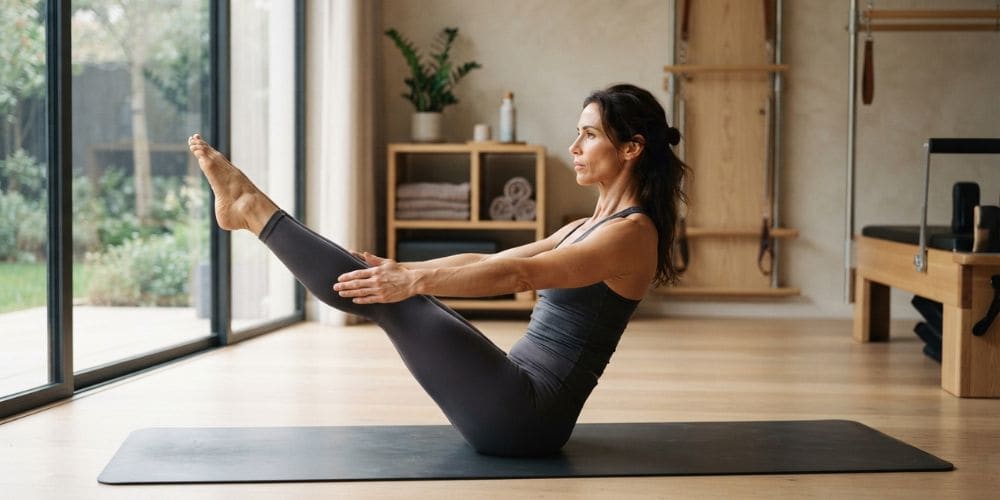
Woman practicing Pilates in a private fitness studio in Franklin, TN

Do Pilates and Yoga Count as Strength Training?

You have been in the same class for three years now. Twice a week most weeks, sometimes more.

Your posture is better. The low back thing that used to flare up every few months quietly stopped happening somewhere in year two.

Then you are at the airport, lifting a full suitcase up and over your head into the overhead bin, and your arms simply will not do it cleanly. It goes up on the second try, with a small heave you would rather nobody saw.

Nothing was injured. Nothing was even that heavy.

But it plants a question that is genuinely hard to shake, which is whether three years of consistent, disciplined work has been building the kind of strength you assumed it was.

So, Does Pilates Count as Strength Training?

Partly, and the honest answer depends on what you are asking it to do for you.

Pilates and yoga are both resistance work in the broadest sense. Your body is the load, gravity is the opposition, and holding a position under tension is real muscular effort.

Where they differ from what most coaches mean by strength training is progression. Strength training in the technical sense involves resistance that increases over time, so the muscle keeps meeting a demand slightly beyond what it has already adapted to.

A bodyweight practice can absolutely get harder. It usually gets harder through longer holds, better control, and more difficult positions rather than through more load.

That distinction sounds academic until you are standing under an overhead bin. Then it is very concrete.

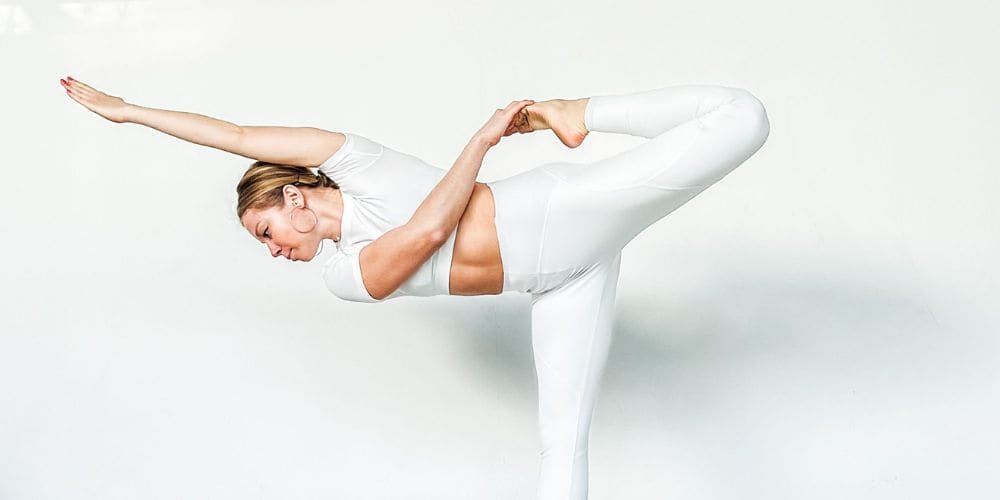
A woman wearing white sportswear performing a yoga pose indoors on a tiled floor.

What Pilates and Yoga Do Genuinely Well

Both build qualities that a lot of conventional strength programs quietly neglect.

Body awareness is the obvious one. People who have practiced for years tend to know where their pelvis is, where their ribs are, and when one side is compensating for the other.

That is not a small skill, and it transfers directly into learning any new movement faster.

Control is the second one. Moving slowly through a full range without wobbling is harder than most people expect, and it builds the kind of joint stability that keeps training sustainable over decades.

Then there is core endurance and mobility. A practiced yoga or pilates student can usually hold a position under tension far longer than someone who only lifts, and can reach positions that person cannot get into at all.

None of that is a consolation prize. Those qualities are genuinely valuable, and anyone who has built them over three years is starting from an advantage, not a deficit.

Where a Bodyweight Practice Tends to Level Off

The limitation is not effort. It is that the resistance eventually stops going up.

Your body weight is a fixed number, give or take. Once you have adapted to moving it well, the practice keeps refining skill and control, but the mechanical demand on the muscle stays roughly where it is.

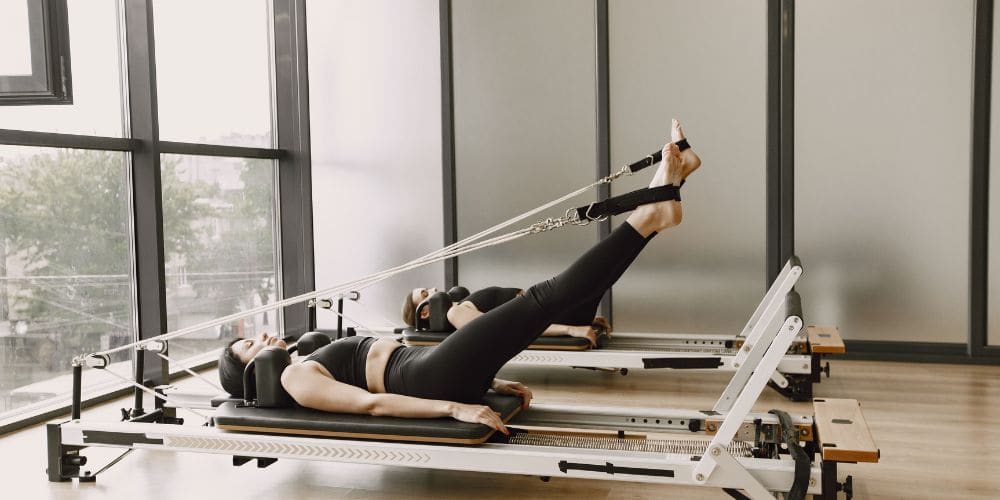
Reformer work changes this somewhat, since springs add external resistance that can be adjusted. Even then, the top end of the load available tends to sit below what a muscle can be asked to produce, particularly in the larger patterns like pressing and pulling.

That shows up most in the movements a mat or a reformer rarely loads heavily. Pushing something overhead. Pulling something toward you. Standing up out of a deep position with weight in your hands.

For most people, those are exactly the patterns that ordinary life eventually tests.

What "Counts" Actually Means for Your Goal

Whether pilates counts as strength training depends far less on the class and far more on the outcome you are after.

If the goal is moving well, staying mobile, and keeping a practice you actually look forward to, then it counts. It is doing that job, and doing it well.

If the goal is measurably more force production, more muscle, and the kind of strength that tends to protect independence later in life, then it is doing part of the job. Progressive resistance is the part that is missing.

What we understand about aging points fairly consistently toward muscle and strength as things worth defending on purpose rather than assuming. General activity helps. Loading a muscle enough to keep asking it for more helps in a way that is difficult to substitute.

That is not an argument against your practice. It is an argument for adding one specific input to it.

Adding Resistance Without Giving Anything Up

The two are not competitors, and most people are best served keeping both.

Plenty of clients at our studio in Franklin combine their studio sessions with walking, yoga, or recreational sports. The strength work supplies the loaded, progressive piece. Everything else stays exactly where it already is.

What that piece requires is less time than people tend to assume.

A small amount of properly loaded, well-supervised resistance work each week is enough for most people to keep making progress, which is the premise behind a structured physical fitness program built around efficiency.

At LUX Fitness, we use adaptive resistance equipment, which matches the force you produce instead of asking you to guess at a weight. For someone coming from a movement practice, that tends to be a straightforward transition, because the control is already there.

If the hesitation is about how your body might change, that is a fair question and a common one. It is worth reading through whether strength training actually makes women bulky before you decide.

Frequently Asked Questions

Should I do strength training and pilates on the same day, or separate days?

Either works, so pick whichever you will actually keep. If you do both in one day, put the strength work first while you are still fresh, since force production is the part that suffers most from fatigue. Separate days give each one your full attention, which most people find easier to sustain.

What should I expect in a first strength session coming from a mat practice?

Less unfamiliar than you would expect. The control you already have transfers, so most of the session is learning how the equipment responds rather than learning how to move. A coach sets the range and watches your positions throughout, so there is nothing to figure out on your own.

Will strength training make my yoga or pilates practice harder?

It tends to make it easier for most people. Stronger shoulders and hips generally mean positions that used to require straining become more comfortable to hold. Some people notice temporary stiffness in the first few weeks, which usually settles as the body adapts to the new demand.

Do I have to stop my classes to start strength training?

No, and we would not suggest it. Your practice is doing real work, and dropping it to make room for something else is usually a poor trade. Strength training slots in beside it as an additional input, not as a replacement for one.

How long before I notice a difference in everyday tasks?

Most people notice ordinary things feeling easier within the first few months. Early gains tend to come from the nervous system learning to recruit muscle more efficiently, with visible changes following later. Suitcases, car seats, and stairs are usually where people notice it first.

Take the Next Step in Your Fitness Journey at LUX Fitness

If pilates or yoga has been part of your routine for years, you’re already doing something valuable for your body. The consistency you’ve developed is an achievement worth keeping.

The next step may simply be adding resistance that gradually challenges your muscles. Even a small amount of strength training can help support continued progress without replacing the practice you already enjoy.

If you are exploring what that might look like alongside what you already do, you can book a free intro session and see how it fits.

Ben Cluff September 25, 2026 Physical Fitness Read more
A guy strength training with a personal coach

Moving to Franklin, TN? How to Choose a Strength Training Studio

The boxes are mostly unpacked. The kitchen works, the internet is set up, and you have already picked a grocery store.

What has not come back is training.

Where you lived before, it was solved. A place you knew, a coach who knew your history, a standing slot on the calendar that had survived two job changes and a promotion.

Then a move erased all of it in a single weekend. Not the discipline, just the logistics around it.

That is the part most people underestimate when they relocate. The routine did not fail. The structure holding it up did not move with you.

Rebuilding it is a smaller decision than it feels, as long as you know what you are actually evaluating.

How to Choose a Strength Training Studio When You Are Starting Over

Start with the constraint that broke your old routine, because it is almost never effort.

For most people who relocate, the thing that quietly ended training was friction. A longer commute, an unfamiliar schedule, a place that was fifteen minutes further away than the old one.

So before you look at a single website, write down what your week can genuinely absorb. Not what it could absorb in an ambitious month, but what it looks like in a normal one.

Then work backward. Drive time, session length, and how many times a week you can realistically show up are the three numbers that decide whether a place works for you.

Once you have those, comparing your options for a gym in Franklin becomes a much shorter exercise. Most of what looks like a hard choice is really a scheduling question wearing a disguise.

What to Look For Inside a Strength Training Studio

The things worth evaluating are mostly invisible on a website.

Equipment lists and square footage photograph well and tell you very little. What matters is what happens in the time you are actually there.

Look for programming that belongs to you. There should be a plan with your name on it that changes as you change, not a workout everyone gets on a Tuesday.

Look for coach continuity. Working with the same person over months is how someone learns your history, your bad shoulder, and the difference between you being tired and you being under-recovered.

Look for a record. A studio that tracks your numbers can show you progress on a week when you do not feel it, and that tends to matter more than motivation does.

Finally, look at the room itself. Whether an environment feels like somewhere you want to be at 6:30 in the morning is not a soft consideration; it is the whole retention question.

Questions Worth Asking on a Tour

A good tour answers questions about your training, not about the amenities.

Walk in with four or five specific questions, and you will learn more in ten minutes than an hour of browsing websites will teach you.

  • Who writes my program, and how often does it change?
  • Will I work with the same coach every session?
  • What do you track, and how will I see my progress over time?
  • What happens if I travel for work or miss two weeks?
  • How do you handle an old injury or a movement I cannot do yet?
  • What does the first month actually look like?

Pay attention to how the answers are delivered. Someone who asks about your history before describing their method is telling you something useful about how they coach.

Be a little cautious of pressure. A studio confident in its work does not need you to decide today, and no reputable place should make a commitment feel urgent.

Where a Private Strength Studio Differs From What Newcomers Expect

Most people arrive expecting a smaller version of what they left, and that is the expectation worth adjusting first.

A private studio is appointment-based. You do not drop in and browse; you have a scheduled time, and the equipment is set before you arrive.

Sessions also tend to be shorter than what you may be used to, which surprises anyone who spent years measuring training in hours logged.

There is also no floor to wander. The session is directed from start to finish, which some people find restrictive for a week and then find is exactly why they stopped skipping.

If you want the full breakdown of that structural difference, our comparison of a private studio and a big-box gym covers the cost and access trade-offs in more detail. For the purposes of choosing, the short version is that you are buying a guided outcome rather than access to a room.

What a Trial or Intro Session Should Tell You

A first session is a test of the coaching, not a test of you.

The best sign is how much of it is spent on questions. A coach who asks about your training history, your past injuries, and what you are actually trying to accomplish is building a program, not running a demo.

You should leave knowing what happens next. A clear picture of the first few weeks, how progress will be measured, and what your week is expected to look like is a reasonable thing to expect from a first session.

Notice how correction feels. Good coaching adjusts you calmly and explains why, and nothing about a first session should feel like a performance you are being graded on.

You should also leave able to walk normally. A trial designed to exhaust you is selling intensity, and intensity is easy to deliver and hard to sustain.

Frequently Asked Questions

How long should I give a new studio before deciding it is working?

Give it about eight to twelve weeks. Strength changes are measurable well before they are visible, so the honest test is whether your numbers are moving and whether you are still showing up. If both of those are true, the fit is probably right for you.

Should I bring my old program with me?

Bring the information, not the program. A record of what you were lifting, what aggravated old injuries, and what you actually enjoyed is genuinely useful to a new coach. Handing over a program written for a different facility and a different schedule usually is not.

Does a private studio make sense if I already know how to lift?

It can, for a different reason than beginners have. Experienced lifters usually are not buying instruction; they are buying structure, a schedule that holds, and someone who notices the compensations that creep in after twenty years of training. That is a different problem from learning to lift, and it does not solve itself with experience.

How soon after moving should I start training again?

Earlier than feels reasonable. Waiting for life to settle tends to push it further and further out, and starting small while the house is still half unpacked is far easier than restarting from zero in three months.

Start Your Strength Training Journey With LUX Fitness

Moving is a legitimate reason for a routine to lapse. It is also a rare chance to rebuild one around the schedule you have now rather than the one you had five years ago.

Take a tour or two. Ask the questions above, and pay attention to which conversations felt like coaching rather than a pitch.

If you would like to see what a coached, appointment-based session feels like before deciding anything, you are welcome to book an introductory session and use it as a benchmark for everywhere else you look.

Ben Cluff September 25, 2026 Gym Read more
Man performing a deadlift exercise on an ARX machine.

ARX Alpha vs. ARX Omni: Which One You’ll Train On in Franklin, TN

You booked the session. It is on the calendar for Thursday morning, wedged between a standing call and a school pickup.

And then, somewhere around Tuesday, a small question shows up. Which machine are they going to put me on?

It is not really a question about equipment. It is a question about whether you will walk in, get pointed at something unfamiliar, and spend the first ten minutes feeling like the least competent person in the room.

That worry is fair. It is also easy to put down once you know what the two machines in the studio actually are.

LUX Fitness in Franklin trains on two ARX machines, the Alpha and the Omni. Here is what each one covers, who each one tends to suit, and how your coach decides.

The Short Answer on ARX Alpha vs. Omni

The Alpha is the simpler seated machine with six core movements, and the Omni is the broader machine with sixteen, covering a much wider range of positions.

Both run on the same adaptive resistance system, so the feel of a rep is consistent across the two. If you want the mechanics of how that resistance works, our guide on what an ARX workout actually involves covers it in detail.

The difference between the machines is not intensity. It is range.

One gives you a tight, repeatable set of foundational movements. The other opens up pressing, pulling, and hinging patterns from more angles.

Hands attaching a cable to a fitness machine clip.

What the ARX Alpha Covers

The Alpha handles six movements that together work most of the major muscle groups.

Those movements are the leg press, chest press, row, calf raise, torso flexion, and torso extension.

You sit down, press start, and work. There is no loading, no adjusting between exercises, and no deciding how heavy to go.

That last part matters more than people expect. For most first-timers, the mental load of a gym is heavier than the physical load, and the Alpha removes almost all of it.

It is a machine you can be competent on inside a single session.

What the ARX Omni Adds

The Omni is built for full-range, multi-directional training, which means it reaches movement patterns the Alpha does not.

Its exercise list runs to sixteen movements. Belt squat, high pull, deadlift, horizontal press, Romanian deadlift, decline press, calf raise, and incline press sit on one half of the list.

Pulldown, pec fly, pullover, triceps pressdown, row, biceps curl, overhead press, and hamstring curl fill out the rest.

That range is what makes the Omni useful once you have a base and want more specific work. Overhead pressing, hinging, and direct arm work all live here.

Despite the longer list, the experience stays the same. Same intuitive setup, same adaptive resistance, same coach walking you through it.

ARX Alpha vs. Omni, Side by Side

The Omni covers a far wider range of movements, and that is the only difference that changes which one you use.

Attribute ARX Alpha ARX Omni
Number of exercises 6 16
Movement style Seated Full-range, multi-directional
Lower body movements Leg press, calf raise Belt squat, deadlift, Romanian deadlift, hamstring curl, calf raise
Pressing movements Chest press Horizontal press, incline press, decline press, overhead press
Pulling movements Row Row, pulldown, high pull, pullover, pec fly
Direct arm work Not on the exercise list Biceps curl, triceps pressdown
Trunk movements Torso flexion, torso extension Not on the exercise list
Resistance system Adaptive, computer-controlled Adaptive, computer-controlled
Performance data tracked Force output, rep speed, range of motion, intensity, exercise time, fatigue Force output, rep speed, range of motion, intensity, exercise time, fatigue
Getting started Sit down and press start Same intuitive experience, more positions
Tends to suit First sessions, returning after time off, anyone who wants simple and repeatable Established members, specific strength goals, more movement variety

How Your Coach Decides Which One You Use

Your coach chooses the machine based on your goals and how the session needs to be built, not on a fixed rotation.

Training at LUX is one-on-one, and the plan comes out of the conversation we have with you before anything else happens. That plan drives the machine selection.

If the goal for a session is a clean full-body stimulus with as little friction as possible, the Alpha usually does it. Six movements, seated, straightforward.

If the goal is more specific, say building overhead pressing strength or adding hinge work, the Omni gives your coach the movements to do it.

Neither choice is a promotion or a demotion. They are different tools for different jobs.

Close-up of a specialized fitness equipment handle attachment.

Which ARX Machine Fits Your Goal

For most people, the honest answer is that both machines show up in training over time.

If you are starting from a long gap and mostly want to rebuild a base, the Alpha tends to be the right home for a while. It is simple, and simple is what keeps people coming back.

If you already train and want to address specific weak points, the Omni’s longer movement list gives you somewhere to go.

Both machines feed the same data. Total force output, max force output on both the lifting and lowering portions, rep speed, range of motion, intensity, exercise time, and fatigue all get tracked, so progress stays visible no matter which machine produced it.

One thing worth setting straight for anyone picturing a standard weight room. There are no barbells and no free weights at our private strength studio in Franklin, and the two ARX machines are the training floor.

Frequently Asked Questions

Can I request one machine over the other?

Yes. Tell your coach what you prefer and why, and it gets factored into your plan. Preference matters for consistency, and consistency is what tends to produce results. If your preference works against your stated goal, your coach will talk it through with you rather than quietly override it.

Do I need to learn both machines?

No. Your coach sets up every movement and walks you through it in the moment, so there is nothing to memorize beforehand. Most people find both machines intuitive within a session or two. You are never expected to arrive already knowing how anything works.

Do I need to be a certain height or build to use either machine?

No. Your coach sets you up in position for each movement, so fit is handled in the room rather than something you need to work out in advance. If a position does not feel right once you are in it, say so, and your coach will adjust it before you start the set.

Can I use both machines in the same session?

That depends on how your coach has structured your current plan. Sessions are built around a specific training stimulus, and sometimes that is best delivered on a single machine. Ask your coach how your current block is laid out and why it is built that way.

What if I am nervous about the more advanced movements?

Say so. Coaching at LUX is one-on-one, so the session adapts to you rather than the other way around. The resistance only ever matches the force you produce, which means a movement you are unsure about stays exactly as light as you make it.

Book Your Franklin Session at LUX Fitness and Experience ARX Firsthand

The machine question tends to resolve itself the moment you are in the room with a coach.

If you are curious how the Alpha and the Omni actually feel, the simplest next step is to try one. You can book a free intro session and find out which one your coach starts you on, and why.

No decision required afterward. Just a clearer picture of how the training works.

Ben Cluff September 25, 2026 Gym Read more
Busy professional fitting a personal training session into a morning schedule in Franklin, TN

How to Fit Personal Training Into a Busy Week in Franklin, TN

It is 6:40 on a Tuesday morning. The coffee is still brewing, two emails have already landed, and someone in the house needs a form signed before the bus comes.

By 7:20, you are in the car. By 8:15 you are in a meeting that will almost certainly run long.

You are not disorganized. Your week is simply full, and it has been full for a long time.

So when training comes up, the real question is rarely whether it matters. The question is where, exactly, it would go.

That is a calendar problem before it is a fitness problem. Here is how a session actually fits into the week of a working professional in Franklin.

Where Does Personal Training Fit in a Busy Schedule?

Personal training fits in the parts of the day you already control, which for most busy professionals means the hour before work, a midday window, or the gap between leaving the office and dinner.

Those three windows are worth naming because they behave differently. Early morning is the most protected slot in the day, since almost nothing else competes for it yet.

Midday is flexible but fragile, because meetings expand into it. Early evening is convenient, but it shares space with family logistics.

Sessions at LUX are appointment-based and run roughly 30 minutes, which is what makes any of these three windows realistic in the first place. A short, scheduled block is far easier to place than an open-ended visit with no defined end time.

Client is performing a controlled strength exercise while a professional trainer provides coaching nearby.

Anchor Your Session to One Fixed Slot

The most reliable calendar move is to place your session in the same slot each week and leave it there permanently, rather than scheduling it fresh every Sunday night.

A recurring slot changes what the rest of your week has to negotiate with. Meetings, calls, and errands get scheduled around a block that already exists instead of on top of an empty one.

It also removes a decision. You are not comparing Tuesday at 7:00 against Thursday at noon every week, because that question was settled once.

Your coach will help you settle how many slots to hold. What matters most is that each one sits in the same place on the calendar every week.

How Do You Train Around a Commute?

Put the session at one end of the commute rather than in the middle of it, because a session sandwiched between two drives is the first thing to get cut when traffic runs late.

Plenty of Franklin professionals commute into Nashville, and that drive is unpredictable enough that a midday slot rarely survives contact with a real week. The better placement is before the drive out or after the drive back.

The before-work version tends to be the sturdier of the two. Nothing has gone wrong yet at 6:30 in the morning, and the session is finished before the day has a chance to reroute it.

The after-work version works well when your slot is close to home rather than close to the office. A short, private session at a private strength studio in Franklin keeps you on your own side of the drive, which is a small logistical detail that quietly decides whether you keep showing up.

Fitting Training Around School Runs and Family Logistics

The cleanest placement for parents is inside a window that is already blocked for something else, so the session borrows time that was never going to be productive anyway.

Drop-off and pickup create natural edges in the day. The stretch right after morning drop-off is one of the most usable blocks a parent has, and it rarely gets claimed by anything else.

Practices and lessons create the same effect in the afternoon. A 30-minute appointment fits comfortably inside an hour you were already going to spend waiting.

The point is not to find new time. It is to look at the time already committed and notice which pieces of it are functionally empty.

What Happens During Travel Weeks?

On a travel week, you move the session rather than cancel it, and you book the replacement slot before you leave rather than after you get back.

Travel is predictable in a way that most disruptions are not. You usually know a week or two out, which is enough lead time to shift a Wednesday slot to a Monday.

If the trip covers the whole week, the useful move is to book the following week before you go. That way the calendar already has a slot waiting when you land.

Some weeks genuinely will not hold a session. That is a normal outcome, and it matters far less than what happens to the week after it.

What to Do When the Week Falls Apart

When a week collapses, you rebook the next available slot instead of restarting the whole plan, because a calendar recovers much faster than most people expect.

A missed session is a scheduling event, not a verdict. The practical response is to open the calendar, find the next open time, and put the session there.

This is easier when sessions are appointment-based, since there is a specific time to move rather than a vague intention to get back in. You are rescheduling one 30-minute block, not rebuilding anything.

If you want a clearer picture of how the schedule tends to settle early on, it helps to read through what the first thirty days with a personal trainer usually look like. Results depend on consistency, effort, and recovery, and that first month is mostly about finding the slot that holds.

Frequently Asked Questions

How far in advance should I book my sessions?

Book two to three weeks out. That horizon is long enough to protect your slot from incoming meetings and travel, but short enough that you can still see your real commitments. Booking further ahead is fine when your calendar is already visible that far out.

Can I change my standing time slot if my work schedule shifts?

Yes. A standing slot is meant to reflect your actual week, so when your work pattern changes seasonally or permanently, the slot should move with it. The thing worth avoiding is drifting week to week without ever settling on a new fixed time.

How long before a session should I eat?

Eat lightly beforehand rather than arriving on a full stomach. A small meal or snack an hour or two ahead suits most people, and sessions are short enough that no elaborate pre-workout routine is needed. If you tend to feel sluggish or light-headed either way, mention it to your coach so the timing can be adjusted.

Do I need to build in extra time for parking and changing?

Plan a small buffer on either side, though less than a large gym usually requires. A private studio has no waiting for equipment and no crowded floor to navigate, so the appointment itself is close to the total time you need to block off.

What if my calendar genuinely changes every single week?

Then anchor to a day rather than a time. Pick the weekday that is most consistently manageable, and book that day’s available slot as soon as the week takes shape. A fixed day still removes most of the decision for you.

Fit Personal Training into Your Busy Week at LUX Fitness

If you are looking at your week and trying to work out where a session would realistically go, that is exactly the right question to be asking.

LUX Fitness is a private studio in Franklin built around short, appointment-based strength sessions. The format exists so that training can sit inside a full schedule rather than compete with it.

If you would like to see how a session fits your own week, you can book an introductory session and try the slot you have in mind.

No pressure either way. It is worth knowing whether the calendar works before anything else does.

Ben Cluff September 25, 2026 Personal Trainer Read more
Coach guiding compound movement to rebuild functional strength safely

Is a Personal Trainer Worth It in Franklin, TN?

It is 6:40 on a Tuesday morning. You are standing in the kitchen with coffee, running the whole day in your head before it has actually started.

Somewhere in that list is the workout you meant to do yesterday.

You are not lazy. You have built a career, a household, and a calendar that mostly runs you.

You have also tried the app, the class package, and the January reset. Each one worked until a heavy week arrived and quietly ended it.

So now you have a browser tab open with a few personal trainers in Franklin, and one honest question behind it. Is this going to be different, or is it one more thing you pay attention to for six weeks?

That is the right question. Here is a straight way to answer it, including the cases where the answer should be no.

What Are You Actually Buying With a Personal Trainer?

You are buying certainty, not workouts.

Workouts are easy to find. Anyone can pull a program off the internet, and most of them are fine.

What is hard to find on your own is the confidence that the thing you are doing is the right thing, done correctly, in the right order, at the right intensity for where you are today.

A good trainer sells you four things.

Structure, so the decision of what to do is already made. Accountability, so a hard week does not become a lost month. Technique, so effort turns into progress instead of soreness. And measurement, so you know whether any of it is working.

If you strip those four things out, you are just paying someone to count reps. That version is rarely worth it for anyone.

Coach discussing health goals before personalized strength assessment session

When Is a Personal Trainer Not Worth It?

A personal trainer is not worth it if you already train consistently, enjoy the process, and can point to measurable progress over the last year.

That person does not have a coaching problem. Adding a trainer to an already working routine tends to add calendar pressure without adding much else.

It is also not worth it if you cannot protect the time. If the sessions are going to be the first thing sacrificed when a client emergency lands, the outcome is predictable no matter how good the coach is.

And it is not worth it if you are looking for a specific result by a specific date. Bodies do not run on quarterly deadlines. Results depend on consistency, effort, and recovery, and anyone promising a timeline is guessing.

Finally, if what you actually want is a social outlet or an hour of entertainment, a class community will serve you better and cost less friction.

Why Personal Training Fails for Some People

When personal training does not work, the reason is almost never effort.

The first failure point is a mismatch between the goal and the method. Someone who wants to feel strong and durable at fifty does not need the program a twenty-two-year-old athlete needs, and running the wrong one produces frustration rather than progress.

The second is a schedule that never had room in it. Committing to sessions you can only attend in a good week is how people end up paying for absence.

The third is the absence of measurement. Without numbers, progress becomes a feeling, and feelings are unreliable in month three when motivation is normal instead of high.

Notice that all three are fixable before you ever sign anything. That is the point of asking the question early.

How Do You Decide If a Personal Trainer Is Worth It for You?

Answer four questions honestly, and the decision usually makes itself.

First, what is the actual outcome you want? Not “get in shape,” but something you would recognize if it happened.

Carrying luggage without your back complaining. Feeling capable at sixty.

Second, how consistent have you been on your own in the last twelve months? If the honest answer is stop and start, that is a structure problem, and structure is exactly what coaching provides.

Third, can you protect a regular training time for a full season, not a good month?

Time is the real currency here, and it is worth being unsentimental about it.

Fourth, what will you measure? If nobody is tracking anything, you will not know whether it worked, and neither will your trainer.

Arx workout training with a coach

What Changes for a Busy Professional in Franklin

For most time-starved professionals, the deciding factor is not the training itself but how much friction sits around it.

An hour of training is rarely just an hour. It is the drive, the crowded floor, the wait for equipment, the shower, the drive back.

That surrounding friction is what quietly ends most routines, and it is why a private, appointment-based setting tends to work better for this reader than a busy gym floor. Sessions are short, scheduled, and finished on time.

This is the approach we built our private strength training studio in Franklin around, using ARX technology so that a small amount of time can carry real training effect.

That is a very different ask than living at the gym five days a week.

What to Do Before You Commit to a Trainer

Before you commit, meet the person and ask how they would measure your progress.

The answer tells you almost everything. A trainer who can describe what they track, how often, and what they would change if the numbers stalled is running a process. A trainer who talks only about intensity is running a vibe.

Ask about their experience with people in your situation, your age range, and any limitations you are carrying.

If you want a fuller checklist for that conversation, our guide on how to find a personal trainer in Franklin walks through what to look for and what should give you pause.

Frequently Asked Questions

Do I need to get in shape before working with a personal trainer?

No. Starting from an untrained baseline is normal, and it is often the easiest place to build from because there is nothing to undo. A good trainer sets the starting point to match your current capacity, then adjusts as you adapt rather than expecting you to arrive prepared.

How long should I give it before deciding whether it is working?

It depends on your starting point, but think in seasons rather than weeks. Give it long enough to see whether your consistency and your measured numbers are both moving. If neither has shifted after a few months of regular attendance, that is a real signal worth raising with your trainer.

Can a personal trainer help if I have an old injury or a physical limitation?

Often, yes, provided your physician has cleared you for exercise. Experienced trainers work around limitations routinely by adjusting range, load, and selection. Be specific about your history in the first conversation, because a trainer who waves the concern away is telling you something useful about how they operate.

Is personal training worth it if I travel frequently for work?

It depends on whether the schedule can flex. Frequent travel is workable when sessions can be moved rather than lost, and when you have something simple to do on the road. It becomes expensive frustration if the arrangement assumes you are in town every week.

What if I try it and decide it is not for me?

Then you stop, and you will have lost very little. A single session tells you how the coaching feels, how the space feels, and whether the schedule is realistic for you. Deciding it is not the right fit is a legitimate outcome, and it is far cheaper to learn that early than after a long commitment.

How to Find a Personal Trainer in Franklin at LUX Fitness

If you are exploring whether coaching makes sense for your situation, the useful next step is a conversation, not a commitment.

You can ask about your goals, your schedule, and what progress would actually be measured. If the answers do not fit, that is a good outcome too, because you will have ruled something out with information instead of guesswork.

If you would like to see how the studio works in person, you can schedule an intro session whenever the timing suits you.

Ben Cluff September 25, 2026 Personal Trainer Read more
A 40-year-old woman tying her training shoes in a private gym studio before starting a session.

Is Soreness a Sign of a Good Workout? What Muscle Soreness Actually Tells You

You get home from a session, take the stairs two at a time, and nothing hurts.

The next morning you wake up and check. Still nothing. No ache across the quads, no tightness in the chest, no reason to walk down the hallway carefully.

And somewhere in the back of your head, a small voice says “that probably wasn’t heavy enough.”

Most people were taught to read soreness as a receipt. If you can feel it tomorrow, it counted. If you can’t, you wasted the hour and the drive.

So is soreness a sign of a good workout, or is it just a sign that you did something your body wasn’t used to? Let’s break down what soreness actually measures, and what’s worth watching instead.

Is Soreness a Sign of a Good Workout?

No, not reliably, and not in the way most people assume.

Delayed onset muscle soreness, usually shortened to DOMS, is what you feel a day or two after training. It tends to show up most when you do something new, something with a lot of lowering under load, or something you haven’t done in months.

Notice what’s on that list. Novelty. Unfamiliar loading. Not effectiveness.

You can have a genuinely productive session and feel nothing the next day. You can also feel wrecked after an hour that produced almost no useful strength stimulus. Soreness and progress overlap sometimes. They are not the same measurement.

This is general education, not medical advice. Soreness that’s sharp, one sided, or lasting well beyond a few days is worth a conversation with a medical professional rather than a training tweak.

A healthy adult's upper back and shoulders showing natural muscle definition

What Muscle Soreness Actually Tells You

Soreness is mostly a novelty signal.

When a movement is new to you, or when the lowering phase is longer or heavier than your body expects, you’re more likely to feel it later. Soreness tends to track how unfamiliar the movement was and how much eccentric load it involved, not how effective the session was.

Which explains something people find strange. Soreness usually fades as you get better at training. Same effort. Less ache. That’s adaptation, not decline.

It also explains why soreness is loudest at the exact moment you know the least, your first few weeks, and quietest later on when you’re genuinely stronger. As a progress signal, it runs backwards.

Most people never notice that, mostly because nobody ever handed them a second signal to compare it against. That second signal usually starts with a baseline strength measurement, which is where a program gets its first honest number.

Why Chasing Soreness Tends to Backfire

If soreness is the goal, the plan has to keep changing to deliver it.

That’s the trap. Staying sore requires constant novelty, which means swapping movements, adding volume, and reaching for whatever feels hardest that day. Progress needs roughly the opposite. Repetition, controlled loading, and enough consistency to tell whether something is working.

There’s a scheduling cost too. Sessions that leave you genuinely beaten up have a way of pushing the next one back a few days. Then a week. Two sessions a week quietly becomes five sessions a month.

At LUX Fitness in Franklin, TN, this pattern shows up in almost every first conversation. Someone tells us they used to train hard for three weeks, get sore enough to skip, and never quite restart. The soreness wasn’t really the problem. The stop and start pattern it created was.

There’s a safety angle worth naming as well. Training deep into significant soreness can raise the odds of moving poorly, and moving poorly under load is where people tend to get hurt.

Does a Workout Still Count if You're Not Sore?

Yes, for most people and most of the time.

A session counts if it applied enough load, with enough control, to give your body a reason to adapt. Soreness isn’t part of that definition anywhere. It’s a side effect that sometimes happens and often doesn’t.

This comes up constantly after a first session on ARX, the adaptive resistance system we use. It matches the force you produce rep by rep, so the effort tends to run high while the working time stays short. People walk out braced for a rough morning. Some get one. Some don’t.

Both are normal. We’re not claiming ARX prevents soreness, because it doesn’t. We’re saying soreness was never the number that mattered.

What mattered is whether the force you produced was higher than the last time you measured it.

A client performing a strength exercise on ARX equipment while a trainer monitors performance data

What to Track Instead of Soreness

Track output, not aftermath.

The useful question isn’t how you felt on Wednesday. It’s what you actually produced on Tuesday, and whether it beat the Tuesday before it.

Measured load answers that. So does plain session to session consistency, which is the least interesting variable in fitness and the one that predicts the most.

At LUX Fitness, every rep gets recorded. Force. Range. Effort held across the whole movement. That turns a vague sense of whether things are going well into something you can look at and disagree with.

Objective beats anecdotal here, every single time. If you want the wider picture of what gets recorded across a program, this is how we handle session-by-session progress tracking for members.

How Do You Know a Session Worked?

You look at the number, and then you look at the pattern.

One session tells you very little on its own. Four weeks of sessions tells you almost everything. If output trends upward across that window, the training is working, whether or not any single day left you limping.

Beyond the data, there are a few honest signals worth trusting. Movements feel more controlled. Everyday loading gets less notable. You stop bracing at the bottom of the stairs.

Most people find that reassuring and slightly disappointing at the same time. Progress that works is generally quieter than progress that hurts.

Nothing dramatic. Nothing that makes a good story on Monday. Just a line that keeps going up, session after session, for as long as you keep showing up.

Frequently Asked Questions

How long does soreness usually last after strength training?

Usually one to three days, peaking around a day or two in. Gentle movement, walking, and normal sleep tend to help more than stretching or ice. Soreness that feels sharp rather than achy, or lingers well past that window, is worth raising with a medical professional.

Should you still train if you're sore from the last session?

In most cases, yes. Mild soreness rarely justifies skipping, and a coach can adjust load or movement selection around it. Significant soreness that changes how you move is a different conversation, and worth flagging before you start.

Is it too late to start if I'm already postmenopausal?

Not necessarily. You often feel soreness where a movement was unfamiliar, not where the most work happened. It’s a rough location clue at best, and a poor way to judge whether a session actually targeted what you intended.

Does soreness mean you worked the right muscles?

Not necessarily, and we don’t coach nutrition here. Most people see progress from the training itself. If food becomes a real question for you, a registered dietitian or your own doctor is the right place to take it.

Do beginners get sore more than experienced lifters?

Usually, yes, though it evens out faster than people expect. Most beginners find the worst of it lands after the first two or three sessions and then drops off sharply. Returning after a long break can bring it back briefly, even for people who trained for years.

Should you tell your coach when you're sore?

Yes, every time. It’s useful context, not a complaint. Knowing where and how much you’re feeling it helps a coach read your data more accurately and adjust the next session on evidence rather than assumption.

Trade Soreness for Measured Progress at LUX Fitness in Franklin, TN

Soreness tells you something was new. It doesn’t tell you anything was better. With per-rep load data in front of you, the honest question becomes whether the number moved. You can book a free intro session and get your first data point. We also have a guide on how ARX records strength output, if you want the mechanics first.

Athlete sleeping after strength training for recovery

How Sleep Affects Muscle Recovery and Strength Gains

It’s 5:45 and the parking lot is already full. Inside, twenty-two people are lined up on mats while someone counts down from ten over a speaker.

You find a spot near the back. The person beside you is half your age and moving twice as fast.

Forty-five minutes later you’re soaked, your heart rate is high, and you have no idea whether you got any stronger. Maybe. Probably? Hard to say.

That uncertainty is what sends most people looking up personal training vs group fitness in the first place. Both formats work for someone. They just don’t work the same way, and the difference matters more than the price gap suggests. Here’s where each format actually wins.

What Actually Separates Personal Training and Group Fitness

The difference isn’t intensity, it’s who the session is designed around.

Group fitness is designed around the room. One session, one plan, delivered to whoever shows up that morning. That isn’t a flaw, it’s the format working as intended, and it’s what keeps the cost down and the energy high.

One-on-one training is designed around one person. The load, the pace, the exercise selection and the stopping point all belong to you.

Most people compare the two on price and intensity, which are the two easiest things to measure and the two least predictive of whether you get stronger. Which one is right for you? It depends less on the format than on what you need from it, so let’s compare attention, load, tracking and control.

Coach explaining personalized strength assessment results to new client

How Much Coaching Attention Do You Actually Get?

In a group, attention gets divided by the number of people in the room.

That’s arithmetic, not criticism. A good instructor is watching form, cueing, scaling on the fly and keeping the session moving. Split across a full room, though, most of what you do goes unwatched. You get corrected when something looks obviously wrong, not when it’s subtly off.

Subtly off is where most progress leaks out. A hip that shifts. A rep that gets fast at the end. Small things a coach standing three feet away catches immediately and a coach managing twenty people simply can’t.

At LUX Fitness, the pattern surfaces within the first few sessions. Someone who has trained in a group setting for years finds out that one side has quietly been doing more of the work than the other.

Is the Load Matched to You or to the Room?

In a group setting, the load is something you pick yourself.

That’s the part nobody says out loud. Whatever the instructor calls out, the actual weight is a guess you make in the moment, usually calibrated to what you did last time or what the person beside you grabbed. Sometimes that guess is good. Often it’s conservative, because nobody wants to stall out a lift in front of a room.

One-on-one, load stops being a guess. On ARX, adaptive resistance technology that pushes back with exactly the force you apply, resistance matches your output on every single rep. Not the average of the room. Yours.

That matters most at the edges. The last few reps, where adaptation tends to happen, are the ones a self-selected weight almost always undersells.

How Does Progress Get Tracked in Each Format?

Group fitness tends to measure the session, while one-on-one measures you.

Calories, heart rate, how tired you felt afterward, those are session metrics. They tell you something happened. They don’t tell you whether you’re stronger than you were in April.

Objective load data does. Force output per rep, session over session, is a straight answer to the only question that really matters, is this working. It also catches plateaus early, while they’re still easy to correct.

Most people are surprised by how much the tracking changes their behaviour. When progress is visible, showing up stops being a discipline problem. If you want to see how that works inside a session, here’s how a coached ARX session actually runs from start to finish.

Arx workout training with a coach

Who Controls the Schedule?

A class happens when it happens.

For some people that’s the entire appeal. A fixed time on the calendar, non-negotiable, is the thing that gets them out the door. If that’s what makes you consistent, it’s a real advantage and worth protecting.

For a lot of professionals, though, it’s the exact reason they stop going. The six a.m. slot conflicts with an early call. The evening session starts twenty minutes before you leave the office. Miss enough of them and the membership quietly turns into something you pay for and don’t use.

Appointment-only training moves with you instead. Thirty minutes, booked around your calendar rather than against it, twice a week. Private, by design. No waiting for equipment and no audience.

So Which One Gets You Stronger?

For building measurable strength, one-on-one wins on the four things that decide it.

That isn’t a knock on group fitness. It’s social, it’s usually cheaper, and the fixed schedule is genuinely useful for people who need external structure. If you like the room and it keeps you showing up, keep going.

But if you’re short on time and tired of not knowing whether any of it is working, the calculus changes. You don’t need more energy in the room. You need load matched to you, someone watching every rep, and numbers that tell you where you stand.

That’s the case for one-on-one, and it’s the reason the format exists at all. If you want the full picture, here’s what one-on-one training involves week to week.

Frequently Asked Questions

Should I start strength training if I'm already on hormone therapy?

That’s a question for the doctor managing your care. In general, strength work and medical treatment tend to address different things rather than competing, so most people can do both, but the sequencing should come from whoever knows your history.

Do I need a bone density scan before I start strength training?

That’s a decision for your doctor, not a prerequisite for training. Most people can begin controlled resistance work without one. If you already have a diagnosis affecting your bones, bring it to your coach so loading can be adjusted.

Is it too late to start if I'm already postmenopausal?

No. Meaningful strength gains appear to be possible at every stage of adult life, including well after menopause. Starting later usually means being more deliberate about progression and recovery, not doing less. Your doctor can flag anything specific to your situation.

Do I need to change how I eat for this to work?

Not necessarily, and we don’t coach nutrition here. Most people see progress from the training itself. If food becomes a real question for you, a registered dietitian or your own doctor is the right place to take it.

What if hot flashes or poor sleep make sessions unpredictable?

That’s normal and it’s workable. Because sessions are appointment-only and short, they’re far easier to keep on a rough week than an hour-long commitment. Tell your coach what kind of night you had, and the session gets adjusted to it.

Train Through Menopause at LUX Fitness in Franklin, TN

Nothing about this stage means you’re on the way down. It means the inputs that used to work by default now have to be chosen on purpose, load tracked and recovery respected. If you’re exploring what that looks like, you can book a free intro session and see the process. Many women also ask whether strength training makes women bulky.