

Do You Need to Stretch Before Lifting? What a Good Warm-Up Does

Ben Cluff
Ben Cluff
You are parked outside the studio with eight minutes to spare.
Somewhere in the back of your mind there is a high school coach with a clipboard, counting down a hamstring stretch while the whole team held it in silence.
So you wonder whether you should be doing some version of that right now. In the parking lot. In work clothes.
It feels like the responsible thing to do. It also feels slightly ridiculous.
Here is the short version. The stretch you remember was never doing the job you think it was doing, and something else was.
What Stretching Before Lifting Actually Does
Static stretching is a flexibility tool, not a warm-up.
Static stretching means holding a muscle in a lengthened position and staying there. The hamstring hold. The quad pulled back against a wall. The arm dragged across the chest.
Done regularly over weeks, that kind of work can improve how comfortable you are in a longer position. That is a real benefit and it is worth having.
What it does not do is prepare you to lift. Holding still does very little to raise tissue temperature, and it does nothing to rehearse the movement you are about to perform.
There is one more point worth knowing. Long, aggressive static holds immediately before hard effort may leave a muscle feeling slightly less responsive for the first working sets. Not dangerous, just not helpful at that particular moment.

Why the Pre-Workout Stretch Became a Habit
Most of us learned this from someone managing a group, not from someone assessing our bodies.
A team stretch is easy to run. Everyone does the same thing at the same time, where the coach can see them, and it takes no equipment at all.
Somewhere along the way it got attached to a broader idea about preventing injuries, and it stayed attached.
The thinking has moved on since then. The habit mostly has not, which is why intelligent adults still feel a small pang of guilt for skipping the hamstring hold.
You are not being careless when you skip it. You are reaching for a different tool.
What a Warm-Up Is Actually For
A warm-up has three jobs, and static stretching does none of them well.
The first is temperature and circulation. Muscle and connective tissue behave differently once they are warm, and getting there takes gentle movement rather than stillness.
The second is rehearsal. Your body performs a pattern better when it has just done a lighter version of that same pattern.
The third is the nervous system. Strength is partly a question of how well your brain recruits the muscle, and that connection sharpens with a few progressive efforts rather than a held stretch.
Put simply, a warm-up should look like a smaller version of the thing you are about to do. Stretching sits outside that description.
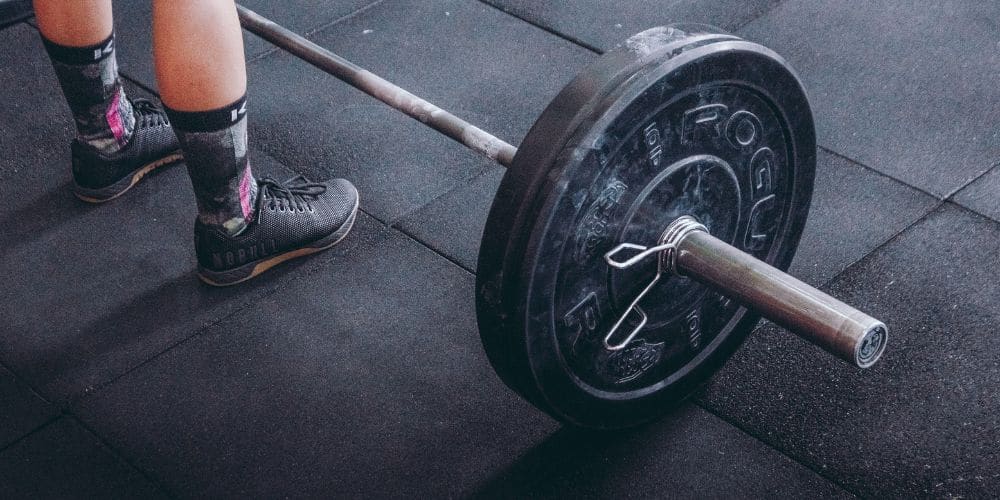
What a Good Warm-Up Looks Like Before You Lift
Movement, not stillness.
Start general. Something that lifts your breathing and body temperature a little without turning into a workout of its own.
Then take your joints through their range under control. Slow and deliberate, which is close to the opposite of holding a position and waiting for a count.
Then rehearse. Take the actual movement you are about to load and perform it lighter first, with your attention on control rather than effort.
Breathing belongs in this stage too. Getting your breath organized before the first hard effort is part of the setup, and how to breathe when you lift is worth understanding before you add meaningful load.
This is general education and not medical advice. If you are managing an injury, a recent surgery, or a condition that changes how you should train, speak with your physician first.
Why a Shorter, Controlled Session Changes the Calculation
Much of the traditional warm-up exists to protect you from the gym, not from the work.
In an open gym you are balancing a loaded bar, guessing at a starting weight, and managing momentum. A long ramp-up makes sense in that environment, because there are more ways for a set to go sideways.
A session at LUX Fitness in Franklin, TN is built differently. Adaptive resistance, known as ARX, matches the machine’s force to whatever you produce on each rep, so the load meets your actual output instead of a number you guessed at beforehand.
The movement is guided, the range is controlled, and a coach has the session set up before you walk in. The session itself includes a brief warm-up, so there is nothing for you to invent in the parking lot.
That structure is also what makes the format easy to repeat week after week. The preparation is built into the appointment rather than bolted onto the front of it.

Where Stretching Still Belongs
Keep stretching. Just move it somewhere it can do its actual job.
After training is a reasonable home for it. You are already warm, and there is no heavy effort waiting on the other side of it.
A separate block on a different day works just as well, and often better, because you can give it real attention instead of thirty distracted seconds.
If mobility is genuinely a limiting factor for you, it deserves to be its own project. That sits naturally alongside strength work within a broader approach to training and wellness, rather than being squeezed into the minutes before a lift.
Frequently Asked Questions
Is it bad to stretch before lifting?
Not bad, just poorly timed. The real issue is that long static holds do not prepare you for load, and they can leave your first sets feeling slightly flat. Save the deeper work for after training, when you are already warm and nothing hard is waiting on the other side of it.
What is the difference between static and dynamic stretching?
Static means holding a lengthened position still. Dynamic means moving a joint through its range in a controlled, repeated way. Dynamic work belongs in a warm-up because it raises temperature and rehearses movement, while static work belongs with recovery and flexibility goals, where holding the position is the point.
Do I still need a warm-up if the machine controls the movement?
Yes. Guided equipment removes the balancing and load-guessing problem, but your tissue still performs better warm and your nervous system still benefits from rehearsal. That is precisely why a brief warm-up is part of the session rather than something left for you to remember.
Should I stretch at home before driving to a session?
There is no need. Arriving warm is not a requirement, because the preparation happens inside the session. If you have been at a desk all day, a short walk before you arrive is more useful than a stretch, and considerably easier to actually do.
Will skipping the stretch make me tighter over time?
Not on its own. Tightness usually tracks with how much you move across the week rather than with a pre-lift ritual. Regular strength work through a full range, plus mobility given its own dedicated time, tends to do more for how you feel than a rushed hold.
If You Are Exploring Strength Training in Franklin
You do not need to settle the stretching question before you begin.
It resolves itself the moment the warm-up becomes part of the session instead of something you improvise in the car.
If you are exploring what measured, private strength training looks like in Franklin, you are welcome to book a free intro session and see how the format works from the inside.