

You get home from a session, take the stairs two at a time, and nothing hurts.
The next morning you wake up and check. Still nothing. No ache across the quads, no tightness in the chest, no reason to walk down the hallway carefully.
And somewhere in the back of your head, a small voice says “that probably wasn’t heavy enough.”
Most people were taught to read soreness as a receipt. If you can feel it tomorrow, it counted. If you can’t, you wasted the hour and the drive.
So is soreness a sign of a good workout, or is it just a sign that you did something your body wasn’t used to? Let’s break down what soreness actually measures, and what’s worth watching instead.
Is Soreness a Sign of a Good Workout?
No, not reliably, and not in the way most people assume.
Delayed onset muscle soreness, usually shortened to DOMS, is what you feel a day or two after training. It tends to show up most when you do something new, something with a lot of lowering under load, or something you haven’t done in months.
Notice what’s on that list. Novelty. Unfamiliar loading. Not effectiveness.
You can have a genuinely productive session and feel nothing the next day. You can also feel wrecked after an hour that produced almost no useful strength stimulus. Soreness and progress overlap sometimes. They are not the same measurement.
This is general education, not medical advice. Soreness that’s sharp, one sided, or lasting well beyond a few days is worth a conversation with a medical professional rather than a training tweak.
What Muscle Soreness Actually Tells You
Soreness is mostly a novelty signal.
When a movement is new to you, or when the lowering phase is longer or heavier than your body expects, you’re more likely to feel it later. Soreness tends to track how unfamiliar the movement was and how much eccentric load it involved, not how effective the session was.
Which explains something people find strange. Soreness usually fades as you get better at training. Same effort. Less ache. That’s adaptation, not decline.
It also explains why soreness is loudest at the exact moment you know the least, your first few weeks, and quietest later on when you’re genuinely stronger. As a progress signal, it runs backwards.
Most people never notice that, mostly because nobody ever handed them a second signal to compare it against. That second signal usually starts with a baseline strength measurement, which is where a program gets its first honest number.
Why Chasing Soreness Tends to Backfire
If soreness is the goal, the plan has to keep changing to deliver it.
That’s the trap. Staying sore requires constant novelty, which means swapping movements, adding volume, and reaching for whatever feels hardest that day. Progress needs roughly the opposite. Repetition, controlled loading, and enough consistency to tell whether something is working.
There’s a scheduling cost too. Sessions that leave you genuinely beaten up have a way of pushing the next one back a few days. Then a week. Two sessions a week quietly becomes five sessions a month.
At LUX Fitness in Franklin, TN, this pattern shows up in almost every first conversation. Someone tells us they used to train hard for three weeks, get sore enough to skip, and never quite restart. The soreness wasn’t really the problem. The stop and start pattern it created was.
There’s a safety angle worth naming as well. Training deep into significant soreness can raise the odds of moving poorly, and moving poorly under load is where people tend to get hurt.
Does a Workout Still Count if You're Not Sore?
Yes, for most people and most of the time.
A session counts if it applied enough load, with enough control, to give your body a reason to adapt. Soreness isn’t part of that definition anywhere. It’s a side effect that sometimes happens and often doesn’t.
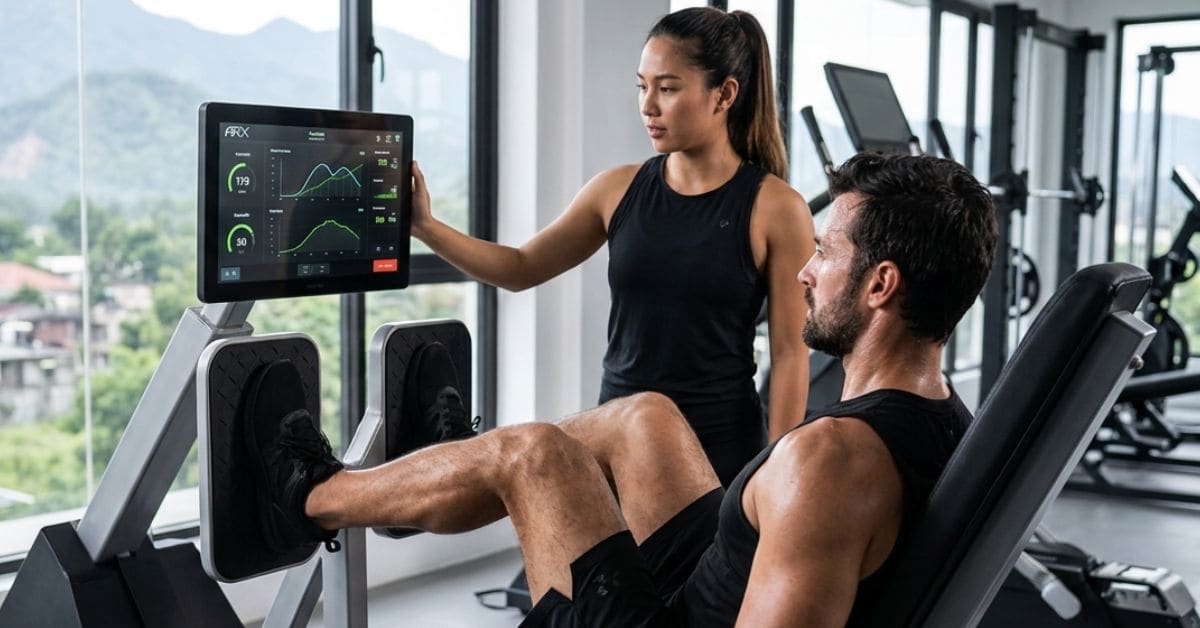
This comes up constantly after a first session on ARX, the adaptive resistance system we use. It matches the force you produce rep by rep, so the effort tends to run high while the working time stays short. People walk out braced for a rough morning. Some get one. Some don’t.
Both are normal. We’re not claiming ARX prevents soreness, because it doesn’t. We’re saying soreness was never the number that mattered.
What mattered is whether the force you produced was higher than the last time you measured it.
What to Track Instead of Soreness
Track output, not aftermath.
The useful question isn’t how you felt on Wednesday. It’s what you actually produced on Tuesday, and whether it beat the Tuesday before it.
Measured load answers that. So does plain session to session consistency, which is the least interesting variable in fitness and the one that predicts the most.
At LUX Fitness, every rep gets recorded. Force. Range. Effort held across the whole movement. That turns a vague sense of whether things are going well into something you can look at and disagree with.
Objective beats anecdotal here, every single time. If you want the wider picture of what gets recorded across a program, this is how we handle session-by-session progress tracking for members.
How Do You Know a Session Worked?
You look at the number, and then you look at the pattern.
One session tells you very little on its own. Four weeks of sessions tells you almost everything. If output trends upward across that window, the training is working, whether or not any single day left you limping.
Beyond the data, there are a few honest signals worth trusting. Movements feel more controlled. Everyday loading gets less notable. You stop bracing at the bottom of the stairs.
Most people find that reassuring and slightly disappointing at the same time. Progress that works is generally quieter than progress that hurts.
Nothing dramatic. Nothing that makes a good story on Monday. Just a line that keeps going up, session after session, for as long as you keep showing up.
Frequently Asked Questions
How long does soreness usually last after strength training?
Usually one to three days, peaking around a day or two in. Gentle movement, walking, and normal sleep tend to help more than stretching or ice. Soreness that feels sharp rather than achy, or lingers well past that window, is worth raising with a medical professional.
Should you still train if you're sore from the last session?
In most cases, yes. Mild soreness rarely justifies skipping, and a coach can adjust load or movement selection around it. Significant soreness that changes how you move is a different conversation, and worth flagging before you start.
Is it too late to start if I'm already postmenopausal?
Not necessarily. You often feel soreness where a movement was unfamiliar, not where the most work happened. It’s a rough location clue at best, and a poor way to judge whether a session actually targeted what you intended.
Does soreness mean you worked the right muscles?
Not necessarily, and we don’t coach nutrition here. Most people see progress from the training itself. If food becomes a real question for you, a registered dietitian or your own doctor is the right place to take it.
Do beginners get sore more than experienced lifters?
Usually, yes, though it evens out faster than people expect. Most beginners find the worst of it lands after the first two or three sessions and then drops off sharply. Returning after a long break can bring it back briefly, even for people who trained for years.
Should you tell your coach when you're sore?
Yes, every time. It’s useful context, not a complaint. Knowing where and how much you’re feeling it helps a coach read your data more accurately and adjust the next session on evidence rather than assumption.
Trade Soreness for Measured Progress at LUX Fitness in Franklin, TN
Soreness tells you something was new. It doesn’t tell you anything was better. With per-rep load data in front of you, the honest question becomes whether the number moved. You can book a free intro session and get your first data point. We also have a guide on how ARX records strength output, if you want the mechanics first.