

Moving to Franklin, TN? How to Choose a Strength Training Studio

Ben Cluff
Ben Cluff
The boxes are mostly unpacked. The kitchen works, the internet is set up, and you have already picked a grocery store.
What has not come back is training.
Where you lived before, it was solved. A place you knew, a coach who knew your history, a standing slot on the calendar that had survived two job changes and a promotion.
Then a move erased all of it in a single weekend. Not the discipline, just the logistics around it.
That is the part most people underestimate when they relocate. The routine did not fail. The structure holding it up did not move with you.
Rebuilding it is a smaller decision than it feels, as long as you know what you are actually evaluating.
How to Choose a Strength Training Studio When You Are Starting Over
Start with the constraint that broke your old routine, because it is almost never effort.
For most people who relocate, the thing that quietly ended training was friction. A longer commute, an unfamiliar schedule, a place that was fifteen minutes further away than the old one.
So before you look at a single website, write down what your week can genuinely absorb. Not what it could absorb in an ambitious month, but what it looks like in a normal one.
Then work backward. Drive time, session length, and how many times a week you can realistically show up are the three numbers that decide whether a place works for you.
Once you have those, comparing your options for a gym in Franklin becomes a much shorter exercise. Most of what looks like a hard choice is really a scheduling question wearing a disguise.
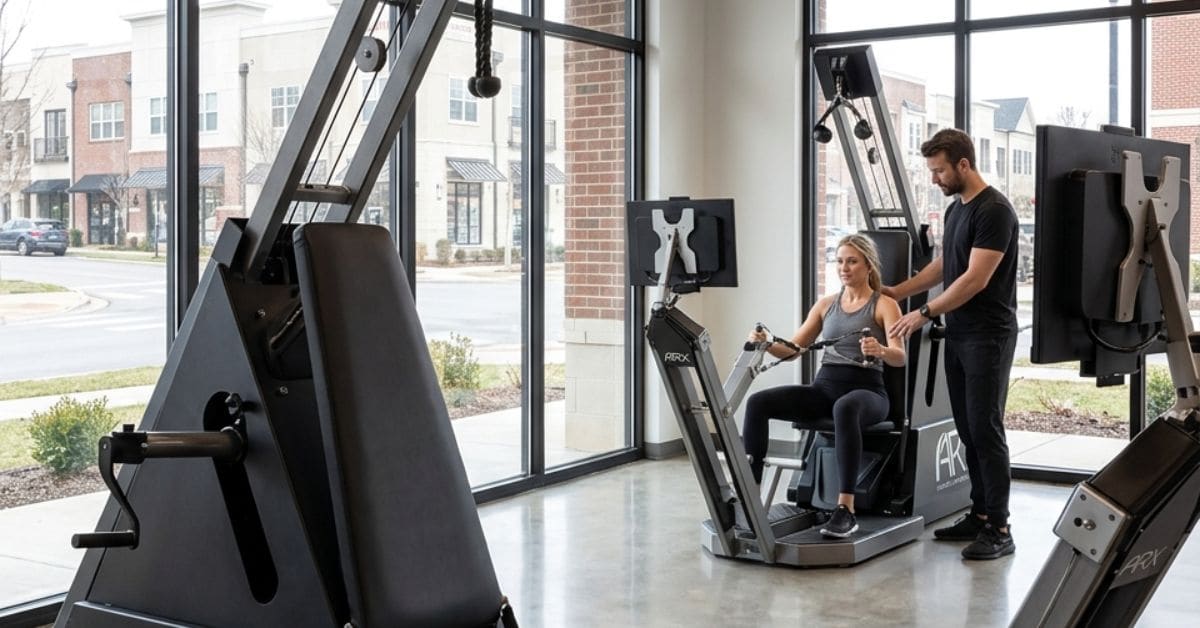
What to Look For Inside a Strength Training Studio
The things worth evaluating are mostly invisible on a website.
Equipment lists and square footage photograph well and tell you very little. What matters is what happens in the time you are actually there.
Look for programming that belongs to you. There should be a plan with your name on it that changes as you change, not a workout everyone gets on a Tuesday.
Look for coach continuity. Working with the same person over months is how someone learns your history, your bad shoulder, and the difference between you being tired and you being under-recovered.
Look for a record. A studio that tracks your numbers can show you progress on a week when you do not feel it, and that tends to matter more than motivation does.
Finally, look at the room itself. Whether an environment feels like somewhere you want to be at 6:30 in the morning is not a soft consideration; it is the whole retention question.
Questions Worth Asking on a Tour
A good tour answers questions about your training, not about the amenities.
Walk in with four or five specific questions, and you will learn more in ten minutes than an hour of browsing websites will teach you.
- Who writes my program, and how often does it change?
- Will I work with the same coach every session?
- What do you track, and how will I see my progress over time?
- What happens if I travel for work or miss two weeks?
- How do you handle an old injury or a movement I cannot do yet?
- What does the first month actually look like?
Pay attention to how the answers are delivered. Someone who asks about your history before describing their method is telling you something useful about how they coach.
Be a little cautious of pressure. A studio confident in its work does not need you to decide today, and no reputable place should make a commitment feel urgent.

Where a Private Strength Studio Differs From What Newcomers Expect
Most people arrive expecting a smaller version of what they left, and that is the expectation worth adjusting first.
A private studio is appointment-based. You do not drop in and browse; you have a scheduled time, and the equipment is set before you arrive.
Sessions also tend to be shorter than what you may be used to, which surprises anyone who spent years measuring training in hours logged.
There is also no floor to wander. The session is directed from start to finish, which some people find restrictive for a week and then find is exactly why they stopped skipping.
If you want the full breakdown of that structural difference, our comparison of a private studio and a big-box gym covers the cost and access trade-offs in more detail. For the purposes of choosing, the short version is that you are buying a guided outcome rather than access to a room.
What a Trial or Intro Session Should Tell You
A first session is a test of the coaching, not a test of you.
The best sign is how much of it is spent on questions. A coach who asks about your training history, your past injuries, and what you are actually trying to accomplish is building a program, not running a demo.
You should leave knowing what happens next. A clear picture of the first few weeks, how progress will be measured, and what your week is expected to look like is a reasonable thing to expect from a first session.
Notice how correction feels. Good coaching adjusts you calmly and explains why, and nothing about a first session should feel like a performance you are being graded on.
You should also leave able to walk normally. A trial designed to exhaust you is selling intensity, and intensity is easy to deliver and hard to sustain.
Frequently Asked Questions
How long should I give a new studio before deciding it is working?
Give it about eight to twelve weeks. Strength changes are measurable well before they are visible, so the honest test is whether your numbers are moving and whether you are still showing up. If both of those are true, the fit is probably right for you.
Should I bring my old program with me?
Bring the information, not the program. A record of what you were lifting, what aggravated old injuries, and what you actually enjoyed is genuinely useful to a new coach. Handing over a program written for a different facility and a different schedule usually is not.
Does a private studio make sense if I already know how to lift?
It can, for a different reason than beginners have. Experienced lifters usually are not buying instruction; they are buying structure, a schedule that holds, and someone who notices the compensations that creep in after twenty years of training. That is a different problem from learning to lift, and it does not solve itself with experience.
How soon after moving should I start training again?
Earlier than feels reasonable. Waiting for life to settle tends to push it further and further out, and starting small while the house is still half unpacked is far easier than restarting from zero in three months.
Start Your Strength Training Journey With LUX Fitness
Moving is a legitimate reason for a routine to lapse. It is also a rare chance to rebuild one around the schedule you have now rather than the one you had five years ago.
Take a tour or two. Ask the questions above, and pay attention to which conversations felt like coaching rather than a pitch.
If you would like to see what a coached, appointment-based session feels like before deciding anything, you are welcome to book an introductory session and use it as a benchmark for everywhere else you look.