

How to Breathe When You Lift: A Guide for ARX Training in Franklin, TN

Ben Cluff
Ben Cluff
You are deep into a hard rep and the resistance has not let up once. It matches you the entire way.
Your face is warm. Your jaw is locked.
Then it registers. You have not taken a breath since your coach said go.
You let one out in a rush, and the next few seconds feel completely different. Steadier. More like something you are doing on purpose rather than surviving.
Almost nobody raises a hand mid-session to ask how they should be breathing. It feels like a thing you were supposed to have figured out years ago.
So here it is in writing, for the kind of training you are actually doing.
Why the Usual Advice on How to Breathe When Lifting Does Not Apply Here
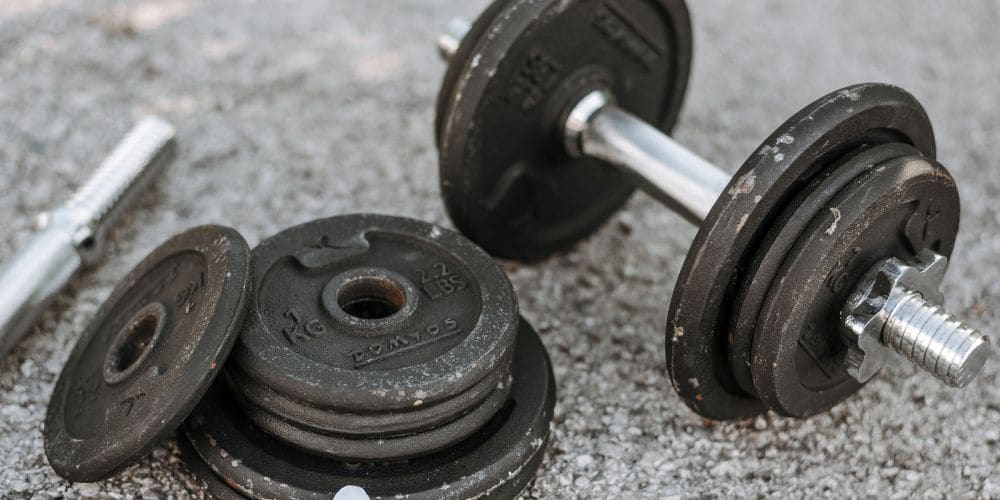
Almost every article on this question was written for a barbell, and there are no barbells at LUX Fitness.
The standard answer goes like this. Take a big breath, brace your midsection hard, hold that pressure through the heaviest part of the lift, then release at the top. That held breath is called the Valsalva maneuver.
It exists to solve one specific problem. When a loaded bar is sitting across your back or hanging from your hands, your torso has to become rigid enough to keep your spine safe under it.
LUX Fitness has no barbells and no free weights. The ARX machines are what you train on: motor-controlled, fixed in their path, and unable to fall on you.
The problem the Valsalva maneuver was built to solve simply is not present in your session. Borrowing the answer anyway just means you hold your breath for no reason.
What Adaptive Resistance Changes About the Way You Breathe
Adaptive resistance changes how long a rep lasts, and rep length is what really determines your breathing.
ARX matches the force you produce moment by moment. When you are strong, it pushes back harder. When you fatigue, it eases with you and stays right at the edge of your effort.
That removes the parts of a lift where you normally get a breather. There is no easy stretch at the bottom, no lockout at the top, no rack to set the weight down on.
A barbell set is a series of short efforts with recovery built into the gaps. An ARX set is closer to one long, continuous output.
You cannot hold your breath through something that long, and you should not try to.
The Breathing Pattern That Works Under Continuous Resistance
Breathe continuously, push your air out as the effort peaks, and never let the cycle stop.
Keep a steady rhythm through both directions of the movement. The pushing phase and the lowering phase are both working phases on an ARX machine, so neither one is a place to park your breath.
Exhale through slightly pursed lips as the effort builds, then let the inhale come during the less demanding portion of the range. Long, unhurried, out and in.
It will not land as a tidy one breath per rep, and that is fine. Reps here run longer than what that rule was written for, so you may take several breaths inside a single rep.
Let the rhythm find its own pace. The only requirement is that it keeps going.
Why You Hold Your Breath Without Ever Deciding To
Breath holding under effort is a reflex, not a discipline problem.
Your body braces when it senses hard work, and the diaphragm gets pulled into that bracing along with everything else. Concentration makes it worse. The harder you focus on the movement, the less of your attention is left over for breathing.
Holding your breath during exertion temporarily raises pressure inside the chest and abdomen, and blood pressure rises with it. That is well established and, for most healthy people, brief and unremarkable when it happens under a barbell for a second or two.
Over a long continuous rep, though, a sustained hold is worth avoiding. You will also just feel worse doing it, lightheaded and flushed, and you will quit the set before your muscles are actually finished.
This is general education, not medical advice. If you have a blood pressure or heart condition, are pregnant, or are returning from any medical event, speak with your physician and tell your coach before your next session.
How to Breathe When Lifting If You Are New to Adaptive Resistance
For your first sessions, the only goal is to stay audible.
If you can hear your own breathing, you are not holding it. That single test beats any counting method, and it works while you are too busy to think.
Do not time anything. Do not try to match a specific ratio. Just make noise on the way out and let the air come back in on its own.
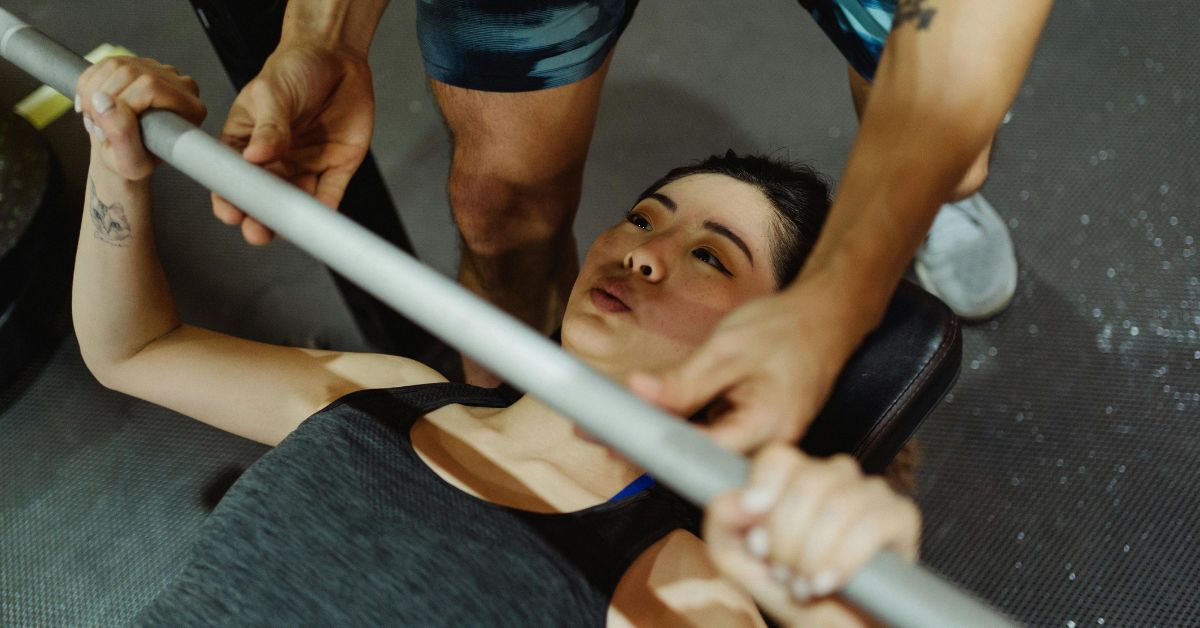
Form, breathing, and progression are what your coach is following while you are on the machine. Breathing is the one clients are least likely to bring up on their own.
It is also one of the quieter details behind the broader wellness approach LUX Fitness takes to strength in Franklin, where how you train matters as much as how hard.
What Changes Once Breathing Stops Being Something You Manage
When your breathing runs itself, the sessions become noticeably easier to finish.
Clients who fix this usually complete reps they used to abandon early. The muscles were not out of capacity. The breath was.
You settle faster between exercises, and you walk out clear-headed rather than rattled. That matters more than it sounds when sessions are short and each one has to count.
It carries past the session too. Breathing well is one part of training in a way your body can absorb, alongside how muscle recovery after strength training works.
Frequently Asked Questions
Should I ever hold my breath during an ARX rep?
A brief pause as you change direction is normal and nothing to correct. What is worth avoiding is a deliberate hold through the working portion of a rep. The machine controls the resistance and the movement path, so you are never stabilizing an external load that could shift or fall.
What if I feel lightheaded partway through a set?
Stop the set and tell your coach. Lightheadedness during effort is very often a sign that breathing stopped, and it usually settles quickly once normal breathing resumes. It is not something to push through quietly, and your coach would far rather adjust the set than have you finish it uncomfortable.
Does breathing through my nose or my mouth matter?
Not much during a hard working set. Under real effort, your body will take air the fastest way available, and forcing nasal breathing usually just adds one more thing to think about. Nasal breathing is a reasonable preference during warm-ups and between exercises, when demand is lower.
Does breathing change between the first and last set?
It gets louder and faster, and that is expected. As fatigue builds across a session, your breathing deepens on its own to keep up with the demand. The pattern itself does not change, since you are still exhaling as effort peaks and never holding. Let the pace rise rather than forcing it.
Will better breathing actually change my results?
Indirectly, yes. Breathing does not build muscle on its own, but it determines whether you reach the end of a set on your terms or stop early because you are starved of air. Finishing the work you came to do is what drives progress over weeks and months.
Put Proper Breathing Into Practice at LUX Fitness
Breathing quietly decides how much of a session you actually complete. It is also the kind of detail that only gets corrected when someone is watching you train.
Every session at LUX Fitness is one-on-one, which means nobody has to raise a hand and ask. The coach is already there.
If you are exploring what coached strength training under adaptive resistance would look like for you, you are welcome to book a free session and see how it feels with someone guiding the details.