Author : Ben Cluff

About the Author:

Owner and co-founder of LUX Fitness, a premium strength training studio built around smarter, more efficient fitness. With a background in sales, leadership, and personal development, Ben is passionate about helping people build strength, confidence, and discipline without spending countless hours in the gym. Through LUX Fitness, he helps members achieve meaningful results with personalized training, advanced equipment, and a high-performance approach to health and wellness.

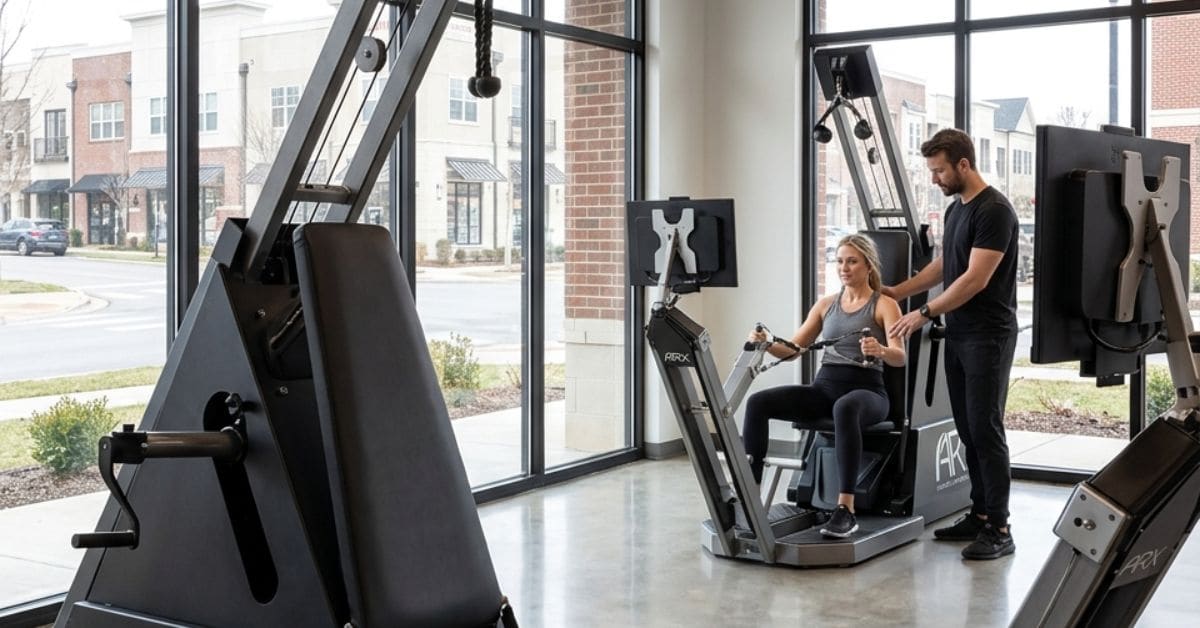
Arx workout training with a coach

What Is an ARX Workout? Inside the Strength Technology Behind LUX Fitness

Most people in Franklin walk into training with a familiar expectation: if it works, it has to take time. An hour minimum. Heavy weights. Long rest periods. The kind of session you have to mentally prepare for the night before.

Then they try ARX. And the first reaction is usually the same, this feels too efficient to be real.

At LUX Fitness, we see it all the time. Someone comes in thinking they’re just “checking it out,” and 15 minutes later they’re looking at their strength data wondering how something so short can feel so complete.

ARX (Adaptive Resistance Exercise) changes the rhythm of strength training entirely. Instead of lifting fixed weights, you work against resistance that adapts to you in real time. Every rep meets your effort exactly where it is.

Let’s break down what that actually means, how the system works, and why it feels so different from traditional lifting.

What Is an ARX Workout?

An ARX workout is a strength training session performed on a machine that uses motorized, computer-controlled resistance instead of plates, bands, or gravity.

So instead of picking a weight and hoping it’s the right challenge, you simply move, and the machine responds. Push harder, and it pushes back harder. Ease off, and it immediately adjusts with you.

That’s the key difference. The resistance isn’t fixed. It’s adaptive, second by second.

This removes one of the biggest guesswork problems in traditional training: whether you chose the “right weight.” On ARX, the load is always exactly what you can handle in that moment.
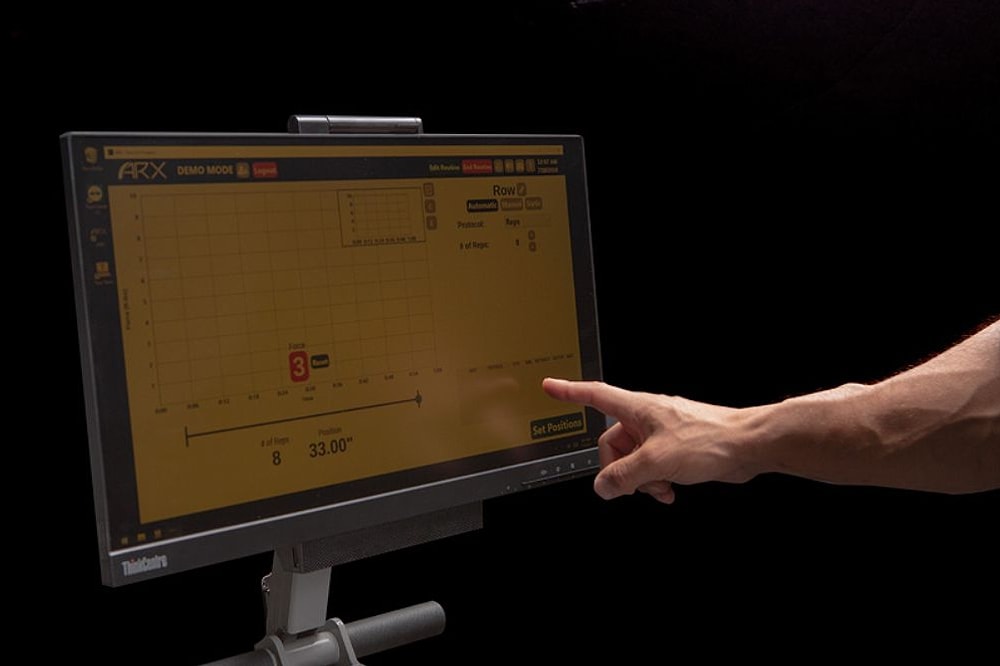
Hand selecting an exercise on the ARX touchscreen

How ARX Adaptive Resistance Works

Traditional weights don’t really match your strength through a full movement. You might be strong in one part of a rep and weaker in another, but the weight stays the same the entire time.

ARX works differently. It measures the force you produce and responds with equal resistance through every inch of the movement. That means the machine is constantly adjusting to match your output, not the other way around.

Where it really stands out is the eccentric phase, the lowering portion of a movement. That’s where a large portion of strength development actually happens, but most training setups underload it or ignore it entirely.

ARX applies consistent resistance in both directions, so you’re working through the full range with equal demand on the muscle. The result is a smoother, more controlled form of resistance that keeps tension where it matters most.

Why an ARX Workout Takes Just 15 Minutes

The short duration surprises almost everyone the first time. But it’s not rushed. It’s just efficient in a way traditional training isn’t.

Because the resistance is perfectly matched to your effort, there’s no wasted time. No adjusting weights. No long breaks between sets. No “that probably wasn’t heavy enough” second-guessing.

Each exercise takes about two minutes of focused effort. A full-body session fits into roughly 15 minutes.

At LUX Fitness in Franklin, this is often what finally makes consistency realistic for busy professionals. When training doesn’t compete with your schedule, it actually happens.

Is an ARX Workout Safe?

Safety is one of the biggest reasons people feel comfortable trying ARX for the first time.

You are always in control of the resistance. The machine only responds to the force you apply. If you stop pushing, it stops resisting immediately.

There’s no stack of weights that can drop on you. No risk of getting pinned under a bar. No awkward bailouts mid-rep.

The movement itself is also smooth and controlled, which reduces stress on joints compared to traditional heavy lifting. That makes it especially appealing for beginners, people returning after time off, or anyone managing old injuries. If sore knees, hips, or a touchy back tend to be the limiting factor in your workouts, our joint-friendly strength training guide digs into how to get stronger without stirring them up.

What Results Can You Expect From an ARX Workout?

The promise behind ARX is simple: more output in less time. And there’s some solid data behind it.

In a 12-week study, participants using ARX trained approximately 72 percent less than a traditional weightlifting group, while still showing greater improvements in fat loss, muscle gain, cardiovascular fitness, and overall strength.

That said, results always depend on consistency, effort, and recovery. So it’s better to view those findings as what’s possible when training is done well, not a guaranteed outcome for everyone.

What most people notice first is less dramatic but more important: they feel stronger in daily life. They recover faster between sessions. And they stick with it, because the time commitment finally makes sense.
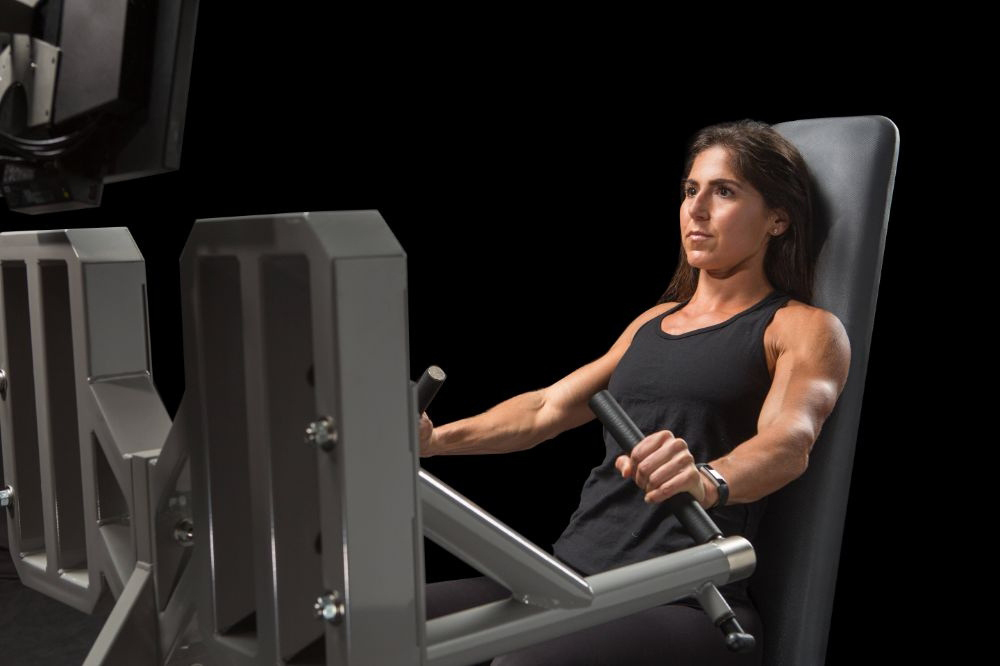
What an ARX Session at LUX Fitness Looks Like

At LUX Fitness, ARX training is always one-on-one.

A coach is there throughout the session to guide movement, adjust effort targets, and interpret real-time data from the machine. You’re not left guessing what to do next or whether you’re doing it right.

Each session is tailored to your body, your goals, and how you’re feeling that day. Progress is tracked over time so you can actually see strength changes instead of just hoping they’re happening. Everything is structured, but nothing feels generic.

If you’re curious what that first session feels like, our ARX training sessions in Franklin, TN page walks through it step by step. And for many adults balancing work, family, and aging joints, ARX also fits naturally into the approach we use for personal training over 40.

Frequently Asked Questions

How long is an ARX workout?

About 15 minutes total. Each exercise takes roughly two minutes of focused effort, with no long rest periods or setup time needed between movements.

How often should you do ARX?

Most people train once or twice per week. Because each session creates a strong training stimulus, recovery between workouts is important and built into the program.

Is ARX good for beginners?

Yes. It’s actually one of the most approachable ways to start strength training. The machine only provides resistance equal to what you can produce, and a coach guides you through every step at LUX Fitness.

Does ARX build muscle?

It can. ARX trains muscles through a full range of motion, including the eccentric phase where a lot of growth happens. With consistent training and proper nutrition, it’s an effective tool for building lean muscle.

Is ARX safe if I have joint pain or past injuries?

For many people, yes. The controlled movement and adaptive resistance reduce unnecessary strain. You can stop at any point, and the machine responds instantly. If you have a medical condition or injury history, it’s always best to consult your doctor and inform your coach so adjustments can be made.

Experience an ARX Workout at LUX Fitness in Franklin, TN

An ARX workout gives you something most people don’t expect from strength training: real results without the time drain or joint stress that usually comes with it. By matching resistance to your effort in real time, it turns short sessions into highly productive ones. If you’re in Franklin, TN and want to experience it firsthand, book a free intro session at LUX Fitness. We’ll walk you through the system, coach your first movements, and help you see whether it fits the way you want to train. We also share a guide on doing one strength workout per week for steady progress.
Ben Cluff June 15, 2026 Gym Read more
Active adult performing a glute bridge exercise in a private fitness studio

Joint-Friendly Strength Training: What’s Actually Safe If You Have Knee, Hip, or Back Pain

Achy knees when you take the stairs. Hips that feel stiff after you’ve been sitting too long. A back that tightens up the moment you bend down like it’s warning you not to.

Most people don’t even call that “pain” at first. It just becomes normal. Then training slowly gets pushed aside because it feels like the risk outweighs the reward.

We hear that a lot at LUX Fitness in Franklin, TN. And the funny thing is, once people start moving the right way again, slower, more controlled, less guesswork, the body usually responds better than expected.

Not instantly. But steadily.

So let’s break down what actually makes sense when your joints are the thing holding you back.

Can You Strength Train With Knee, Hip, or Back Pain?

Yes. In most cases, you can. And more than that, it’s often one of the best things you can do.

When the muscles around a joint get stronger, they start sharing the load. That means less pressure going through the irritated spot and more support coming from the surrounding system.

It’s not a fringe idea either. Mayo Clinic and Harvard Health both consistently point to regular strength training, a few days per week, as part of managing arthritis and ongoing joint discomfort.

So it’s rarely about “should I train or not.” It’s more like, how do we make this safe enough and smart enough that your body actually tolerates it?

Heavy, rushed, ego-driven workouts usually don’t help here. But controlled strength work, done in ranges you can actually own, tends to go a long way.

Older adult training on ARX equipment at LUX Fitness in Franklin, TN

What Makes Joint-Friendly Exercises Truly Safe?

A joint-friendly exercise isn’t about being easy. It’s about being controlled. You’re trying to load the muscle without irritating the joint. That’s the whole game.

So the pace slows down. A lot. No bouncing. No throwing weights around. No forcing a range just because a program says so.

Two things matter most: low impact and a range you can control without flaring anything up.

Most people start simple. Bodyweight first. Bands. Machines. Then progress later when things feel stable, not before.

And pain has to be taken seriously, but not fearfully. Muscle effort is fine. A bit of soreness is normal. Sharp, pinchy, or escalating joint pain? That’s your cue to back off or adjust. Not push through.

Joint-Friendly Exercises for Knee Pain

Knees are usually the first place people feel “old,” even if the real issue is elsewhere. Often it’s not the knee itself, it’s what’s happening above and below it. Quads not firing well. Glutes not pulling their weight. Hamstrings underused.

So we train the support system. A controlled leg press through a comfortable range can be a great starting point. Same with a slow sit-to-stand pattern. Nothing deep. Nothing forced. Just clean reps you can actually control.

Isometrics help too. You tighten the muscle without moving the joint much. It sounds simple, but it can be a useful way to build strength when things are irritated.

And for some light conditioning, cycling tends to be a solid option. Smooth motion. Low impact. No pounding. The goal isn’t to “test” the knee. It’s to rebuild confidence in it.

Joint-Friendly Exercises for Hip Pain

Hip pain has a way of showing up quietly. After sitting. After walking. After doing “not much,” sometimes. A lot of that comes down to the glutes not doing enough of the stabilizing work they’re supposed to do.

So we go back to basics. Glute bridges. Clamshells. Controlled hip abduction work. Nothing flashy. Just steady movement with good control.

You’ll usually feel these more in the muscles than the joint itself, which is exactly what we want early on. Gentle hip flexor mobility can also help things loosen up over time, especially if sitting is part of your daily routine.

And again, the rule stays the same: if something creates a sharp pinch in the joint, we don’t force it. We change it. Simple as that.

Joint-Friendly Exercises for Back Pain

Back pain tends to change how you do everything. You move more carefully. You brace before you bend. You hesitate without thinking about it.

So the goal shifts away from “strengthen the back” and more toward “teach the core to actually protect the spine.”

Bird dogs. Dead bugs. Glute bridges. These are simple movements, but they teach control in a way that carries into real life, especially when you bend, lift, or twist.

One of the biggest wins here is learning to hinge at the hips without rounding your lower back. Once that pattern clicks, a lot of everyday strain starts to disappear. Until then, lighter loads and strict form matter more than intensity. No rush. Just repetition done well.

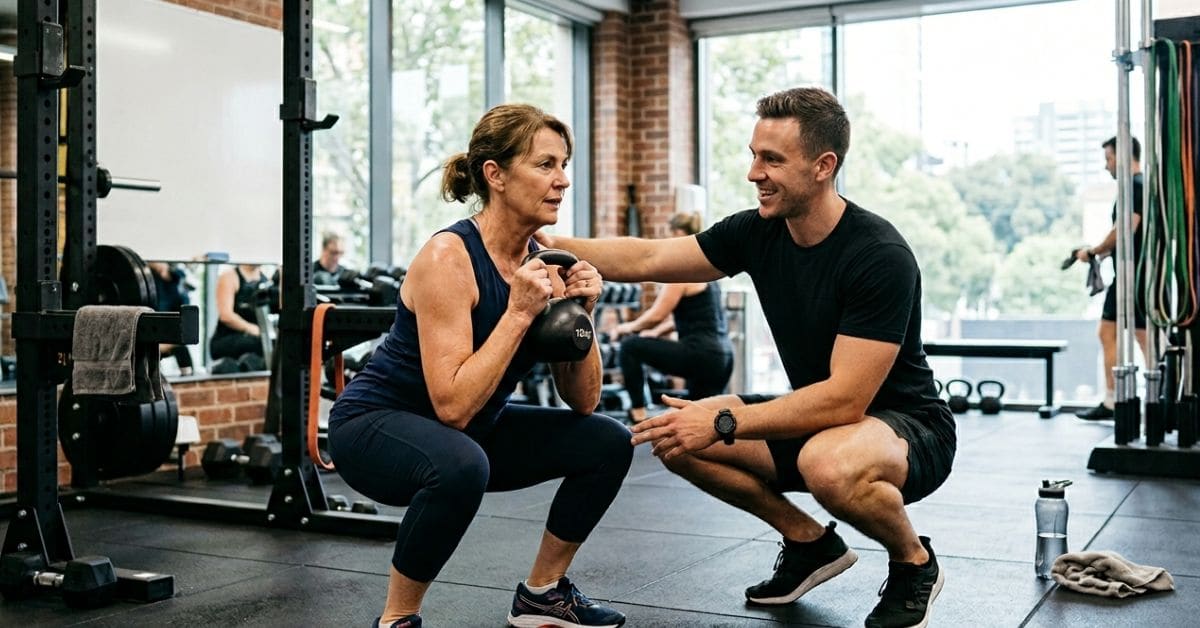
Middle-aged woman doing a slow controlled resistance exercise

Why Adaptive Resistance Is Especially Joint-Friendly

One of the tricky parts of training with pain is unpredictability. A rep feels fine, until it doesn’t. That’s where adaptive resistance helps clean things up.

At LUX Fitness, ARX machines adjust resistance in real time based on your effort. Push harder, it responds. Slow down, it eases off. Stop, and the load drops immediately.

So there’s no momentum pulling you into a bad position. No surprise spikes in weight. No fighting something your body isn’t ready for that day. It keeps the work inside the muscle where it belongs, without punishing the joint.

For a lot of people dealing with knee, hip, or back issues, that consistency makes training feel doable again. Curious how it actually works? Our ARX training sessions in Franklin, TN page breaks it down, and our joint-friendly strength training page shows how we build pain-aware programs. Training past 40? These ideas slot right in with our guide to personal training over 40.

When to Check With a Professional First

This is general education, not medical advice.

If your pain is severe, new, the result of an injury, or tied to a diagnosed medical condition, it’s important to speak with a doctor or physical therapist before starting anything new. They can help you figure out what’s appropriate for your situation.

At LUX Fitness, sessions are one-on-one, which means we can adjust things in real time, range, resistance, exercise choice, based on how your body actually feels that day.

How to Find a Personal Trainer in Franklin

Is it safe to strength train with arthritis?

For most people, yes. In many cases it’s encouraged. Strength training can help support joints affected by arthritis and improve how they function over time. Start light, keep things controlled, and always get medical clearance if your condition is new or more advanced.

What exercises should I avoid with knee or back pain?

Usually anything that causes sharp pain, relies heavily on momentum, or puts you in deep loaded positions before you’re ready. That might include deep squats for some knees or loaded twisting and bending for some backs. There are usually safer swaps for the same muscle groups.

How often should I strength train if I have joint pain?

Two times per week is a solid place to start. It lines up with what groups like Mayo Clinic commonly recommend. It gives your body time to recover while still building consistency.

Is ARX a good option if I have joint pain?

For many people, yes. Because resistance adapts to your effort in real time, it stays smooth and controlled without sudden strain. Still, it’s smart to check with your doctor first and then work with your coach to tailor it properly.

Train Stronger With Joint Pain at LUX Fitness

Joint pain doesn’t automatically mean you stop training. It usually just means you need a different approach. Slower. More controlled. More intentional. At LUX Fitness in Franklin, TN, that’s how we build training for people dealing with pain or stiffness every day. If you want to see what that looks like in real life, book a free intro session. We’ll keep it simple and meet you where you’re at. We also provide a guide on strength training for fat loss to help you use workouts effectively for weight management

A client performing a strength exercise on ARX equipment while a trainer monitors performance data

What to Expect From Your First Personal Training Session at LUX Fitness in Franklin, TN

There’s a specific kind of moment that brings people through the door at LUX Fitness. It’s not usually excitement. It’s usually a decision that’s been delayed for weeks or months. A calendar finally opens up, a frustration hits a peak, or something in the mirror or the doctor’s office makes it clear that “later” isn’t working anymore.

So they book the session. And then almost immediately, the overthinking starts. What do I wear? Am I already behind? Am I going to be pushed too hard? Am I going to look out of place in a private training studio in Franklin, TN?

If that sounds familiar, you’re exactly who this first session is designed for. Not to test you. Not to overwhelm you. But to give you clarity in a place where most people only ever experience confusion. If you’re still weighing your options, our guide on how to find the right personal trainer in Franklin walks through that decision. Here’s what actually happens.

The First Personal Training Session People Overthink the Most

Of all the sessions you’ll ever do, this is the one people build up in their head the most. Not because it’s complicated, but because it feels unknown.

Most new clients at LUX Fitness come from busy professional lives in Franklin where everything is scheduled, optimized, and expected to be handled well. Fitness is usually the one area that hasn’t cooperated with that system.

So the mind fills in the gaps: Am I going to be judged? Am I going to be too out of shape? Do I already need to “know what I’m doing”? The truth is simpler. Your first session is designed to remove pressure, not add it.

It’s the starting point of a structured, private personal training experience built around Adaptive Resistance Exercise (ARX) and coaching that meets you exactly where you are.

What to Bring to Your First Personal Training Session

You don’t need a reset routine before showing up. No prep cycle. No “get in shape first” phase. Just show up ready to move.

Wear comfortable training clothes. Bring athletic shoes and a water bottle. That’s it. If you’ve got past injuries, medical notes, or anything your coach should know, bring that too. Not because it’s a barrier, but because it helps shape your plan from day one.

At LUX Fitness, your personal trainer in Franklin is focused on building something that fits your real body, not an ideal version of it.

The First 10 Minutes: Just a Conversation

You’re not thrown into training right away. You sit down and talk first.

Your coach will ask about your goals, your schedule, your history with exercise, and what life actually looks like for you right now. Work demands, family rhythm, stress, energy levels, it all matters. Nothing here is a quiz and nothing you say is the “wrong answer.”

This conversation is the foundation of your entire training approach. It’s how we remove guesswork and start building structure around your life instead of forcing your life around workouts.

The Studio Walk-Through

Next, you’ll get a simple walkthrough of the space. LUX Fitness is a private strength training studio in Franklin, so the environment is intentionally calm, controlled, and distraction-free. No crowds. No noise. No wandering around trying to figure out what to do next.

Your coach will show you how the studio flows, where the ARX equipment is, and how a typical session is structured from start to finish. Most people relax during this part without even noticing it. The unfamiliar becomes familiar quickly when the environment is this focused.

Your First Movement on ARX

This is your first real introduction to training at LUX. Your coach will guide you through Adaptive Resistance Exercise (ARX), which works differently than traditional weights. Instead of lifting a fixed load, the machine matches your force in real time.

If you push harder, it responds. If you slow down, it adjusts. The resistance is always aligned with your effort. There’s nothing to load, no setup confusion, and no prior strength level required.

The first few movements are intentionally slow. The goal isn’t intensity. It’s awareness. Learning how your body feels when resistance is precise and controlled.

A beginner using a modern resistance training machine while a coach provides calm guidance.

The First Working Set

After you’ve moved through a few warm-up patterns, you’ll complete a short working set on one or two key movements. This is usually where things click.

Most new clients expect fitness to feel like pushing through exhaustion. Instead, they discover something more useful: effort that’s measurable, controlled, and repeatable. You’re not being pushed to your limit. You’re being shown what your actual starting point is.

By this stage, you’re typically 20 to 25 minutes into the session, already getting meaningful data on how your body responds to structured strength training.

How Your First Personal Training Session Ends

The final part of the session is about direction, not pressure. Your coach walks you through what they observed, how your baseline looks, and what your early training structure will likely involve.

You’ll talk through scheduling, consistency, and how often you should realistically train based on your life in Franklin, not an ideal calendar that doesn’t exist. There’s no pitch. No push. Just clarity on what comes next and what progress is going to look like over the first few weeks.

How the First Session Sets Up Your First Month

That first session becomes the blueprint for everything that follows. It establishes your baseline strength, introduces your movement patterns, and gives your coach the data needed to structure your first month of personal training.

From here, your program evolves week by week. Resistance adjusts. Progress is tracked. And each session builds on the last instead of restarting from scratch. For most clients, this is the first time training feels like a system instead of a cycle of starting over.

For a week-by-week look at how that first month tends to unfold, our guide on your first 30 days with a personal trainer at LUX picks up right where this leaves off.

What Makes the First Session at LUX Different

Most people walk into fitness environments expecting a test. Something they have to pass. Something they have to be ready for. LUX Fitness doesn’t operate that way.

Your first session in our private Franklin training studio is built around understanding, not performance. You’re not competing with anyone. You’re not trying to prove anything. With one-on-one coaching and ARX technology, everything is tailored in real time to your effort, your ability, and your starting point.

It feels less like an evaluation and more like the beginning of a system that finally makes sense.

FAQs About Your First Personal Training Session at LUX Fitness

What should I expect from my first personal training session?

Expect a conversation about your goals, a quick walkthrough of the studio, an introduction to ARX training, and a short working set to establish your baseline. It’s structured, but not intense. You’ll leave with a clear understanding of your next steps and how training will be built around you.

How long is a first session at LUX Fitness?

Most first sessions run about 45 to 60 minutes. The focus is on understanding your goals, learning how you move, and introducing you to ARX-based strength training without rushing the process.

Do I need any experience to start personal training?

No experience is needed. Whether you’re brand new, returning after time off, or just looking for a more structured approach, your coach will guide everything from the ground up.

Will I be pushed hard in my first personal training session?

No. The first session is about assessment and familiarization, not maximum effort. The intensity comes later once your coach has a clear understanding of how your body responds to training.

Book Your First Personal Training Session at LUX Fitness

Starting is usually the hardest part. Not because the training is difficult, but because people wait until they feel “ready.” At LUX Fitness, readiness isn’t a requirement. Structure is what creates readiness.

Your first session in our Franklin private training studio gives you a chance to experience ARX training, meet your coach, and understand what a real system for strength looks like, without commitment pressure.

If you’re just getting started, our strength training for beginners in Franklin, TN page is a good next stop.

Client reviewing strength progress metrics with a personal trainer inside a private fitness studio

At-Home vs In-Studio Personal Training in Franklin, TN: Why Equipment Matters

Why In-Home Personal Training Feels Like the Easy Part

On the surface, at-home training feels like the obvious win. No commute. No traffic on the way through Franklin. No planning your day around a studio window.

That convenience is usually what gets people interested in the first place, and it’s valid. When life is already packed, saving time feels like the biggest lever you can pull.

But once you look past scheduling, these aren’t just two versions of the same workout. They’re fundamentally different training environments. And the real dividing line almost always comes down to one thing: what kind of equipment you actually have access to.

What In-Home Personal Training Actually Looks Like

Most at-home setups are simple by necessity. Bodyweight movements, a pair of dumbbells, resistance bands, maybe a bench if you’re lucky. Enough space to move, but not much more.

For someone just getting started, or someone who mainly needs accountability and structure, that can work surprisingly well. Having a coach in your living room keeps you consistent and helps you learn how to move properly.

The limitation shows up later. Once your strength starts to improve, the lack of progressive, precise resistance becomes the bottleneck. You eventually outgrow what the equipment can realistically challenge.

And when that happens, progress doesn’t stop because of effort. It slows because of limits.

What the Studio Adds

Step into a dedicated training space and the entire equation changes.

At LUX Fitness, that means access to ARX technology, which automatically matches resistance to your effort through every phase of a movement. There’s nothing to load, nothing to guess, and no risk of choosing a weight that doesn’t match what your body can actually handle that day.

Every rep adjusts in real time.

That creates a level of precision and control that’s extremely difficult to replicate in a home environment. The session becomes less about working around limitations and more about applying exactly the right amount of resistance, every single time.

Why Equipment Quietly Decides the Outcome

Most people assume the coach is the main factor in results. Coaching matters. A lot. But the equipment determines what that coaching can actually do.

The same trainer, working with the same client, will produce two very different outcomes depending on the tools in the room. A bodyweight squat and a fully resisted ARX movement may use the same cueing, but they create completely different training stimuli.

One builds coordination and baseline strength. The other drives measurable, progressive overload.

That difference is what separates general movement from structured strength development. Both have value, but they are not interchangeable over time.

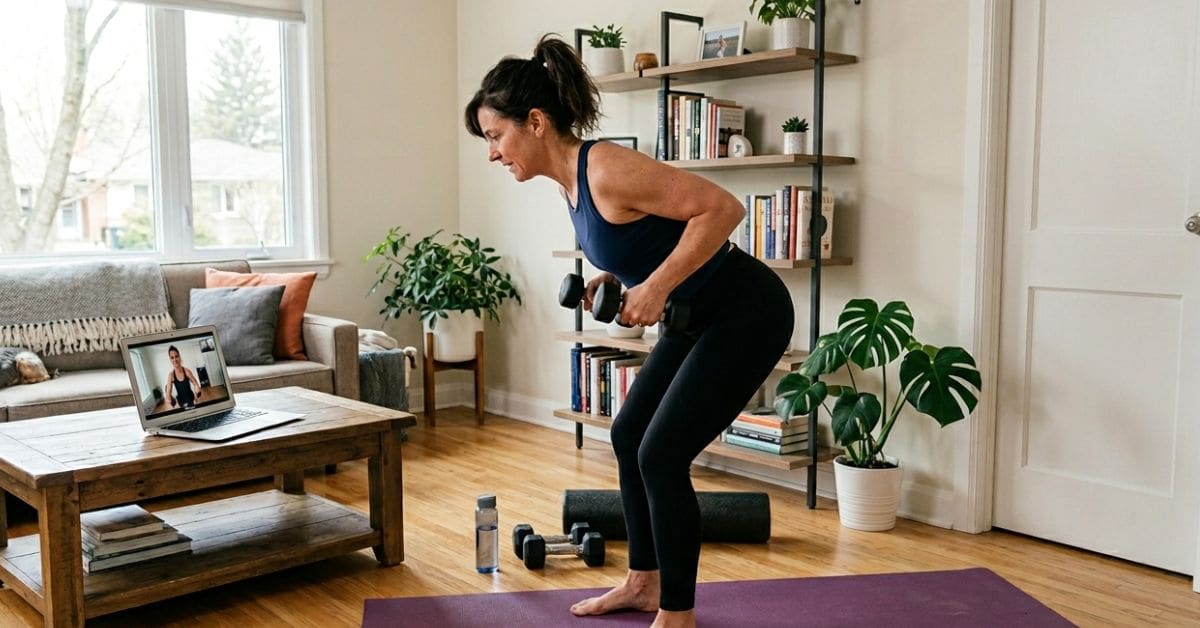
Adult client exercising at home with resistance bands, dumbbells, and a yoga mat in a clean living room

When In-Home Personal Training Makes Sense

At-home training fits best in specific situations:

  • You’re brand new and consistency is the main hurdle
  • Leaving the house is genuinely difficult due to schedule or mobility
  • You’re working through rehab with a professional guiding you
  • You need simplicity more than progression right now

In those cases, convenience isn’t just helpful, it’s the thing that makes training possible at all. A solid at-home session is always better than no session.

When the Studio Becomes the Better Fit

The studio environment starts to make more sense when your goals shift toward measurable progress and long-term strength. That usually looks like:

  • You want strength that can be tracked and improved over time
  • Bodyweight and light weights no longer challenge you
  • You want safer, more controlled progression as you get stronger
  • You prefer focused sessions that remove distractions
  • You perform better when the environment signals “it’s time to train”

For most people once the beginner phase is behind them, structure and progression matter more than convenience alone.

Why ARX Tips the Balance

This is where the gap becomes impossible to ignore.

Traditional equipment forces a fixed load. You choose a weight, and that weight stays the same whether you’re fresh or fatigued. Too light and you’re under-stimulated. Too heavy and form breaks down halfway through.

ARX removes that tradeoff completely by adjusting resistance in real time based on your output. Every phase of the rep is matched to what you can actually produce in that moment.

That kind of adaptive resistance doesn’t exist in a home setup. It’s a studio advantage by design, and it changes how efficiently you can train.

How Time and Energy Really Compare

At-home training often feels faster because there’s no commute attached to it. But that perception can be misleading.

Home sessions tend to stretch longer to compensate for limited equipment and setup changes. Rest periods drift. Transitions slow down. Focus comes and goes because you’re still in your normal environment.

A 30-minute focused ARX session at LUX Fitness, even with a short drive, often ends up matching the total time investment of a much longer at-home workout.

The bigger difference is energy. Studio sessions are contained. You arrive, train with intention, and leave. There’s no blending of roles or distractions pulling attention in different directions.

Why the Setting Itself Affects Results

The environment you train in changes how you show up.

Walking into a dedicated space creates a clean mental separation from everything else happening in your day. Work stays outside. Home stays outside. You’re not half-training while thinking about emails or chores.

That separation matters more than people expect.

For many clients, that switch is the difference between inconsistent effort and fully committed sessions. The environment doesn’t just support training, it reinforces it.

What In-Home Personal Training and In-Studio Training Share

Regardless of where you train, one factor still outweighs everything else: the quality of coaching.

A strong coach will get results in a modest setup. A weak coach won’t fix anything in a high-end studio. The fundamentals, attention, programming, and accountability, matter in both environments.

So the real decision isn’t just about location or equipment. It’s about pairing the right coaching with the right setup for your stage of progress. If you’re weighing your options, it helps to know what to expect from your first session before you commit.

Once that’s clear, the question becomes simple: do you need maximum convenience, or do you need maximum progression?

FAQs About In-Home Personal Training vs In-Studio in Franklin

Is in-studio personal training better than at-home personal training in Franklin?

For measurable strength progress, in-studio training usually has the advantage because the equipment allows for more precise and progressive overload. At-home training works well for beginners or anyone prioritizing consistency over performance. The better option depends on whether your main challenge is showing up or continuing to progress.

Can you build real strength with at-home personal training?

Yes, especially early on. Bodyweight work, bands, and light dumbbells can build a solid foundation. Over time, though, those tools become limiting as strength increases. In-studio training with adaptive resistance allows for continued progression long after home setups plateau.

Does in-studio personal training take a lot more time?

Not necessarily. While you add a short commute, studio sessions are more focused and efficient. A 30-minute structured session often replaces longer, less efficient at-home workouts once setup time and distractions are factored in.

Why does equipment matter so much in personal training?

Because equipment determines how precisely you can apply resistance and progression. Coaching sets direction, but equipment sets the ceiling. Adaptive systems like ARX remove guesswork and allow training to stay aligned with your actual strength in real time.

See the Difference Equipment Makes at LUX Fitness

The easiest way to understand the difference is to experience it directly.

A free intro session at LUX Fitness shows how adaptive resistance changes the feel and outcome of training in real time. If you’re still comparing options, our ARX training sessions in Franklin, TN page gives you a clearer sense of how studio-based strength training actually works.

Personal trainer and client reviewing workout performance metrics on a tablet screen after a training session

Personal Trainer vs. Regular Gym Membership in Franklin, TN: Which Is Right For You?

The Personal Trainer vs. Gym Membership Question

Most people don’t sit around seriously debating “gym vs trainer” like it’s a life philosophy. It usually shows up in a quieter moment.

You notice your energy isn’t what it used to be. Clothes fit a little differently. You think about getting back in shape, maybe after a long stretch of work stress, travel, or just life stacking up faster than your routines.

So you open your phone and start searching. A gym membership feels like the default. A personal trainer feels like the “serious” option.

But that’s not really the question you’re trying to answer. What you’re actually asking is: what am I going to stick with this time? That’s the only part that matters.

So instead of arguing which is better in general, here’s how each option actually plays out in real life here in Franklin, and how to tell which one fits your situation right now.

What a Gym Membership Actually Buys You

A gym membership is straightforward. You’re paying for access. Access to equipment. Access to space. Access to show up whenever your schedule allows.

And to be fair, that’s useful, especially if you already know what you’re doing. If you’ve trained before and you’re comfortable building your own workouts, a gym can work just fine. You go in, do your thing, and leave. No structure imposed on you, no one directing the process.

But that freedom cuts both ways. A membership doesn’t actually do anything for you beyond opening the door. It won’t tell you what to train. It won’t adjust your plan when life gets messy. It won’t keep you progressing when motivation dips. That part is still on you, and that’s usually where things start to break down.

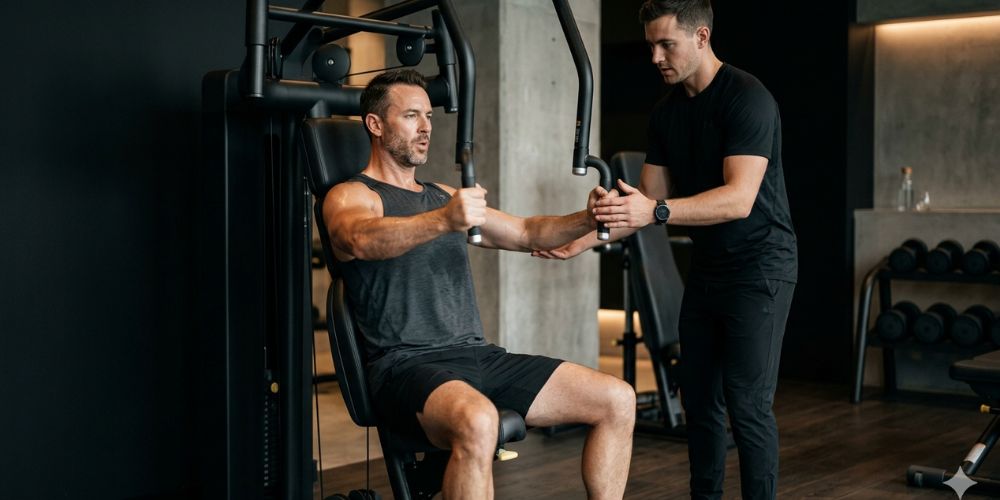
A 40-year-old man in athletic build training in a private luxury fitness studio with a personal coach.

What a Personal Trainer Actually Buys You

A personal trainer is a different setup entirely. You’re not just getting workouts, you’re getting a system that’s built for you, plus someone making sure you actually follow it.

There’s structure. There’s accountability. There’s adjustment when your week doesn’t go as planned. And more importantly, there’s the removal of all the small decisions that usually slow people down: what to do today, how hard to go, whether you’re doing enough, whether you’re doing it right.

At LUX Fitness, that structure is built into private one-on-one sessions using ARX technology, where resistance adjusts to your effort in real time. The session isn’t based on guesswork or ego lifting. It’s based on what your body can actually produce that day. It becomes less about “figuring it out” and more about showing up and executing.

That’s the real difference. Not access versus restriction, but direction versus uncertainty. The same holds if you’re weighing a personal trainer for weight loss.

When a Gym Membership Is the Smart Pick

A gym membership makes sense in the right context. It’s not wrong, it’s just specific. It tends to work best when:

  • You already have a consistent training routine you follow without much effort
  • You’re comfortable programming workouts on your own
  • You enjoy figuring things out as you go
  • Cost is the main factor and you’ve got time and flexibility in your week

In that situation, a gym can be more than enough. You’re not relying on the environment to give you structure, you’re bringing it with you.

When a Trainer Becomes the Better Bet

A trainer starts to make more sense when the pattern looks a little different, like:

  • You’ve joined gyms before but never stayed consistent for long
  • You’re not confident building or adjusting workouts on your own
  • You’re coming back after time off, injury, or a long break
  • Your schedule is packed and you need every session to actually count
  • You want to see clear progress instead of guessing if it’s working

In those cases, the issue usually isn’t effort. It’s not even desire. It’s clarity. A good trainer replaces the uncertainty with a plan you don’t have to second-guess. That alone changes everything for most people.

The Decision Matrix: Personal Trainer vs. Gym Membership, Line by Line

Most of this decision comes down to nine things. Read down the column that sounds more like your life.

What You're Comparing Gym Membership Personal Trainer (LUX Fitness)
What you're actually buying Access to equipment and space A plan, a coach, and a session already on the calendar
Who builds the plan You do, every week Your coach does, starting from a baseline strength assessment
Who adjusts it when your week falls apart Nobody. The plan waits for you to come back to it Your coach, session by session, based on what you can produce that day
Time cost, door to door Longer than the workout, once you add driving, parking, waiting on equipment, and warming up A 30-minute session, booked in advance, with the equipment ready when you arrive
How progress gets measured By feel, or by whatever you remember to log Objectively, through ARX data captured on every rep
Safety and load management Your call on form, load, and progression, which works if you have trained for years Coached form, with resistance matched to your effort rather than to a number you guessed
Environment A shared floor, with crowds at the hours you are most likely free Private and appointment-only, with no audience and no waiting
Cost comparison A low recurring fee for access, and nothing else. The monthly number stays flat while your cost per completed workout climbs every week you skip A larger recurring investment that covers the programming, the coaching, the tracking, and the session itself. The number to compare is cost per result, not cost per month
What happens when you stop showing up You keep paying for access you are not using, and usually nobody notices A booked session is harder to skip, and your coach notices when you do

Read the matrix honestly and the answer usually picks itself. If every row in the left column already describes a system you run well, a membership is the efficient choice.

If three or more rows land in the right column, structure is the thing that has been missing.

Personal Trainer vs. Gym Membership: How Costs Compare

On paper, the gym is cheaper. That part is obvious. But that’s not the full picture.

A gym membership only stays “cheap” if you actually use it consistently. If you go three times one month and twice the next, the cost per workout climbs fast without you noticing.

A trainer flips that equation. You’re paying for a session that’s already scheduled, already structured, and already expected. You don’t have to decide whether you’re going, you just go.

At LUX Fitness, the value shows up less in the monthly number and more in whether you actually stay consistent week after week. For most busy professionals, that consistency is what they were missing in the first place.

discussing a customized fitness plan with a clipboard and a digital tablet visible on the table between them.

How the Time Math Works

Time is usually the deal-breaker, even if people don’t say it out loud. A gym session sounds like an hour, but the real version is closer to an hour and a half once you factor in driving, parking, waiting on equipment, warming up, and cooling down. And if the gym is busy, it stretches even more.

A focused 30-minute private session changes that rhythm completely. You arrive, train with purpose, and leave. No wandering, no waiting, no figuring it out mid-session. That’s one of the main reasons people in demanding schedules stick with it. It doesn’t require a whole chunk of your day to function.

How Safety Plays Into It

Safety doesn’t usually get much attention in this comparison, but it should. In a traditional gym, you’re responsible for all of it: your form, your load, your progression, and your recovery. That works if you’ve been training for years. It gets risky if you haven’t.

With a trainer, those decisions aren’t left hanging. Your movement is coached, your load is adjusted, and your progression is monitored. At LUX Fitness, ARX technology adds another layer by matching resistance to your effort so you’re not forcing weights your body isn’t ready for. The goal isn’t just to work hard, it’s to work hard without breaking yourself down in the process.

How to Find a Personal Trainer: Compare Two Side by Side

If you’re stuck between options, stop trying to overthink it and compare what actually matters:

  • Is the training private or in a shared gym environment?
  • How long are sessions, and are they realistic for your schedule?
  • What equipment or system do they use, and why?
  • How is progress tracked and communicated?
  • How do they handle adjustments when life gets busy?
  • Will this actually survive a normal week of your life?

The trainer who answers these clearly usually makes the decision for you.

A beginner using a modern resistance training machine while a coach provides calm guidance.

What Using a Personal Trainer and Gym Membership Together Looks Like

Not everyone chooses one or the other completely. Some people keep a basic gym membership for casual cardio, stretching, or extra movement on off days, while doing structured personal training for their main strength work. That setup can work well, as long as both pieces are actually being used with intention.

But if your gym membership has turned into something you pay for but rarely use, that’s usually a sign it’s not the right tool anymore. Not a failure, just a mismatch.

If the environment is the part you are still weighing, our comparison of a private studio vs. a big-box gym in Franklin covers that side of it.

Personal Trainer vs. Gym Membership: How to Make the Call

If you’re stuck between the two, it helps to simplify it:

  • If you already have structure, a gym membership is usually enough
  • If you’re missing structure, consistency, or confidence, a trainer is the stronger option
  • If time is your biggest constraint, short, focused training almost always wins

Most people already know the answer once they’re honest about what’s actually missing. If you’re still figuring it out, the next step is usually understanding how to choose the right personal trainer in Franklin before committing either way.

FAQs About Personal Trainer vs. Regular Gym Membership

Is a personal trainer better than a gym membership in Franklin?

It depends on what you need right now. If you already know how to train and just need access, a gym works fine. If you need structure, accountability, or help staying consistent, a trainer is usually the better fit.

Is a personal trainer worth the extra cost over a gym membership?

It tends to be worth it when consistency matters more than keeping monthly costs low. A cheap membership doesn’t help much if it’s barely used. The real comparison is whether you’re getting results, not what you’re paying per month.

Can you switch from a gym membership to a personal trainer easily?

Yes, it’s usually a smooth transition. Some people keep their gym for a short overlap period, but many drop it once structured training becomes their main routine. It depends on how quickly you settle into the new rhythm.

Do beginners benefit more from a personal trainer or a gym membership?

Most beginners do better with a trainer. It removes the guesswork, builds proper form early, and helps establish consistency from day one. A gym can work, but only if there’s already a clear plan in place.

Try the Training Side at LUX Fitness

The easiest way to know the difference is to experience it.

A free intro session at LUX Fitness gives you a feel for structured, ARX-based personal training in a private setting: no guessing, no crowds, just a clear session built around how you actually move. If you’re still exploring, the gym in Franklin, TN page lays out our overall approach.

Personal trainer providing one-on-one coaching during a workout

How to Find the Right Personal Trainer in Franklin, TN: A Buyer’s Guide

Why Knowing How to Find a Personal Trainer Feels So Hard

Most people don’t struggle with the idea of getting a personal trainer. They struggle with figuring out which one is actually right.

You open a few websites and everything starts to blur together. Same language. Same promises. Same photos of someone mid-squat looking like they’ve got life figured out. Everyone says they offer “custom training” and “real results,” but nothing clearly explains what makes one place different from the next.

So the decision drags on longer than it should.

If you’re in Franklin, TN trying to get stronger, lose weight, or finally build consistency that lasts longer than a few weeks, here’s the reality: the right trainer isn’t just about credentials. It’s about fit, structure, and whether the system actually works for your life.

Below is a simple way to sort through it without overthinking it.

How to Find a Personal Trainer: Start With Your Actual Goal

Before comparing trainers, most people skip the most important question. What do you actually want this to do for you? Not in a vague “get fit” way. In a real-life way.

Stronger joints so your knees and back stop holding you back. A leaner body without living in the gym. More energy in the afternoon instead of crashing by 3 PM. Or just a system that finally sticks so you’re not restarting every few months.

Each of those goals requires a slightly different kind of coaching. The “best trainer” doesn’t exist in general. The best trainer is the one built for your version of consistency, your schedule, and your body.

Get that clear first, and everything else gets easier to judge. If losing weight is the goal, here’s what to expect from a personal trainer for weight loss.

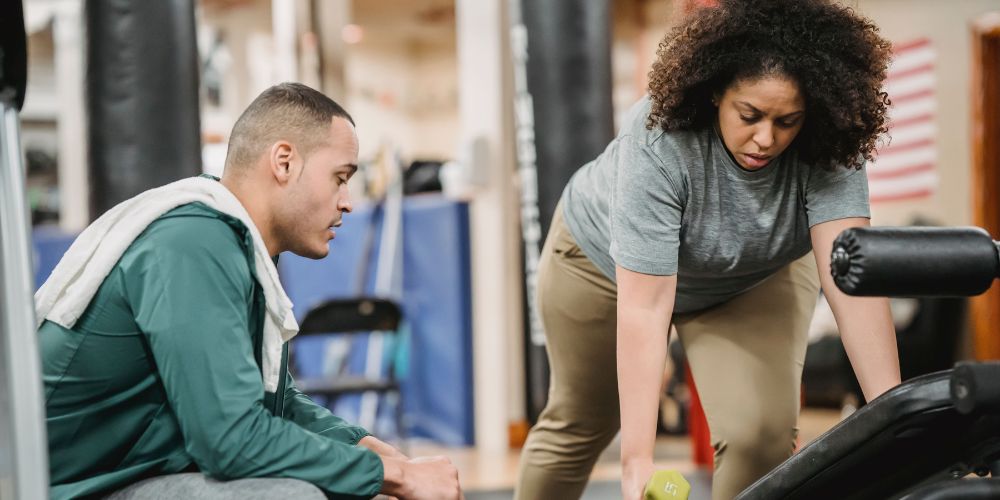
A personal trainer guides a woman lifting dumbbells in a gym setting.

Look at the Room Before the Resume

People love to compare certifications. But the environment you train in matters just as much, if not more.

A crowded big-box gym and a private training studio will produce completely different experiences, even if the trainer is equally skilled. If you already feel stressed just thinking about navigating a busy gym floor, that’s not something to ignore. That reaction is information.

LUX is built specifically around removing that friction. Private training space. No wandering. No waiting. No performing your workout in front of strangers. Just focused sessions where the only thing that matters is execution and progress.

For most busy professionals, that shift alone changes everything.

Ask What They Actually Use

“Personal training” can look very different depending on where you walk in. Some trainers rely heavily on barbells and free weights. Others lean into high-intensity circuits. Others use bands, machines, or a mix of everything with no real system behind it.

What matters is not just what they use, but how that method affects your joints, your time, and your ability to stay consistent.

At LUX Fitness, training is built around ARX technology. It automatically matches resistance to your strength in real time, every rep. That means no guessing what weight to use, no bouncing through momentum, and no beating up your joints to “make it count.” Sessions stay efficient, controlled, and built for measurable strength progress in about 30 minutes.

For people balancing work, family, and everything else, that efficiency isn’t a bonus. It’s the difference between sticking with it and dropping off again.

Judge the Coaching, Not the Workout

Most workouts can be made to look impressive on paper. Good coaching is harder to spot.

Pay attention to how a trainer communicates. Do they explain why you’re doing something, or just tell you what to do? Do they adjust when something feels off, or push through it just because it’s written on the plan?

The best coaches stay curious. They listen. They adjust. They don’t tie your progress to ego or intensity. If everything sounds like “push harder” and “no excuses,” that’s not coaching. That’s noise.

Real coaching is about consistency, recovery, and making sure your body can actually keep progressing week after week.

Make Sure the Schedule Is Honest

A training plan only works if it fits your actual life, not your ideal version of it. Most people underestimate this.

If your week is already packed with meetings, family responsibilities, travel, and constant context switching, long or overly frequent sessions will eventually lose to your schedule.

That’s why structure matters. LUX uses shorter, focused sessions designed for consistency over perfection. The goal isn’t to overwhelm your calendar. It’s to fit into it reliably so you can actually stay on track long enough to see results.

Because the best program is the one you can repeat.

Female personal trainer coaching a woman during a strength training workout in a clean private fitness studio,

Ask How They'll Measure Progress

If progress can’t be measured, it usually gets guessed. And guessing leads to inconsistency.

A trainer should be able to clearly explain how they track whether what you’re doing is working. Strength improvements, movement quality, recovery, and how you feel outside the gym all matter.

At LUX, ARX data gives you and your coach a shared baseline every session. You’re not relying on memory or vague impressions. You’re seeing actual strength changes over time. That’s what allows adjustments early, instead of waiting months to realize something isn’t working.

Would You Trust Them With a Bad Day?

Anyone can coach a good day. You show up rested, motivated, and everything feels easy. The real test is the opposite.

You walk in tired. Stressed. Maybe a little sore. Not in the mood to push hard, but still wanting to stay consistent. A good coach doesn’t punish that. They adjust. They scale the session. They keep you moving without turning one difficult day into a setback.

That kind of coaching doesn’t show up in marketing. It shows up in the room, when life is actually happening.

How to Find a Personal Trainer: Compare Two Side by Side

If you’re stuck between options, stop trying to overthink it and compare what actually matters:

  • Is the training private or in a shared gym environment?
  • How long are sessions, and are they realistic for your schedule?
  • What equipment or system do they use, and why?
  • How is progress tracked and communicated?
  • How do they handle adjustments when life gets busy?
  • Will this actually survive a normal week of your life?

The trainer who answers these clearly usually makes the decision for you.

Trainer or Gym Membership?

Not every decision is trainer versus trainer. Sometimes it’s a trainer versus a regular gym membership and going it alone.

That’s a bigger question than most people give it credit for. One path gives you structure, feedback, and accountability. The other gives you flexibility, but also full responsibility for staying consistent when life gets chaotic.

Neither is wrong. But only one is designed to remove decision fatigue from your week.

How to Find a Personal Trainer in Franklin

How do you choose the right personal trainer in Franklin?

It comes down to fit more than anything else. Your goals, your schedule, and the environment you train in matter just as much as experience or certifications. Pay attention to whether they actually listen, whether they track progress in a meaningful way, and whether their system still works when your week gets messy. An intro session will usually tell you more than any website ever will.

What questions should you ask a personal trainer before signing up?

Ask how sessions are structured, how long they last, what a typical week looks like, and how progress is tracked over time. Also ask what happens when your schedule falls apart or life gets busy. Clear, specific answers usually signal a real coaching system. Vague responses usually don’t.

Should you choose a personal trainer based on price alone?

Price alone rarely tells the full story. The cheapest option can end up costing you more if you don’t stay consistent. The most expensive isn’t automatically better either. What matters is whether the format, coaching style, and environment match your goals well enough that you actually stick with it.

How does LUX Fitness help new clients decide if it's the right fit?

It starts with a free intro session. You meet the coach, see the space, and experience an ARX session firsthand. There’s no pressure to decide on the spot. The goal is simple: give you enough clarity to know whether the system fits your life and your goals.

How to Find a Personal Trainer in Franklin at LUX Fitness

Most people don’t need more information. They need a clear starting point. That’s what the first session at LUX is for.

It’s private, structured, and focused entirely on you. You’ll understand how training works, what your plan would look like, and whether it actually fits your schedule and goals.

If you’re still exploring, our personal trainer in Franklin, TN page breaks down the bigger picture of how we train and who it’s built for.

Close-up of a specialized fitness equipment handle attachment.

Personal Training Pricing in Franklin, TN: One Private Membership, $299 a Month

You’ve probably had this moment already. A few studio websites are open in different tabs, each with its own packages, session bundles, and fine print, and none of them gives you a straight number.

After a long day, comparing pricing charts is the last thing you want to do. You just want to know what it costs and what you actually get.

At LUX Fitness, that answer fits in one sentence. One private membership, $299 a month, with one-on-one strength coaching in every session.

How Much Does Personal Training Cost at LUX Fitness?

A LUX Fitness membership is $299 per month. That comes out to about $75 per coached session.

The monthly number is the one to pay attention to.

At LUX, every rep is measured, so you can see whether you’re getting stronger instead of guessing.

Hands attaching a cable to a fitness machine clip.

Why Personal Training Pricing Gets Confusing

Most personal training pricing is built around packages. Buy more sessions, get a lower rate, then work to use them up.

That setup puts a purchase decision in front of every workout. For a busy professional, it’s one more thing to manage in a week that’s already full.

It also makes fair comparisons hard. You end up weighing numbers instead of what the coaching actually looks like.

One Personal Training Membership, Built for Consistency

LUX keeps it simple on purpose. There’s one membership and one price, so the only decision left is when your session fits into your week.

Strength training works because you keep showing up. A steady monthly membership supports that routine better than a stack of sessions you’re trying to spend down.

It also means every member gets the same coaching. Someone brand new to strength training and someone who has trained at LUX for a year get the same private, focused attention.

What's Included in Your LUX Fitness Membership

Every member gets the full LUX experience. There’s nothing to upgrade into later.

Coaching isn’t an add-on at LUX. It’s part of every session.

Month-to-Month Personal Training With No Long-Term Contract

Your membership runs month to month, with no long-term contract to sign.

Work, travel, and family schedules shift, and your training should be able to shift with them. You stay because the training fits your life and you can see your strength going up, not because a contract says you have to.

Man performing a deadlift exercise on an ARX machine.

A Private, Club-Style Strength Studio in Franklin

LUX Fitness isn’t a traditional gym membership. It works more like a private club built around strength training, right here in Franklin.

Sessions are appointment-only, and the studio is quiet, clean, and private. There’s no crowded floor, no waiting for equipment, and no class happening around you.

When you arrive, your coach is ready, and your session is already planned. Most sessions take around 30 minutes, so training fits into your day instead of taking it over.

Is $299 a Month Worth It for Personal Training?

At LUX, every rep is measured, so you can see whether you’re getting stronger instead of guessing. That way, you can judge the monthly price against real, measured progress.

One-on-one coaching, a plan built for you, and protein and electrolytes from the supplement bar all come with that same monthly price.

How to Get Started at LUX Fitness

The easiest way to understand the membership is to try the training first. Every new client starts with a free session.

You’ll meet your coach, try ARX for yourself, and talk through your goals and schedule. There’s no pressure to join during that first visit.

Frequently Asked Questions About Personal Training Pricing in Franklin

What does the $75 per session figure mean?

It’s what the $299 monthly membership works out to per coached session. It gives you an easy way to compare LUX with session-based pricing elsewhere. The membership itself runs month to month, with no long-term contract.

Is LUX more expensive than a regular gym membership in Franklin?

Usually, yes. A standard gym membership pays for access to equipment. A LUX membership includes a private coach in every session, a plan built for you, and measured progress, so the fairer comparison is personal training, where the coaching is what you’re paying for.

Is the membership a good fit for beginners?

Yes. The same membership covers every starting point, from people who have never lifted to experienced lifters. ARX adjusts resistance to your strength in real time, and your coach sets the plan around where you are now, not where a program assumes you should be.

How will I know the membership is working?

You’ll see it in your numbers. ARX measures every rep, and your coach reviews your strength data with you, so progress shows up well before the mirror changes. If you’d like to see it for yourself, a free session is the easiest place to start.

Explore Personal Training Pricing at LUX Fitness

If you’re exploring personal training in Franklin, a free session is the easiest way to see what $299 a month includes. You’ll meet the coach, try ARX, and get a clear feel for the studio before deciding anything.

No crowded gym floor. No complicated packages. Just one private membership and strength coaching built around your life.

A beginner using a modern resistance training machine while a coach provides calm guidance.

Your First 30 Days With a Personal Trainer: What Actually Happens

Most beginners think the hard part is the workout.

Usually it’s starting.

Not because the training is extreme, but because gyms tend to make people feel like they already missed the orientation. Everybody else seems comfortable. The equipment looks complicated. You assume you should already know the difference between a good workout and a pointless one.

So people wait until they feel “ready.”

Most never really do.

At LUX Fitness, the first month is designed to remove that feeling completely. The process is slower, more guided, and more structured than most beginners expect.

Nobody throws you into random circuits. Nobody tries to exhaust you on day one. The first 30 days are about learning how to train properly and proving to yourself that strength training can actually fit your life.

Female personal trainer coaching a woman during a strength training workout in a clean private fitness studio,

The First Week Usually Feels Easier Than Expected

Most people walk into their intro session expecting intensity.

Instead, the first session feels more like a conversation.

Your coach asks about your schedule, your energy levels, old injuries, previous attempts at fitness, and what you actually want out of training. That part matters more than people think because real progress usually depends less on motivation and more on whether the plan works with your normal week. If weight loss is the goal, here’s how a personal trainer for weight loss builds that plan.

Then you go through your first ARX session.

The machine adjusts resistance to your strength while you move, so there’s no awkward guessing about what weight to use or whether you’re overdoing it. For beginners especially, that changes the experience immediately.

Most clients leave the first session thinking:
“That was way more manageable than I expected.”

That’s intentional.

Week Two Is Where Things Start Feeling Familiar

The second week is usually when the nervousness starts fading.

You stop wondering where to stand. The equipment starts making sense. The sessions feel less like an unfamiliar experience and more like a routine you’re learning.

This is also where your coach starts dialing in movement patterns more carefully. Not flashy exercises. Just the basics done well.

How to move under control.
How to brace properly.
How to create tension instead of rushing through reps.

Those small adjustments matter because they make every future workout safer and more effective.

And honestly, this is the point where many beginners realize strength training isn’t supposed to feel chaotic.

Female trainer providing hands-on coaching during a dumbbell strength exercise

Around Week Three, You Notice Something Outside the Gym

The first noticeable changes usually have nothing to do with appearance.

You carry groceries differently. Stairs stop feeling annoying. Sitting at a desk all day doesn’t leave you as stiff. You catch yourself standing taller without thinking about it.

Those changes show up before dramatic physical transformation does.

At the same time, ARX tracking starts showing measurable strength improvements. That part matters because beginners often need proof that the process is working before visible changes happen.

The numbers help remove the guesswork.

You’re not wondering whether you’re improving. You can actually see it.

By Week Four, It Starts Feeling Normal

This is usually the biggest shift in the first month.

Training stops feeling like “the new thing” you’re trying to keep up with.

It starts becoming part of your week.

The workouts still stay short, but your coach now has enough information to adjust things more precisely around your recovery, schedule, and progress. Some clients settle into once-weekly sessions. Others train twice weekly depending on goals and availability.

Either way, the routine starts fitting into life instead of competing with it.

That’s the point most people miss when they try to start fitness on their own. Sustainability matters more than intensity almost every time.

Why Beginners Tend to Like the Environment at LUX

A lot of people picture personal training as an aggressive gym experience with someone yelling motivation at you.

LUX Fitness is quieter than that.

The studio is private on purpose. There’s no crowded floor, no waiting for equipment, and no feeling like people are watching you figure things out. Your coach is with you the entire session, adjusting things in real time and keeping the workout focused.

For beginners, that environment changes everything.

Instead of trying to survive the workout, you can actually pay attention to what your body is doing.

What Beginners Usually Worry About (That Doesn’t Matter)

Almost everybody shows up thinking they should already know more than they do.

People apologize for being out of shape. They worry about lifting too light. They think they should understand the exercises immediately.

None of that matters here.

Your first month is not about performing well. It’s about learning the process, building consistency, and giving your body time to adapt without overcomplicating things.

Most clients are surprised by how quickly that pressure disappears once they start.

What Actually Matters During the First Month

The clients who do best during the first 30 days are usually not the most athletic.

They’re the ones who keep showing up.

They communicate with their coach when something feels off. They focus on learning the movements instead of chasing intensity. They stop trying to “win” workouts and start thinking longer term.

That approach tends to work better after the first month too. Prefer starting with a female personal trainer? Here’s what that’s like.

Start With a Free Intro Session

If you’ve been thinking about working with a personal trainer but keep putting it off, the easiest thing you can do is see the process for yourself.

The intro session at LUX Fitness is simple. You meet your coach, go through a short ARX workout, and get a feel for how the training actually works in practice.

No crowded gym floor.
No pressure to already know what you’re doing.
No expectation that you need to “get in shape first.”

Just a clear starting point and a plan that feels manageable from day one.

A 40-year-old man in athletic build training in a private luxury fitness studio with a personal coach.

Personal Training Over 40 in Franklin, TN: What Changes and What Doesn’t

Most people do not suddenly need a completely different workout after 40.

They need a smarter one.

The body is still capable of building strength, improving muscle tone, and making meaningful progress. What changes is how much it tolerates poor programming, inconsistent recovery, and workouts built around intensity instead of longevity.

That is why personal training over 40 in Franklin, TN works best when the focus shifts from “pushing harder” to training more precisely.

At LUX Fitness, strength training over 40 is built around private coaching, measurable progress, and efficient sessions designed to support consistency long term.

What Actually Changes About Personal Training After 40

The biggest shift after 40 is not potential.

It is recovery.

Workouts that once felt easy can suddenly leave joints irritated for days. Recovery takes longer. Mobility becomes more important. Poor form and excessive volume become harder to “push through” without consequences.

That does not mean your body is declining beyond repair.

It means the margin for error gets smaller.

And that is exactly why training needs to become more intentional.

Smarter programming, cleaner movement, controlled resistance, and consistent recovery become far more important than simply adding more volume or intensity.

A 40-year-old woman performing a slow, controlled strength training movement in a private training studio.

What Doesn’t Change About Strength Training After 40

The fundamentals of strength training still work after 40.

You still build strength through progressive resistance.
You still improve muscle tone through consistency.
You still recover better with sleep, hydration, movement, and proper recovery habits.

The basics do not disappear with age.

What changes is how carefully the plan needs to be executed.

That is why random workouts and inconsistent training tend to feel worse over time, while structured coaching often works better than ever.

Why Strength Training Matters More After 40

Strength training becomes increasingly important with age because it supports much more than appearance.

It helps maintain:

  • Muscle mass
  • Bone density
  • Joint stability
  • Balance and coordination
  • Posture
  • Everyday movement quality

Those benefits rarely feel dramatic after a single workout. They build gradually over months of consistent training.

But the opposite is also true.

When strength training disappears completely, the slow decline in strength, stability, and energy usually becomes the default. Here is how long it takes to lose muscle once training stops.

The good news is that adults over 40 are often capable of making faster progress than they expect once they begin training consistently again. For women, this is often when strength training through perimenopause and menopause matters most.

A 40-year-old man stretching and performing mobility work on a mat after a strength training session

What Smart Personal Training Over 40 Looks Like

A good strength training plan over 40 is usually simpler than people think.

It focuses on:

  • Short, repeatable sessions
  • Controlled movements with proper form
  • Progressive resistance without excessive joint strain
  • Enough recovery between workouts
  • Clear progress tracking over time

At LUX Fitness, this approach is built around ARX technology, which adjusts resistance to your strength throughout the movement in real time.

That means the workout stays challenging without forcing your body into unnecessary strain or momentum-based lifting.

The result is training that feels controlled, efficient, and sustainable.

Why Shorter Sessions Work Better for Personal Training Over 40

Long workouts are not automatically better workouts.

For many adults over 40, excessive volume creates more recovery problems than actual progress.

Fatigue accumulates faster. Joints take a bigger hit. Recovery stretches longer. Eventually, consistency becomes difficult because the workouts are simply too draining to sustain week after week.

That is why many LUX Fitness clients train once or twice weekly in focused 30-minute sessions.

The goal is not exhaustion.

The goal is meaningful strength work that your body can recover from consistently.

That balance is what allows progress to continue long term.

40-year-old man drinking water and doing light stretching in a quiet wellness lounge area

What a Personal Training Session Over 40 Actually Feels Like

Training at LUX Fitness is private, coach-led, and intentionally focused.

There is no crowded gym floor. No loud group class environment. No wandering between machines trying to figure out what comes next.

Your coach guides the entire session while tracking form, pacing, and progression in real time.

The atmosphere stays calm and controlled so you can focus fully on the workout itself.

Most clients leave feeling challenged, energized, and capable — not completely depleted.

That difference matters more after 40 because recovery becomes part of the strategy, not an afterthought.

What Consistent Personal Training Over 40 Actually Changes

For many adults over 40, the first noticeable changes are not dramatic physical transformations.

They are practical improvements in everyday life.

Things like:

  • Feeling less stiff in the mornings
  • Moving more comfortably after sitting for long periods
  • Having more energy later in the day
  • Feeling steadier on stairs or uneven ground
  • Recovering faster from daily activity
  • Feeling stronger and more confident overall

Those changes tend to build gradually, then become difficult to ignore after several months of consistent training.

Why Private Personal Training Works Better for Adults Over 40

Many people over 40 are not looking for extreme workouts or crowded fitness environments.

They want efficient coaching, clear structure, and a training plan that feels sustainable.

Private personal training provides that.

At LUX Fitness, sessions are appointment-based, guided from start to finish, and designed around the individual instead of the group.

That means:

  • No wasted time
  • No guessing what to do
  • No pressure to “keep up”
  • No distractions pulling focus away from the workout

For busy professionals and adults balancing work, family, and recovery, that structure often makes consistency much easier to maintain.

A 40-year-old woman tying her training shoes in a private gym studio before starting a session.

What Makes Strength Training Work Differently Over 40

LUX Fitness focuses on intelligent strength training designed for long-term progress.

Training is built around ARX technology, measurable progression, and coach-led sessions that prioritize safety, efficiency, and sustainability.

The workouts are short enough to fit real schedules, controlled enough to support recovery, and challenging enough to build meaningful strength over time. Just getting started? Here’s what your first 30 days with a personal trainer look like.

Start With a Free Intro Session

If you are considering personal training over 40 in Franklin, TN, the best first step is seeing how the process actually works.

A free intro session at LUX Fitness gives you the opportunity to meet the coach, experience ARX training, and see how a structured strength program can fit into your life.

No crowded gym environment.
No extreme workout challenge.
No pressure to already be in shape.

Just a clear, focused approach to building strength in a way your body can sustain long term.

discussing a customized fitness plan with a clipboard and a digital tablet visible on the table between them.

Personal Trainer for Weight Loss in Franklin, TN: What Actually Works

Weight loss is one of the most talked-about parts of fitness and one of the least clearly explained.

Most people have already tried the usual cycle before they start looking for a personal trainer. Gym memberships. Apps. Online programs. Intense workout plans that work for a few weeks before life gets busy again.

That is usually the turning point.

Not “How do I lose weight fast?” But: “How do I finally do this in a way I can actually sustain?”

If you are looking for a personal trainer for weight loss in Franklin, TN, the answer is usually not more intensity. It is a better structure.

At LUX Fitness, weight loss support is built around private coaching, measurable strength training, and a system designed for real schedules, not perfect ones.

How to Find a Personal Trainer: Start With Your Actual Goal

Before comparing trainers, most people skip the most important question. What do you actually want this to do for you? Not in a vague “get fit” way. In a real-life way.

Stronger joints so your knees and back stop holding you back. A leaner body without living in the gym. More energy in the afternoon instead of crashing by 3 PM. Or just a system that finally sticks so you’re not restarting every few months.

Each of those goals requires a slightly different kind of coaching. The “best trainer” doesn’t exist in general. The best trainer is the one built for your version of consistency, your schedule, and your body.

Get that clear first, and everything else gets easier to judge.

A personal trainer guides a woman lifting dumbbells in a gym setting.

The Role a Coach Actually Plays in Weight Loss

A personal trainer is not just there to make you sweat.

A good trainer creates structure around the entire process.

That means building a strength training plan around your body, adjusting it as you progress, tracking measurable performance, and helping you stay consistent long enough for results to compound over time.

At LUX Fitness, that process is built around ARX technology and coach-led personal training sessions that are efficient, controlled, and designed for long-term progress.

The goal is not to destroy you with workouts.

The goal is to help you train consistently enough that your body actually changes.

Why Strength Training Matters for Weight Loss

A lot of traditional weight loss programs focus almost entirely on burning calories during the workout itself.

That approach usually falls apart.

Calories burned during a single workout are only a small part of long-term weight loss. What matters more is building a body that moves better, maintains muscle, and uses energy more efficiently throughout the day.

That is where strength training becomes important.

As strength improves, everyday movement becomes easier. Muscle development supports metabolism. Recovery improves. Energy tends to become more stable across the day.

And unlike extreme cardio plans, properly structured strength training is usually far easier to sustain long-term.

Coach conducting personalized strength assessment inside private fitness studio

What Usually Does Not Work

Most people do not fail because they lack motivation.

The plan simply is not sustainable.

One of the most common mistakes in weight loss is trying to do too much, too quickly:

  • Long workouts five or six days a week
  • Excessive cardio
  • Aggressive calorie restriction
  • Programs that leave you exhausted and sore all the time

That approach often creates a short burst of momentum followed by burnout.

Schedules get busy. Recovery drops. Motivation fades. The routine becomes impossible to maintain consistently.

And consistency is what actually drives results.

What Actually Works Long Term

Sustainable weight loss usually looks much less dramatic than the fitness industry makes it sound.

It is usually built around:

  • Strength training a few times per week
  • Sessions short enough to fit into real life
  • Controlled progression over time
  • Nutrition habits that are realistic to maintain
  • Consistency measured in months, not days

That is exactly why LUX Fitness uses short, focused ARX training sessions instead of marathon workouts.

Most sessions take around 30 minutes. Resistance adjusts to your body in real time, allowing workouts to stay challenging without unnecessary joint strain or wasted movement.

For busy adults in Franklin, that efficiency matters.

You can build strength, improve body composition, and support weight loss without spending hours every week inside a gym.

A beginner using a modern resistance training machine while a coach provides calm guidance.

How a Personal Trainer for Weight Loss Builds Your Plan

Most weight loss programs hand you the same plan they hand everyone else, then ask you to adapt to it. A coach works from the opposite direction, starting with a measurement of what your body can currently do.

Your first session captures that baseline. ARX records the force you produce and how well you control it, which gives your coach real numbers to program from instead of an estimate.

The plan is then built around the schedule you actually have. If your calendar genuinely holds a set number of sessions each week, the program is designed to work at that frequency rather than assuming you will find more time later.

From there it gets adjusted. Every session produces new data, so your next progression is based on what happened last week rather than on what a template says week four should look like.

That loop is the entire service. Measure, program, adjust, repeat, for long enough that the effort has a chance to compound. It is the same principle behind effective strength training for weight loss, applied to one person instead of a template.

Why Having a Personal Trainer Keeps Weight Loss Progress Moving

Motivation changes constantly.

Structure does not.

One of the biggest advantages of working with a personal trainer for weight loss is having a system that keeps moving even when life gets chaotic.

Your coach tracks your progress, adjusts the plan when needed, and helps you avoid the common cycle of overtraining, inconsistency, and starting over.

That becomes especially important during plateaus.

Most weight loss plateaus are not permanent. They usually mean something in the plan needs adjustment: recovery, progression, training frequency, or overall consistency.

Having a coach helps you make those adjustments early instead of abandoning the process altogether.

What Your Coach Tracks Between Weight Loss Sessions

Weight loss plans rarely fail dramatically. Usually the sessions just drift further apart until they quietly stop.

A coach catches that early, because the drift shows up in the record long before it shows up anywhere else.

Three things get watched. Your force numbers session over session, which show whether you are getting stronger or only showing up. Your attendance against what you scheduled. And how well you recover, because a plan that leaves you flattened is a plan that will not survive a busy quarter.

When one of those slips, the plan gets adjusted instead of abandoned. That single habit is most of what separates steady progress from a fourth restart.

It also changes what you have to rely on. You are not asking yourself whether this is working, because the answer is written down.

What Progress Should Feel Like with Private Training

Real progress does not always start with dramatic scale changes.

Usually, it starts with smaller shifts:

  • Better energy during the day
  • Clothes fitting differently
  • Improved strength numbers
  • Less stiffness and soreness
  • Better recovery
  • More confidence moving your body

Those changes matter because they are often the signs that the process is becoming sustainable.

And sustainable results are the only results that actually last.

Woman performing bench press exercise with guidance in a gym setting.

Why Busy Professionals Tend to Do Better With Private Training

Many LUX Fitness clients are balancing careers, families, travel, and packed schedules.

They do not need another overwhelming fitness routine.

They need something efficient, private, and structured enough to fit into real life.

That is why private personal training works so well for many busy adults in Franklin. There is no crowded gym floor, no guessing what to do, and no wasted time wandering between machines.

You show up. You train with a coach. You track measurable progress. Then you move on with your day.

That simplicity is part of what makes consistency easier to maintain.

Why the Training Method Matters More Than the Intensity

LUX Fitness does not sell extreme transformations or short-term weight loss challenges.

We focus on building strength in a way that supports long-term body composition changes, energy, movement quality, and consistency.

Training is private, coach-led, and powered by ARX technology that adapts resistance to your strength in real time.

The sessions are short. The progress is measurable. The plan is designed to work with real schedules and real life. See what changes with personal training over 40 in Franklin, TN.

Who Private Weight Loss Coaching Fits, and Who It Does Not

Private coaching is not the right call for everyone, and pretending otherwise wastes your time.

It tends to fit people who are already motivated but short on hours, who have tried self-directed plans and stalled after a few weeks, and who would rather see objective data than be told they are doing great.

It also fits people who would prefer to train without an audience. The studio runs by appointment, so there is no crowd, no waiting for equipment, and no one else in the room.

It is a weaker fit if what motivates you is a room full of people moving together, or if you are chasing a short-term result before a fixed date on the calendar. LUX is built for progress that holds after the date passes.

If you are genuinely unsure which of those describes you, one session will answer it faster than any page can.

Frequently Asked Questions About Working With a Weight Loss Coach

Can strength training support weight loss on its own, or do I need cardio too?

It can work on its own. Strength training helps preserve the muscle that dieting alone tends to cost you, and it makes ordinary daily movement easier, which matters far more across months than the calories burned inside any single session. Cardio is an option here, not the mechanism.

How long before I see anything change?

Your strength numbers usually move before the scale does. Force output tends to respond early because the measurement is direct, while visible body changes depend on consistency, sleep, and eating habits over a much longer window. Your coach will show you the strength data first, because it is the honest early signal.

Does LUX handle nutrition or write meal plans?

No. Coaching here covers your training, your strength data, and your consistency. Nutrition clearly matters for weight loss and your coach will not pretend otherwise, but the studio does not write meal plans or run diet programs. That side of it stays with you, or with a professional you already trust.

Will I be sore all the time?

You should not be. Sessions are short and controlled, and ARX matches resistance to the force you produce rather than asking you to fight a fixed load. Some soreness early on is normal. A plan that leaves you flattened every week is a plan you will eventually quit.

What if I have not trained in years?

That is the common starting point rather than the exception. Your first session measures where you actually are, and the plan starts from that number instead of from where you feel you should be. Nothing requires prior experience, and the sessions are private, so no one is watching.

Start With a Free Intro Session

If you are looking for a personal trainer for weight loss in Franklin, TN, the best first step is seeing the process for yourself.

A free intro session at LUX Fitness gives you the chance to meet the coach, experience the studio, and learn how ARX training works in a private setting.

No crowded gym floor.

No extreme workout challenge.

No pressure to already be in shape.

Just a clear, structured approach to building strength and supporting sustainable weight loss over time.