
Do Pilates and Yoga Count as Strength Training?

Ben Cluff
Ben Cluff
You have been in the same class for three years now. Twice a week most weeks, sometimes more.
Your posture is better. The low back thing that used to flare up every few months quietly stopped happening somewhere in year two.
Then you are at the airport, lifting a full suitcase up and over your head into the overhead bin, and your arms simply will not do it cleanly. It goes up on the second try, with a small heave you would rather nobody saw.
Nothing was injured. Nothing was even that heavy.
But it plants a question that is genuinely hard to shake, which is whether three years of consistent, disciplined work has been building the kind of strength you assumed it was.
So, Does Pilates Count as Strength Training?
Partly, and the honest answer depends on what you are asking it to do for you.
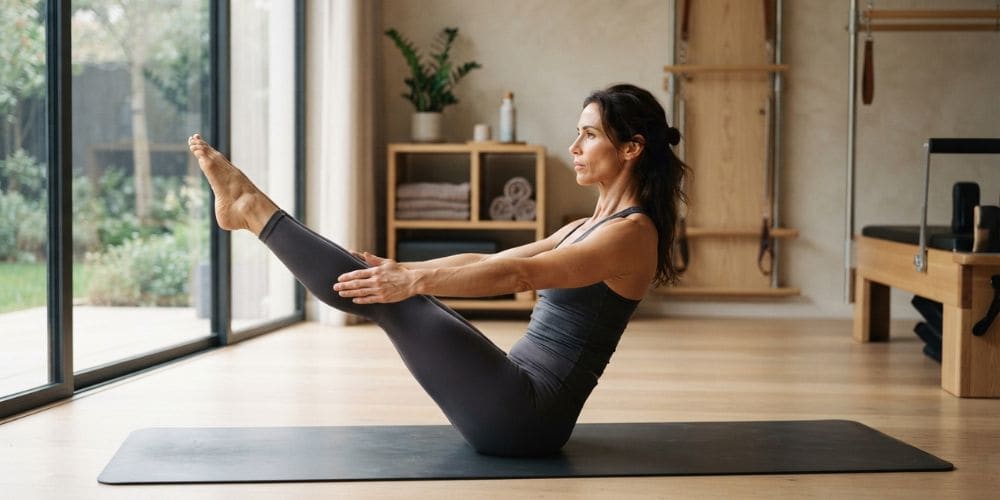
Pilates and yoga are both resistance work in the broadest sense. Your body is the load, gravity is the opposition, and holding a position under tension is real muscular effort.
Where they differ from what most coaches mean by strength training is progression. Strength training in the technical sense involves resistance that increases over time, so the muscle keeps meeting a demand slightly beyond what it has already adapted to.
A bodyweight practice can absolutely get harder. It usually gets harder through longer holds, better control, and more difficult positions rather than through more load.
That distinction sounds academic until you are standing under an overhead bin. Then it is very concrete.
What Pilates and Yoga Do Genuinely Well
Both build qualities that a lot of conventional strength programs quietly neglect.
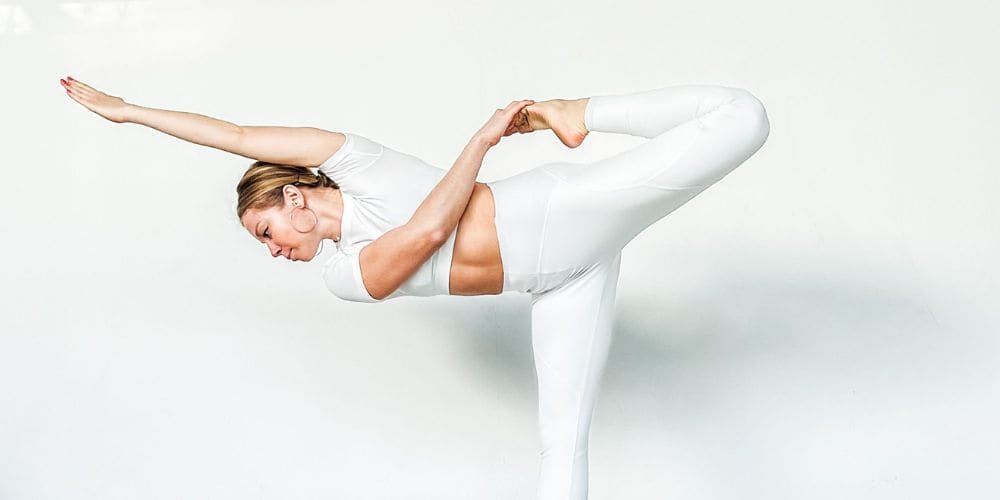
Body awareness is the obvious one. People who have practiced for years tend to know where their pelvis is, where their ribs are, and when one side is compensating for the other.
That is not a small skill, and it transfers directly into learning any new movement faster.
Control is the second one. Moving slowly through a full range without wobbling is harder than most people expect, and it builds the kind of joint stability that keeps training sustainable over decades.
Then there is core endurance and mobility. A practiced yoga or pilates student can usually hold a position under tension far longer than someone who only lifts, and can reach positions that person cannot get into at all.
None of that is a consolation prize. Those qualities are genuinely valuable, and anyone who has built them over three years is starting from an advantage, not a deficit.
Where a Bodyweight Practice Tends to Level Off
The limitation is not effort. It is that the resistance eventually stops going up.
Your body weight is a fixed number, give or take. Once you have adapted to moving it well, the practice keeps refining skill and control, but the mechanical demand on the muscle stays roughly where it is.
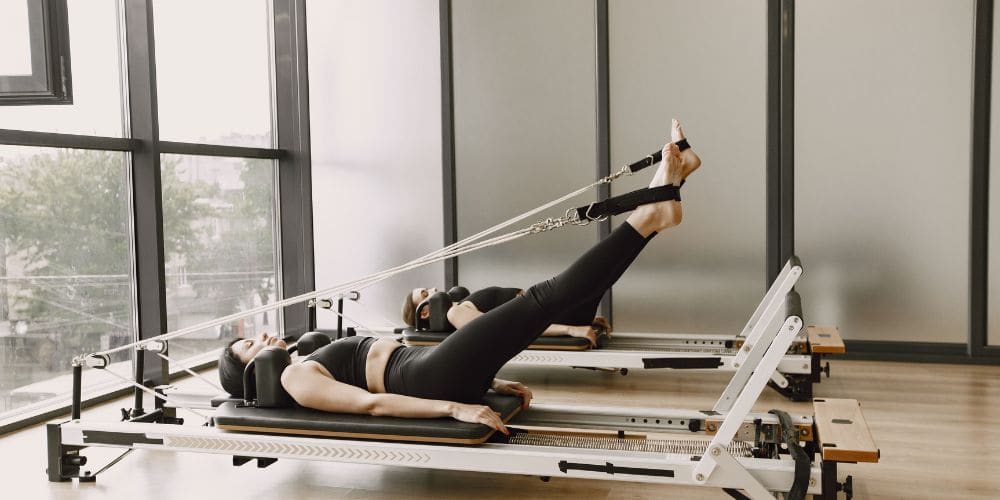
Reformer work changes this somewhat, since springs add external resistance that can be adjusted. Even then, the top end of the load available tends to sit below what a muscle can be asked to produce, particularly in the larger patterns like pressing and pulling.
That shows up most in the movements a mat or a reformer rarely loads heavily. Pushing something overhead. Pulling something toward you. Standing up out of a deep position with weight in your hands.
For most people, those are exactly the patterns that ordinary life eventually tests.
What "Counts" Actually Means for Your Goal
Whether pilates counts as strength training depends far less on the class and far more on the outcome you are after.
If the goal is moving well, staying mobile, and keeping a practice you actually look forward to, then it counts. It is doing that job, and doing it well.
If the goal is measurably more force production, more muscle, and the kind of strength that tends to protect independence later in life, then it is doing part of the job. Progressive resistance is the part that is missing.
What we understand about aging points fairly consistently toward muscle and strength as things worth defending on purpose rather than assuming. General activity helps. Loading a muscle enough to keep asking it for more helps in a way that is difficult to substitute.
That is not an argument against your practice. It is an argument for adding one specific input to it.
Adding Resistance Without Giving Anything Up
The two are not competitors, and most people are best served keeping both.
Plenty of clients at our studio in Franklin combine their studio sessions with walking, yoga, or recreational sports. The strength work supplies the loaded, progressive piece. Everything else stays exactly where it already is.
What that piece requires is less time than people tend to assume.
A small amount of properly loaded, well-supervised resistance work each week is enough for most people to keep making progress, which is the premise behind a structured physical fitness program built around efficiency.
At LUX Fitness, we use adaptive resistance equipment, which matches the force you produce instead of asking you to guess at a weight. For someone coming from a movement practice, that tends to be a straightforward transition, because the control is already there.
If the hesitation is about how your body might change, that is a fair question and a common one. It is worth reading through whether strength training actually makes women bulky before you decide.
Frequently Asked Questions
Should I do strength training and pilates on the same day, or separate days?
Either works, so pick whichever you will actually keep. If you do both in one day, put the strength work first while you are still fresh, since force production is the part that suffers most from fatigue. Separate days give each one your full attention, which most people find easier to sustain.
What should I expect in a first strength session coming from a mat practice?
Less unfamiliar than you would expect. The control you already have transfers, so most of the session is learning how the equipment responds rather than learning how to move. A coach sets the range and watches your positions throughout, so there is nothing to figure out on your own.
Will strength training make my yoga or pilates practice harder?
It tends to make it easier for most people. Stronger shoulders and hips generally mean positions that used to require straining become more comfortable to hold. Some people notice temporary stiffness in the first few weeks, which usually settles as the body adapts to the new demand.
Do I have to stop my classes to start strength training?
No, and we would not suggest it. Your practice is doing real work, and dropping it to make room for something else is usually a poor trade. Strength training slots in beside it as an additional input, not as a replacement for one.
How long before I notice a difference in everyday tasks?
Most people notice ordinary things feeling easier within the first few months. Early gains tend to come from the nervous system learning to recruit muscle more efficiently, with visible changes following later. Suitcases, car seats, and stairs are usually where people notice it first.
Take the Next Step in Your Fitness Journey at LUX Fitness
If pilates or yoga has been part of your routine for years, you’re already doing something valuable for your body. The consistency you’ve developed is an achievement worth keeping.
The next step may simply be adding resistance that gradually challenges your muscles. Even a small amount of strength training can help support continued progress without replacing the practice you already enjoy.
If you are exploring what that might look like alongside what you already do, you can book a free intro session and see how it fits.