
Category : Fitness Center

0 28
  • Person arriving at a private fitness studio on a dark autumn evening

Daylight Saving Time Ends Nov. 1: How to Keep Your Strength Routine When the Evenings Get Dark in Franklin, TN

Lots of people who train after work have a harder time once the clocks fall back. It gets dark around the time you leave work, and heading back out for a workout feels like more effort than it did a week earlier.

Daylight saving time ends Sunday, Nov. 1, and Franklin loses an hour of evening light. If you plan for it a bit now, your strength routine at LUX Fitness can carry right on through winter.

What Changes in Franklin When Daylight Saving Time Ends

At 2 a.m. on Nov. 1 the clocks go back an hour. You get lighter mornings for a while, and the sun sets around 5 p.m.

Most people can live with less daylight. What gets them is that it’s dark right when work lets out, and on a cold night the couch wins a lot of arguments.

Why Dark Evenings Throw Off a Workout Routine

Light after work tells you there’s still some day left. Most of us never notice that until it’s gone.

When it’s dark by the time you get home, it feels like the day is over. You might also feel a little off for the first few days on the new clock, but that tends to pass fast.

Personal trainer coaching a client during a private strength training session

How to Keep Your Workout Routine After Daylight Saving Time

Pick your plan before Nov. 1. Keep your usual training time or move it, but decide now so you aren’t negotiating with yourself every evening.

Put Your Sessions on the Calendar Before the Change

If you train in the evening, book the next few weeks ahead. It’s easy to skip a vague plan to work out later and much harder to skip your coach.

Give Yourself an Easier First Week

You may feel sluggish that first week. Go anyway, and tell your coach how you’re doing when you get there.

Rethink Your Outdoor Cardio

Evening walks and runs change the most, since your usual loop feels different after dark. If you do your own cardio around your strength sessions, our guide to cardio before or after strength training can help you work out the order for winter.

Let an Indoor Session Anchor Your Week

An indoor session happens at the same time whether it’s light out or not. Build the rest of your week around it.

Keeping Training Simple at a Franklin Fitness Center

At LUX Fitness, training is private, one-on-one, and booked ahead. You come in, your coach is ready, and you already know what you’re doing that day.

That’s how our fitness center in Franklin works. Sessions run around 30 minutes, so even in late December you’re home for dinner.
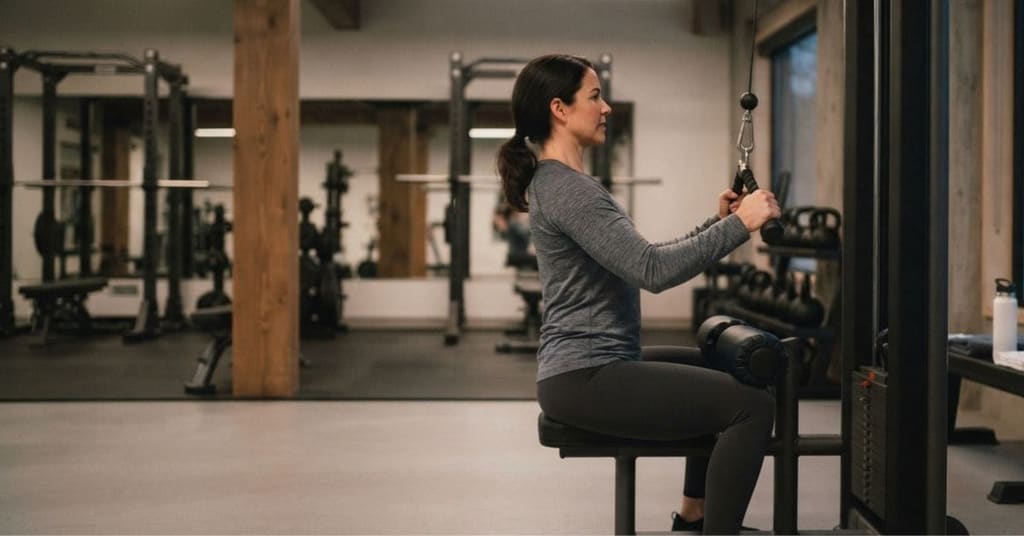
Client using a resistance machine during an indoor winter strength workout

Getting Through to Spring Without Starting Over

Ever notice how routines fall apart right after the clocks change? Nobody actually decides to quit.

You miss one dark evening, then another, and suddenly it’s been a month. Get through November, though, and winter’s honestly not so bad.

And in March, when the clocks jump forward, you’re not starting from zero.

Frequently Asked Questions About Your Workout Routine After Daylight Saving Time

When does daylight saving time end in 2026?

Daylight saving time ends Sunday, Nov. 1, 2026, at 2 a.m., when clocks in Tennessee go back one hour. Evenings get dark a lot earlier from then on.

Should I change my workout time after daylight saving time ends?

Not if your usual time still works. If the dark starts making you skip, though, move your outdoor stuff earlier or book an indoor session in that slot.

How do I stay motivated to work out when it gets dark early?

Don’t count on motivation, because it’s not going to show up once it’s dark out. Book your sessions ahead so there’s nothing to decide each night.

Is it safe to walk or run outside after dark?

It can be, with reflective gear, a light, and a well-lit route. Plenty of people just switch outdoor cardio to daylight for the winter and keep their strength training indoors.

Keep Your Routine Going at LUX Fitness

If you’re looking for a way to keep training steady through the darker months, LUX Fitness in Franklin is built around private, booked sessions.

Every new client begins with a free intro session. We walk you through the studio, talk through your goals, and explain how training works, with no pressure and no surprises.

LUX Fitness, 330 Mayfield Dr. Suite A-13, Franklin, TN 37067. Phone 615-282-5882.

0 123
  • A person walking on a treadmill in a modern gym setting, focusing on fitness.

Cardio Before or After Strength Training? A Franklin, TN Guide

It is Saturday morning in Franklin. You have a run already planned, and a strength session booked for that afternoon.

You are standing in the kitchen with a coffee, wondering whether doing both in one day is smart or slightly self-defeating.

This comes up constantly with people who already have an active life. They run, they cycle, they play tennis, and now there is a coached strength session in the calendar too.

The worry is almost always the same. Nobody wants to spend the effort twice and collect the benefit once.

One thing worth saying up front. LUX Fitness has no treadmills, bikes, or rowers on site, so this is not a question about doing cardio at the studio.

It is a question about how you sequence your own cardio around the session you already have booked.

Cardio Before or After Strength Training: What the Order Changes

The order mostly decides which effort gets your best output, not whether either one works.

You have a finite amount of fresh energy and focus inside a single training window. Whatever you do second tends to happen on tired legs and a tired nervous system.

Sports scientists describe the overlap between hard endurance work and hard strength work as the interference effect. In general terms, demanding cardio performed immediately before strength work tends to blunt how much force you can produce in that strength work.

That effect is real, but it is a matter of degree rather than an on or off switch. For most people training around a full calendar, it is a small tax, not a cancellation.

So the practical question is not whether one session ruins the other. It is which session you want to walk into fresh.

Focused young woman jogging on treadmill indoors, exuding health and vitality.

The Case for Doing Strength First

If getting stronger is your priority right now, do the strength session first.

Strength work depends on producing high force through a controlled range of motion. That is easiest when your legs are fresh, and your attention is sharp.

A hard run beforehand draws down the stored carbohydrate in your working muscles and leaves general fatigue behind. You can still train after it, but you tend to produce less than you are actually capable of, and the session records a smaller number than it should.

There is a second reason that has nothing to do with physiology. The coached session is usually the thing people quietly skip when they are tired, so putting it first protects it.

For most people whose main goal is building strength, this is the sensible default.

The Case for Doing Cardio First

If the run, the ride, or the match is the thing you genuinely care about that day, put it first.

Plenty of people training in Franklin have something specific on the calendar. A spring half marathon, a charity ride, a Saturday tennis league they do not want to show up to already flattened.

When the event matters more than the number on the strength session, the event gets the fresh slot and the strength work absorbs the fatigue instead.

The same logic applies to anything with a skill or safety component. Activities that depend on coordination and reaction time tend to go better before you are tired, not after.

You are simply choosing which effort deserves the fresh version of you.

Close-up of a man rowing indoors, showcasing fitness and determination in a gym setting.

When the Order Genuinely Does Not Matter

If there are several hours or a full day between the two, the order stops being much of a question at all.

Interference is worst when the two run back to back. Put a morning run and a late afternoon strength session on opposite ends of the day and you have mostly solved it with the calendar.

Separating them by a day works even better. A run on Saturday and a studio session on Monday means neither one is happening on the other one’s leftovers.

Easy cardio is a different category again. A walk, a relaxed spin, a round of golf. That kind of work is rarely deep enough to meaningfully change what you can produce in a strength session.

This is already how a lot of clients train, pairing their studio sessions with walking, yoga, or something recreational they actually enjoy. Everything that is actually on site is laid out on our fitness center in Franklin page.

How a Short, Controlled Session Changes the Math

The shorter and more controlled the strength session, the less the ordering question matters.

Most of this debate assumes a long, sprawling gym session with a lot of sets and a lot of standing around. Fatigue accumulates across an hour like that, so whatever came before it matters more.

An ARX session has a different shape. The resistance adapts to the effort you produce, the working time is concentrated, and you are not wandering a floor deciding what to do next.

Because the session is brief and supervised, it tends to survive a bit of pre-existing fatigue better than a long unstructured one would.

Having a coach tracking your output matters here too. When your numbers are recorded session to session, it becomes obvious if a morning run is quietly costing you, and easy to adjust.

How to Sequence Your Own Cardio Around a Studio Session

Pick the priority for the week, give it the fresh slot, and keep the other effort honest.

Start by naming what you are training for right now. General health, a specific event, or simply getting stronger. That answer decides the order more than anything else does.

Then look at spacing before you look at order. If you can put a few hours or a day between the two, do that first, and the rest of the decision gets much easier.

Finally, keep hard efforts hard and easy efforts easy. Problems usually start when every session lands in a vague middle where nothing is fresh and nothing is fully recovered.

This is general education and not medical advice. If you are managing an injury, a recent surgery, or a condition that changes how you should train, speak with your physician first.

If you are not sure where your strength currently sits, a first strength assessment gives you a baseline to sequence around instead of guessing.

Frequently Asked Questions

Should I eat differently on a day I do both?

Eat a little more, and time it around the first effort. Two sessions in a day raise the total demand, so arriving underfuelled tends to show up in whichever one comes second. A normal meal a few hours beforehand, with something small in between, covers most people.

It tends to help rather than hurt. Stronger legs and a more stable trunk generally make a given pace feel easier, particularly late in a race when form starts to slip. Some runners feel heavier for the first few weeks, which usually settles once the training becomes routine.

Keep it, but treat it as maintenance rather than progress. Dropping strength work entirely through a big training block is what tends to cost people, since strength fades faster than it builds. A lighter maintenance schedule is generally enough while your endurance work takes priority.


Usually yes, though the first few weeks may feel heavier than expected while your body adapts. Most people find an easy run the day after is comfortable, and save harder efforts for later in the week. Let how your legs feel guide the intensity.

No. LUX Fitness is a private strength studio, so there are no treadmills, bikes, or rowers on site. Clients handle their own cardio outside the studio through running, cycling, walking, classes, or recreational sports, and we help them fit it around their sessions.

If You Are Exploring Strength Training in Franklin

Sequencing is not something you need to get perfect. You decide it once, based on what you are training for, then adjust as your goals shift.

For most people, regular, focused strength sessions alongside the running, riding, or sport they already enjoy make a workable, sustainable setup.

If you are exploring what that could look like for you, you are welcome to book a complimentary session and see how a coached strength session fits into the week you already have.

0 269
  • Coach conducting personalized strength assessment inside private fitness studio

Your First Strength Assessment at LUX Fitness in Franklin, TN: What We Measure and Why It Matters

Booking a first session and not knowing what will happen is enough to make anyone nervous. If you’re picturing being put through a grueling test on day one, you can let that worry go.

Your first strength assessment isn’t a workout to survive. It’s a calm, structured starting point built to understand your body before any real training begins.

This article walks through what a strength assessment involves, what gets measured, and why that baseline is the foundation on which everything else is built.

What a First Strength Assessment Actually Is

A strength assessment is a focused first session designed to learn where you’re starting from. Think of it as gathering information, not proving anything.

It usually opens with a conversation about your history, any past injuries or aches, and what you want strength to help you do. That context shapes everything that follows.

Nothing here is about judging your current fitness level, it’s about understanding it.

From there, you move through a small set of controlled movements at a comfortable effort. The goal is to see how you move and how much force you can safely produce, not to push you to failure.

The whole experience is meant to feel measured and unhurried. You leave with a clear picture of your starting point rather than a wave of soreness.

Coach discussing health goals before personalized strength assessment session

What Happens in Your First Strength Assessment, Step by Step

Your first strength assessment is a single introductory appointment that measures where your strength actually starts. It moves through four stages: a conversation about your history, a walkthrough of each movement, an ARX strength baseline, and a plain-language debrief of your numbers.

  1. The conversation about your history and goals. Your coach asks what you have trained before, where you get aches, and what you want strength to help you do. That context decides which movements are worth measuring and which ones get handled carefully.
  2. The movement walkthrough. Before you attempt anything, your coach explains the movement and sets up the machine with you standing there. Nothing you are asked to do should be the first time you have seen it.
  3. Your ARX strength baseline and movement read. This is where the measurement happens. ARX matches resistance to the force you produce, so the session records how much force you generate, how well you control it through a full range of motion, and how your two sides compare. Your coach reads your movement at the same time, watching for restrictions and imbalances worth working around in early sessions.
  4. Your debrief and next step. Before you leave, your coach walks you through what each number means in plain language. You will know what was measured, why it matters, and what a sensible next session looks like.

None of it is a test you can fail. The effort stays comfortable and controlled throughout, because a baseline taken at your honest working strength is far more useful than one taken at your limit.

What to Expect on the Day of Your Assessment

What to Wear and How to Prepare

There’s no special prep required before you arrive. Comfortable clothes and shoes you can move in are all you need, and there’s no reason to change your routine beforehand.

The Private, One-on-One Studio Setting

The session happens in a private studio setting, one-on-one with your coach. There’s no crowd of other clients, no mirrors lined with strangers, and no reason to feel like anyone is watching or comparing.

Your coach will walk you through each movement before you attempt it, so nothing feels like a surprise. Questions are welcome the entire time, and the pace stays unhurried from start to finish.

Because the assessment uses ARX resistance technology, the equipment adjusts in real time to match the force you produce, rather than asking you to lift a fixed, unfamiliar load. That makes the process feel more like guided movement than a test you could fail.

Timing, Your Debrief, and Next Steps

Plan for the assessment to take up a normal appointment window. There’s nothing to rush through and nothing you need to cram in beforehand, since the whole point is an honest read of where you’re starting from.

Before you leave, your coach will walk you through what the numbers actually mean in plain language. You’ll know exactly what was measured, why it matters, and what a reasonable next step looks like.

If nerves crept in while you were booking, that’s completely normal. Almost everyone feels a flicker of it walking through the door, and it tends to fade within the first few minutes once the conversation starts.

From there, scheduling your first real training session is simply the next conversation, not a leap into the unknown.

Coach explaining personalized strength assessment results to new client

What We Measure During a Strength Assessment

The heart of the assessment is capturing an honest baseline of your current strength. Using ARX resistance technology, that baseline is captured as real force data rather than a rough estimate.

The session records how much force you can produce and how well you control it through a full range of motion. It also reveals differences between sides and any movements that feel limited.

Just as important is how your body moves. A coach watches for restrictions, imbalances, and anything that should be worked around carefully in early sessions.

Together, these details create a precise snapshot of where you are today. That snapshot becomes the reference point every future session is compared against.

Why a Baseline Strength Assessment Matters

Without a starting point, progress is just a feeling. A measured baseline turns “I think I’m getting stronger” into something you can actually confirm.

It also makes your training genuinely personal. Your program is built from your numbers and your movement, not a generic template meant for someone else.

That kind of precision is part of what separates real coaching from a class everyone follows at the same pace.

A baseline protects you, too. Knowing your real starting strength lets your coach load each exercise appropriately, so you’re challenged without being pushed past what’s safe.

For busy professionals who want their time to count, precision matters. Training aimed at your actual starting point wastes far less effort than guesswork ever could.

How the Assessment Shapes Your Training Plan

The data from your assessment goes straight to work. It tells your coach where to start the resistance, which patterns to prioritize, and what to approach cautiously.

It also becomes the reference every future assessment gets compared against, so progress stays measurable instead of anecdotal.

If the assessment reveals a weak link or an imbalance, your early sessions can address it before it becomes a problem. That’s far easier than fixing something after months of training around it.

From that first baseline, every session builds with intention. You’re never guessing whether you’re ready for more, because your numbers guide the next step.

A Note From Coach Ben Cluff at LUX Fitness

“People often come into their first assessment braced for something intense,” says Ben Cluff of LUX Fitness in Franklin. “Then they realize it’s really just us getting to know their body and taking honest measurements. The relief on their face is almost universal.”

“That baseline is one of the most valuable things we do,” he adds. “It’s how we make sure everything after it is built for them specifically, and it’s how they get to watch their own progress add up down the road.”

Frequently Asked Questions

What happens during the first strength assessment?

A first strength assessment begins with a conversation about your history and goals, followed by a few controlled movements at a comfortable effort. A coach measures your current strength and watches how you move, so the session gathers information rather than pushing you to your limit.

No. A strength assessment is designed to meet you exactly where you are, whether you’re a complete beginner or returning after time off. Its entire purpose is to establish your current baseline, so there’s nothing to prepare for or prove.

It shouldn’t. The assessment uses controlled, comfortable effort to measure your strength safely, not to exhaust you. You should leave with a clear picture of your starting point rather than the heavy soreness of a maximal workout.

A strength assessment establishes your initial baseline before training begins, while progress tracking measures how that baseline changes session to session. The assessment is your starting line, and progress tracking is how you follow the road from there.

Most first assessments fit comfortably within a single introductory session. It’s an efficient process focused on gathering the right information, so you get a complete baseline without spending a long time on the floor.

Ready for Your First Strength Assessment?

A first strength assessment isn’t a test to pass. It’s the moment your training becomes genuinely yours, grounded in real information about your body.

If you’re exploring where to begin, our strength assessment and testing service can walk you through it, and you can see how that baseline turns into ongoing progress in our guide to how ARX measures your strength progress.