Category : Wellness Center

0 51
  • Charcoal t-shirts hanging next to supplement canisters on shelves.

Supplement Bar (Protein and Electrolytes) in Franklin, TN

The supplement bar at LUX Fitness in Franklin is stocked with electrolytes and protein, and members can use it every session at no extra cost. Members also get 30% off all Prestige Labs supplements through the LUX app.

That’s the whole idea. Electrolytes before you train, protein after, and then you get on with your day.

What the Supplement Bar in Franklin Includes

Electrolytes and protein. Grab electrolytes before your session and protein once you’re done.

You don’t have to bring a shaker from home or remember to pack anything. It’s just there, and whether you use it is up to you.

Complimentary Supplements for LUX Members

The bar is part of your membership, not a paid add-on. Members get complimentary access to it, so there’s nothing extra to buy at the studio.

You can see everything else membership covers on our personal training packages page. The supplement bar is just one less thing to think about on a packed day.

Clear plastic bulk dispensers filled with colorful supplement powders.

Prestige Labs Discount for LUX Members in Franklin

LUX Fitness members get 30% off all Prestige Labs supplements, ordered through the LUX app. If you already take supplements at home, it’s a way to get quality ones without guessing.

If you don’t, that’s fine too. Nobody at the studio is going to push you to buy anything.

How the Supplement Bar Fits Our Franklin Wellness Center

The supplement bar is part of the wellness side of LUX Fitness, which is really about the stuff around your workout. Recovery, habits, and a little support so you leave feeling better instead of run down.

You can see how it all fits on our wellness center in Franklin page. Training, the Bullet Proof whole body vibration plates, and the supplement bar all work together there.

We don’t hand out nutrition plans or make health promises about supplements. If you’ve got dietary questions, your doctor or a registered dietitian is the right call.
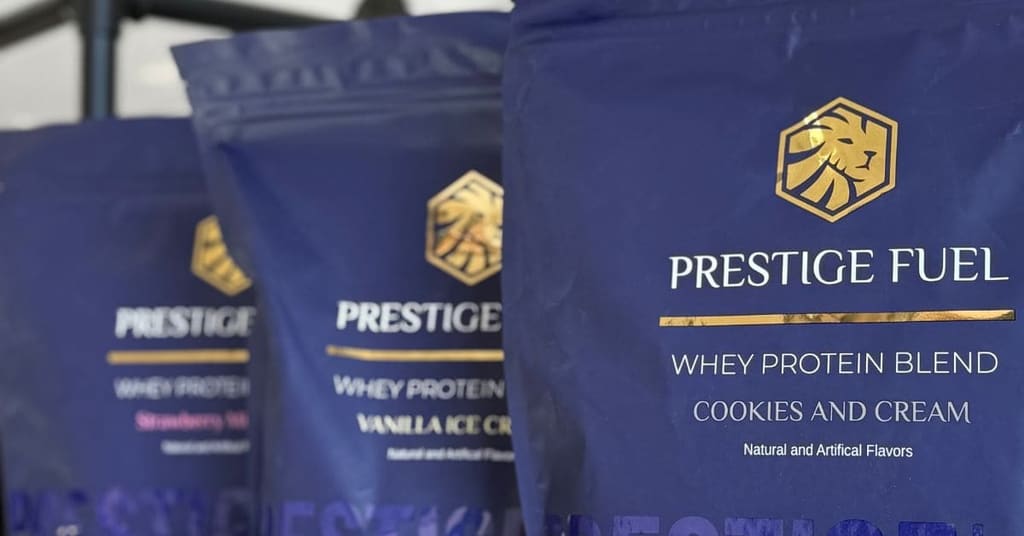
Blue Prestige Fuel whey protein powder bags lined up.

Why the Supplement Bar Helps Busy Franklin Professionals

A lot of our clients squeeze sessions between meetings, school pickup, and everything else. Having electrolytes and protein waiting at the studio takes one small chore off the list.

It’s a small thing, sure. Small things are kind of the point at a private studio, though.

Frequently Asked Questions About the Supplement Bar in Franklin

Is the supplement bar included in a LUX Fitness membership?

Yes. Members get complimentary access to the supplement bar, so electrolytes before a session and protein after don’t cost anything extra.

What’s on the supplement bar?

Electrolytes and protein. Members usually take electrolytes before a session and protein after.

Do members get a discount on supplements for home?

Yes, LUX Fitness members get 30% off all Prestige Labs supplements through the LUX app. Whether you use it is completely up to you.

Do I have to use the supplement bar?

No. It’s there if you want it, and nobody at the studio will push you to use it or buy anything.

Does LUX Fitness give nutrition advice?

No, we don’t write nutrition plans or make health claims about supplements. For dietary questions, talk with your doctor or a registered dietitian.

Visit the Supplement Bar at LUX Fitness in Franklin

If you’re exploring LUX Fitness, you’ll see the supplement bar on your first visit.

Every new client begins with a free intro session. We walk you through the studio, talk through your goals, and explain how training works, with no pressure and no surprises.

Call us at 615-282-5882 to set it up. LUX Fitness is at 330 Mayfield Dr. Suite A-13, Franklin, TN 37067.


0 43
  • Female trainer providing hands-on coaching during a dumbbell strength exercise

Finished Physical Therapy? How to Keep Getting Stronger in Franklin, TN

You made it through physical therapy. The pain’s settled, you’re moving again, and then the appointments just stop, and nobody really says what comes next.

Turns out that’s a pretty good time to start strength training. Once your therapist gives you the OK, LUX Fitness in Franklin can help you keep getting stronger with one-on-one coaching and controlled resistance.

What Finishing Physical Therapy Usually Means

It basically means you can handle things on your own now. You’ve got enough movement back that weekly visits with your therapist don’t make sense anymore.

Thing is, “done with PT” and “back to full strength” aren’t the same, and most therapists will tell you so if you ask. They were aiming at something specific, like walking without a limp or reaching the top shelf, and once you hit it the visits wound down.

Plus, the muscles around the injury have basically been on break for months. Protecting that spot was smart, but now those muscles are behind the rest of you.

Why Progress Often Stalls After Physical Therapy

Mostly because the structure disappears. For weeks someone booked your appointments, watched your form, and told you when to add a bit more, and then one day that’s just over.

After that, people tend to go one of two ways. Some stick with the same easy home exercises for months because they feel safe, and others jump right back into their old gym routine and can’t figure out why the ache is back.

Neither group did anything wrong. They just got handed their independence with no plan, and a little nagging worry about undoing all that work.

Strength Training After Physical Therapy in Franklin

Right now you want two things: someone watching closely, and resistance that stays under control. Every session at LUX Fitness in Franklin is one-on-one with a coach for exactly that reason.

Your coach sets you up on the machine, watches how you move, and plans around what your body handles well right now. Not what you did last year, and not what some online program says.

To be clear, your coach doesn’t diagnose anything and isn’t a replacement for your therapist. Their job’s simpler than that: help you keep getting stronger without stirring up the thing you just spent months fixing.

Got notes or restrictions from your therapist? Bring them, so your coach is working off the same info.

How ARX Keeps the Next Phase Controlled

With ARX, the machine only pushes back as hard as you push. Push harder and you get more, ease off and it eases off with you, even halfway through a rep.

There’s no bar to drop and no weight to guess at. The movement stays smooth start to finish, without the jerky swing that gets people in trouble with free weights.

That’s the idea behind our safe strength training approach for people coming back from an injury. It’s still hard work, just not reckless work.

Tracking Strength So You Know You’re Still Improving

ARX records every rep, force output included. After PT that matters more than you’d think, because how you feel on a given day isn’t a great gauge.

Some mornings you’re stiff and sure you’ve slid backwards. A couple of days later you feel great and want to do way too much, and the numbers on the screen settle both.

And don’t skip rest days, because your body does its rebuilding after the work’s done. That’s why we treat recovery as part of getting stronger.

When to Check Back With Your Physical Therapist or Doctor

If the old pain comes back, feels different, or won’t settle after you train, call your therapist or doctor. Don’t just wait it out.

Same with new swelling, numbness, or a joint that feels like it might give. Those are their department, not ours.

We’re a strength studio, not a clinic, and training isn’t a treatment for injuries. If anything feels off mid-session, tell your coach right then and there.

This is general education, not medical advice. If you’re on the fence about being ready, your therapist is the one to ask before you book.

Frequently Asked Questions About Strength Training After Physical Therapy in Franklin

How soon after physical therapy can I start strength training?

When your therapist says you’re cleared for normal activity. There’s no standard date, since it depends on the injury and how it was treated.

If you’re unsure, ask at your last appointment. They get asked that all the time.

Should I keep doing my physical therapy home exercises?

Keep doing them for as long as your therapist wants you to. They’re aimed right at the spot you rehabbed, and they won’t get in the way of strength training.

Tell your coach which ones are on your list so you’re not doing the same work twice.

Will I reinjure myself if I start lifting again?

There’s no such thing as zero risk, with lifting or anything else. What we can tell you is that plenty of setbacks come from rushed reps and guessed weights, and coached, controlled training is set up to avoid both.

A coach watching your form helps more than people expect. And if something hurts, you stop.

What should I tell my coach about my injury?

Tell them what got hurt, how it was treated, and what your therapist said to avoid. Also mention anything that still feels tight, weak, or a little sketchy.

If you’ve got discharge notes, bring them. The more your coach knows going in, the smoother those first sessions tend to go.

Is ARX training the same as physical therapy?

No, they’re two different jobs. PT figures out what’s wrong and treats it, while we help you get stronger once you’ve been cleared.

It’s more of a handoff. Your therapist gets you back to working order, and we help you keep building from there.

Keep Building at LUX Fitness

Getting through PT is real work, and you should be proud of it. Now the goal is just to keep that progress from fading once the appointments stop.

If you’re exploring what the next phase could look like, book a free intro session at LUX Fitness. We’ll show you around the studio, hear where you’re at, and explain how training works, with no pressure and no surprises.

0 40
  • Close-up of a man's hand gripping a dumbbell in an indoor gym setting.

Grip Strength: Why It Matters More Than You Think and How to Build It in Franklin, TN

Most of us never think about grip strength until it quits on us. The jar won’t open, or the grocery bags start sliding out of your fingers before you get to the door.

Good news, though: it doesn’t need its own workout. At LUX Fitness in Franklin, your hands get trained every time you pull against adaptive resistance.

What Grip Strength Is and Why It Matters

Grip strength is just how hard (and how long) your hands and forearms can hang on to something. Squeezing a handle counts, and so does pinching something flat or carrying a load until your fingers want to give up.

Why does it matter? Pretty much everything you lift starts with your hands, whether it’s a heavy suitcase, a toddler who’s decided to go limp, or a bag of mulch in the spring.

If your grip goes first, the rest of you never gets a turn. Your back and legs could keep going, but you set the bag down anyway.

Why Grip Strength Fades When You Sit All Day

Grip fades when your hands stop holding heavy stuff. Keyboards, phones, and steering wheels barely ask anything of your forearms, and a few years of that adds up.

Age plays a part too, since strength slips anywhere it isn’t trained. You just notice it in your hands first, because you use them all day.

None of this is cause for alarm. It’s just a reason to give your grip some regular work.

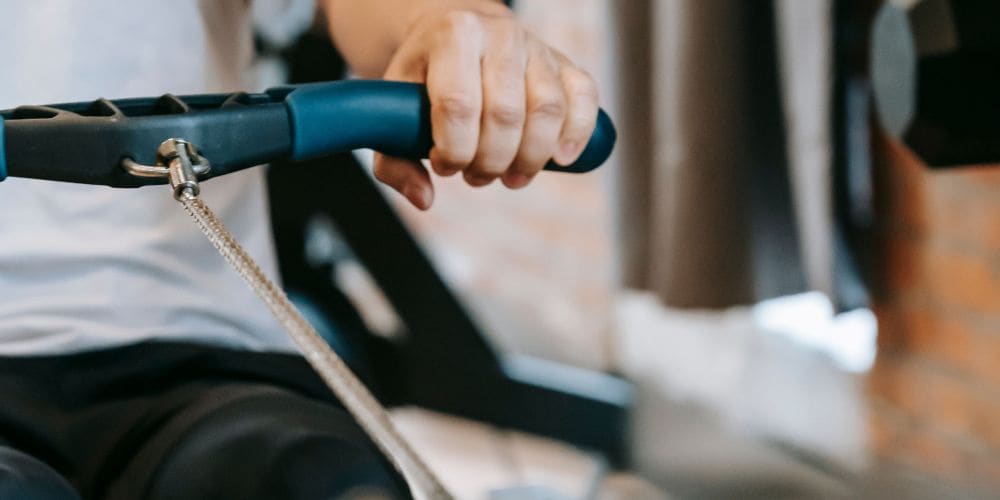
Close-up of a man rowing indoors, showcasing fitness and determination in a gym setting.

How Strength Training Builds Grip Without Extra Exercises

Any pulling movement trains your grip, since you’ve got to hold the handles to move the resistance. On the ARX machines at LUX Fitness, that’s rows, pulldowns, and whatever other pulls your coach puts in your plan.

ARX resistance adjusts to the force you put out through the whole rep. There’s no break for your hands at the top or bottom, so they work as long as the rest of you does.

That matters more than it sounds. Your forearms get a long, steady effort instead of a quick squeeze, which is a lot like carrying groceries or a sleeping kid.

Your coach also keeps an eye out for the point where your grip quits before your back or arms do. When that happens you’ll both see it, and the plan gets adjusted.

Grip Strength Training Moves You Can Do at Home

Between sessions, a few small habits give your hands extra practice without adding a workout. Carry the groceries in yourself and hang on to the bags a little longer than you have to.

Hanging from a sturdy bar teaches your hands to hold your body weight, even for just a few seconds. The monkey bars at the playground work fine next time you’re out with the kids.

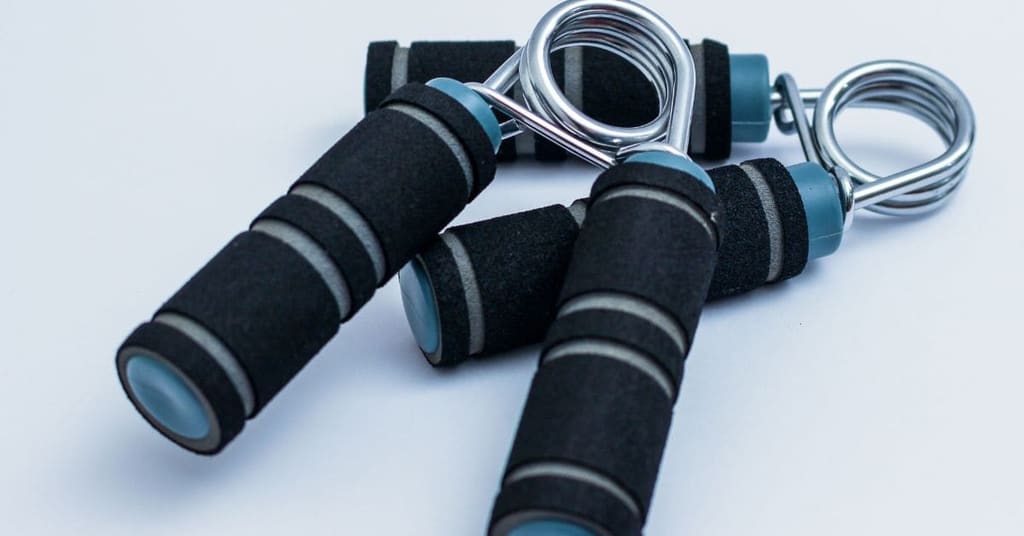
On desk days, you can squeeze a tennis ball during a long call. It won’t build much strength by itself, but it’s better than your hands sitting there doing nothing.

Keep all of this comfortable, and stop if your wrist or elbow starts to complain. This is general education, not medical advice.

What Stronger Hands Change Outside the Studio

Mostly, everyday stuff gets easier. Groceries come in from the car in one trip, jars stop being a two-person job, and holding a sleeping kid through the end of a movie doesn’t leave your forearms burning.

It shows up on weekends, too. A golf club, a pickleball paddle, and the leash of a dog who just spotted a squirrel all depend on your hands holding on.

A lot of people don’t notice their grip improving until someone hands them a stubborn jar. Then it clicks.

Grip Strength and Wellness at LUX Fitness in Franklin

At LUX Fitness, we see grip as one piece of your overall wellness. You don’t need special gadgets for it, and you shouldn’t have to research it on your own.

It’s one of the quieter results of steady, coached strength training, along with how you recover and how you feel day to day. That’s the approach behind our wellness center in Franklin.

Small details like this get handled best when someone’s watching you train. Breathing under effort is another one, which we covered in how to breathe when you lift.

Frequently Asked Questions About Grip Strength in Franklin

Do I need special grip exercises to build grip strength?

Most people don’t, as long as they’re doing regular pulling movements in their strength training. Holding the handles against real resistance works your hands and forearms on every rep.

Extras like carrying groceries or hanging from a bar can help. They’re optional.

Why does my grip give out before the rest of me?

Your hands and forearms are smaller muscles, and they usually haven’t gotten as much training as your back or legs. It’s really common if you sit at a desk most of the day.

It tends to get better as you keep doing pulling movements. Just tell your coach when it happens so they can plan around it.

Will lifting straps or gloves weaken my grip?

Straps take most of the work off your hands, so leaning on them all the time can leave your grip behind. Gloves mostly change comfort and friction, and matter a lot less.

At LUX Fitness you hold the ARX handles directly. Your grip trains right alongside everything else.

Is grip strength affected by age?

Yes, it tends to drop with age if you don’t train it, just like strength anywhere else in your body. Regular strength training is one of the most practical ways to hang on to it.

It’s never too late to start. Your hands respond to training the way the rest of your muscles do.

What if my wrists or hands hurt when I grip?

If gripping hurts, check with your doctor or a physical therapist before pushing through it. Pain in the wrist, thumb, or elbow can come from things training won’t fix.

Let your coach know before your session as well. They can work around a sore spot while you get it looked at.

See How Grip Fits Into Your Training at LUX Fitness

Grip’s easy to ignore until it costs you something. And you don’t need a separate routine to fix it.

If you’d like to see how coached strength training works your hands along with everything else, book a free intro session at LUX Fitness. We’ll walk you through the studio, talk through your goals, and explain how training works, with no pressure and no surprises.

0 137
  • Three adults in a gym performing stretches on floor mats, focusing on fitness and flexibility.

Do You Need to Stretch Before Lifting? What a Good Warm-Up Does

You are parked outside the studio with eight minutes to spare.

Somewhere in the back of your mind there is a high school coach with a clipboard, counting down a hamstring stretch while the whole team held it in silence.

So you wonder whether you should be doing some version of that right now. In the parking lot. In work clothes.

It feels like the responsible thing to do. It also feels slightly ridiculous.

Here is the short version. The stretch you remember was never doing the job you think it was doing, and something else was.

What Stretching Before Lifting Actually Does

Static stretching is a flexibility tool, not a warm-up.

Static stretching means holding a muscle in a lengthened position and staying there. The hamstring hold. The quad pulled back against a wall. The arm dragged across the chest.

Done regularly over weeks, that kind of work can improve how comfortable you are in a longer position. That is a real benefit and it is worth having.

What it does not do is prepare you to lift. Holding still does very little to raise tissue temperature, and it does nothing to rehearse the movement you are about to perform.

There is one more point worth knowing. Long, aggressive static holds immediately before hard effort may leave a muscle feeling slightly less responsive for the first working sets. Not dangerous, just not helpful at that particular moment.

Man doing seated stretch in gym, emphasizing fitness and flexibility training.

Why the Pre-Workout Stretch Became a Habit

Most of us learned this from someone managing a group, not from someone assessing our bodies.

A team stretch is easy to run. Everyone does the same thing at the same time, where the coach can see them, and it takes no equipment at all.

Somewhere along the way it got attached to a broader idea about preventing injuries, and it stayed attached.

The thinking has moved on since then. The habit mostly has not, which is why intelligent adults still feel a small pang of guilt for skipping the hamstring hold.

You are not being careless when you skip it. You are reaching for a different tool.

What a Warm-Up Is Actually For

A warm-up has three jobs, and static stretching does none of them well.

The first is temperature and circulation. Muscle and connective tissue behave differently once they are warm, and getting there takes gentle movement rather than stillness.

The second is rehearsal. Your body performs a pattern better when it has just done a lighter version of that same pattern.

The third is the nervous system. Strength is partly a question of how well your brain recruits the muscle, and that connection sharpens with a few progressive efforts rather than a held stretch.

Put simply, a warm-up should look like a smaller version of the thing you are about to do. Stretching sits outside that description.

What a Good Warm-Up Looks Like Before You Lift

Movement, not stillness.

Start general. Something that lifts your breathing and body temperature a little without turning into a workout of its own.

Then take your joints through their range under control. Slow and deliberate, which is close to the opposite of holding a position and waiting for a count.

Then rehearse. Take the actual movement you are about to load and perform it lighter first, with your attention on control rather than effort.

Breathing belongs in this stage too. Getting your breath organized before the first hard effort is part of the setup, and how to breathe when you lift is worth understanding before you add meaningful load.

This is general education and not medical advice. If you are managing an injury, a recent surgery, or a condition that changes how you should train, speak with your physician first.

Why a Shorter, Controlled Session Changes the Calculation

Much of the traditional warm-up exists to protect you from the gym, not from the work.

In an open gym you are balancing a loaded bar, guessing at a starting weight, and managing momentum. A long ramp-up makes sense in that environment, because there are more ways for a set to go sideways.

A session at LUX Fitness in Franklin, TN is built differently. Adaptive resistance, known as ARX, matches the machine’s force to whatever you produce on each rep, so the load meets your actual output instead of a number you guessed at beforehand.

The movement is guided, the range is controlled, and a coach has the session set up before you walk in. The session itself includes a brief warm-up, so there is nothing for you to invent in the parking lot.

That structure is also what makes the format easy to repeat week after week. The preparation is built into the appointment rather than bolted onto the front of it.

Where Stretching Still Belongs

Keep stretching. Just move it somewhere it can do its actual job.

After training is a reasonable home for it. You are already warm, and there is no heavy effort waiting on the other side of it.

A separate block on a different day works just as well, and often better, because you can give it real attention instead of thirty distracted seconds.

If mobility is genuinely a limiting factor for you, it deserves to be its own project. That sits naturally alongside strength work within a broader approach to training and wellness, rather than being squeezed into the minutes before a lift.

Frequently Asked Questions

Is it bad to stretch before lifting?

Not bad, just poorly timed. The real issue is that long static holds do not prepare you for load, and they can leave your first sets feeling slightly flat. Save the deeper work for after training, when you are already warm and nothing hard is waiting on the other side of it.

Static means holding a lengthened position still. Dynamic means moving a joint through its range in a controlled, repeated way. Dynamic work belongs in a warm-up because it raises temperature and rehearses movement, while static work belongs with recovery and flexibility goals, where holding the position is the point.

Yes. Guided equipment removes the balancing and load-guessing problem, but your tissue still performs better warm and your nervous system still benefits from rehearsal. That is precisely why a brief warm-up is part of the session rather than something left for you to remember.

There is no need. Arriving warm is not a requirement, because the preparation happens inside the session. If you have been at a desk all day, a short walk before you arrive is more useful than a stretch, and considerably easier to actually do.

Not on its own. Tightness usually tracks with how much you move across the week rather than with a pre-lift ritual. Regular strength work through a full range, plus mobility given its own dedicated time, tends to do more for how you feel than a rushed hold.

If You Are Exploring Strength Training in Franklin

You do not need to settle the stretching question before you begin.

It resolves itself the moment the warm-up becomes part of the session instead of something you improvise in the car.

If you are exploring what measured, private strength training looks like in Franklin, you are welcome to book a free intro session and see how the format works from the inside.

0 133
  • Athlete tightening barbell plates in a gym, emphasizing fitness and strength.

How to Breathe When You Lift: A Guide for ARX Training in Franklin, TN

You are deep into a hard rep and the resistance has not let up once. It matches you the entire way.

Your face is warm. Your jaw is locked.

Then it registers. You have not taken a breath since your coach said go.

You let one out in a rush, and the next few seconds feel completely different. Steadier. More like something you are doing on purpose rather than surviving.

Almost nobody raises a hand mid-session to ask how they should be breathing. It feels like a thing you were supposed to have figured out years ago.

So here it is in writing, for the kind of training you are actually doing.

Why the Usual Advice on How to Breathe When Lifting Does Not Apply Here

Almost every article on this question was written for a barbell, and there are no barbells at LUX Fitness.

The standard answer goes like this. Take a big breath, brace your midsection hard, hold that pressure through the heaviest part of the lift, then release at the top. That held breath is called the Valsalva maneuver.

It exists to solve one specific problem. When a loaded bar is sitting across your back or hanging from your hands, your torso has to become rigid enough to keep your spine safe under it.

LUX Fitness has no barbells and no free weights. The ARX machines are what you train on: motor-controlled, fixed in their path, and unable to fall on you.

The problem the Valsalva maneuver was built to solve simply is not present in your session. Borrowing the answer anyway just means you hold your breath for no reason.

Black iron dumbbells on a paved ground, perfect for outdoor strength training and fitness routines.

What Adaptive Resistance Changes About the Way You Breathe

Adaptive resistance changes how long a rep lasts, and rep length is what really determines your breathing.

ARX matches the force you produce moment by moment. When you are strong, it pushes back harder. When you fatigue, it eases with you and stays right at the edge of your effort.

That removes the parts of a lift where you normally get a breather. There is no easy stretch at the bottom, no lockout at the top, no rack to set the weight down on.

A barbell set is a series of short efforts with recovery built into the gaps. An ARX set is closer to one long, continuous output.

You cannot hold your breath through something that long, and you should not try to.

The Breathing Pattern That Works Under Continuous Resistance

Breathe continuously, push your air out as the effort peaks, and never let the cycle stop.

Keep a steady rhythm through both directions of the movement. The pushing phase and the lowering phase are both working phases on an ARX machine, so neither one is a place to park your breath.

Exhale through slightly pursed lips as the effort builds, then let the inhale come during the less demanding portion of the range. Long, unhurried, out and in.

It will not land as a tidy one breath per rep, and that is fine. Reps here run longer than what that rule was written for, so you may take several breaths inside a single rep.

Let the rhythm find its own pace. The only requirement is that it keeps going.

Why You Hold Your Breath Without Ever Deciding To

Breath holding under effort is a reflex, not a discipline problem.

Your body braces when it senses hard work, and the diaphragm gets pulled into that bracing along with everything else. Concentration makes it worse. The harder you focus on the movement, the less of your attention is left over for breathing.

Holding your breath during exertion temporarily raises pressure inside the chest and abdomen, and blood pressure rises with it. That is well established and, for most healthy people, brief and unremarkable when it happens under a barbell for a second or two.

Over a long continuous rep, though, a sustained hold is worth avoiding. You will also just feel worse doing it, lightheaded and flushed, and you will quit the set before your muscles are actually finished.

This is general education, not medical advice. If you have a blood pressure or heart condition, are pregnant, or are returning from any medical event, speak with your physician and tell your coach before your next session.

How to Breathe When Lifting If You Are New to Adaptive Resistance

For your first sessions, the only goal is to stay audible.

If you can hear your own breathing, you are not holding it. That single test beats any counting method, and it works while you are too busy to think.

Do not time anything. Do not try to match a specific ratio. Just make noise on the way out and let the air come back in on its own.

Form, breathing, and progression are what your coach is following while you are on the machine. Breathing is the one clients are least likely to bring up on their own.

It is also one of the quieter details behind the broader wellness approach LUX Fitness takes to strength in Franklin, where how you train matters as much as how hard.

Woman performing bench press exercise with guidance in a gym setting.

What Changes Once Breathing Stops Being Something You Manage

When your breathing runs itself, the sessions become noticeably easier to finish.

Clients who fix this usually complete reps they used to abandon early. The muscles were not out of capacity. The breath was.

You settle faster between exercises, and you walk out clear-headed rather than rattled. That matters more than it sounds when sessions are short and each one has to count.

It carries past the session too. Breathing well is one part of training in a way your body can absorb, alongside how muscle recovery after strength training works.

Frequently Asked Questions

Should I ever hold my breath during an ARX rep?

A brief pause as you change direction is normal and nothing to correct. What is worth avoiding is a deliberate hold through the working portion of a rep. The machine controls the resistance and the movement path, so you are never stabilizing an external load that could shift or fall.

Stop the set and tell your coach. Lightheadedness during effort is very often a sign that breathing stopped, and it usually settles quickly once normal breathing resumes. It is not something to push through quietly, and your coach would far rather adjust the set than have you finish it uncomfortable.

Not much during a hard working set. Under real effort, your body will take air the fastest way available, and forcing nasal breathing usually just adds one more thing to think about. Nasal breathing is a reasonable preference during warm-ups and between exercises, when demand is lower.

It gets louder and faster, and that is expected. As fatigue builds across a session, your breathing deepens on its own to keep up with the demand. The pattern itself does not change, since you are still exhaling as effort peaks and never holding. Let the pace rise rather than forcing it.

Indirectly, yes. Breathing does not build muscle on its own, but it determines whether you reach the end of a set on your terms or stop early because you are starved of air. Finishing the work you came to do is what drives progress over weeks and months.

Put Proper Breathing Into Practice at LUX Fitness

Breathing quietly decides how much of a session you actually complete. It is also the kind of detail that only gets corrected when someone is watching you train.

Every session at LUX Fitness is one-on-one, which means nobody has to raise a hand and ask. The coach is already there.

If you are exploring what coached strength training under adaptive resistance would look like for you, you are welcome to book a free session and see how it feels with someone guiding the details.

0 219
  • Coach discussing muscle recovery after personalized strength training session

Muscle Recovery After Strength Training at LUX Fitness in Franklin, TN: Why Rest Is Part of Getting Stronger

If you grew up believing more is always better, resting can feel like cheating. That instinct is understandable, and it’s also the thing quietly holding a lot of people back.

Strength isn’t built during the workout. It’s built in the hours and days after, while your body repairs and adapts.

This article explains what actually happens when you recover, why rest is a non-negotiable part of getting stronger, and how recovery fits into a sustainable approach to training. By the end, resting on purpose should feel less like giving something up and more like the smartest part of your plan.

Why Muscle Recovery After Strength Training Matters

When you train, your muscle fibers experience tiny amounts of stress. That stress is the signal to adapt, but the adapting happens afterward, not during the session.

Your body uses recovery time to repair those fibers and rebuild them a little stronger than before. Skip that window, and you’re interrupting the very process you trained to trigger.

This is why recovery is not the opposite of progress. It’s the second half of it.

Muscle groups generally need around 48 hours before they’re ready to be worked hard again. Respecting that rhythm is what allows strength to accumulate instead of stalling.

Relaxed athlete recovering comfortably after productive strength training session

What Happens When You Skip Recovery

Training hard every day without adequate rest doesn’t speed things up. It tends to do the opposite.

Without recovery, fatigue builds, performance dips, and the risk of nagging strains climbs. Your body never gets the chance to complete its repairs before you disrupt them again.

Over time, that pattern leads to burnout and frustration. People push harder, see less, and eventually conclude that training “doesn’t work” for them.

Recovery breaks that cycle. It lets each session build on the last rather than dig a deeper hole.

How Efficient Training at LUX Makes Recovery Easier

One of the advantages of a focused, efficient training approach, like the ARX-based training used at LUX, is that it’s built around recovery rather than against it. Short, high-quality sessions a couple of times a week give the body time to adapt between them.

This is a very different model from grinding through long workouts most days of the week. It delivers the stimulus you need without leaving you perpetually depleted.

For busy professionals, that rhythm fits real life. You train hard when you train, then let recovery do its work while you get on with your week.

The result is a routine you can actually sustain for years, which is where the real, lasting benefits of strength come from. It’s less about any single workout and more about staying consistent long enough for the results to add up.

Fatigued professional experiencing consequences of inadequate workout recovery

Why Recovery Matters More As You Get Older

How Your Recovery Needs Change With Age

Recovery needs change as you get older, even when your training intensity doesn’t. The same session that left you ready to go again in a day might take a little longer to bounce back from now.

That’s not a setback, it’s just how the body works over time. Training that ignores this tends to catch up with you eventually, usually in the form of nagging aches or slower progress.

Why Recovery Protects Your Joints and Long-Term Strength

For busy professionals balancing a career, a family, and everything in between, this is exactly where a thoughtful approach to training pays off. Sessions built around real recovery protect your joints and connective tissue, not just your muscles.

This is also where longevity comes into play. Training that respects recovery today is what keeps you strong, mobile, and able to keep doing the things you enjoy for years to come, not just for one good season.

Longevity and consistency tend to go hand in hand here. The people who keep training for the long run usually aren’t the ones who trained hardest for a few months, they’re the ones who built a plan sustainable enough to stick with for years.

How Coaching at LUX Adjusts As You Age

At LUX, this shows up in how sessions are paced and in how much attention goes into form as you train. Working with a coach in a private, appointment-based setting also means small adjustments happen in real time, before minor issues become bigger ones.

There’s no group pace to keep up with and no generic program to follow along the way. A session can flex around how you’re actually recovering that week, which matters more the longer you’ve been training.

None of this requires you to track every metric or overthink each session. It’s simply part of how a good coach thinks about your training over months and years, not just the next 45 minutes.

The goal isn’t to train less as you get older. It’s to train smarter, so the effort you put in now keeps paying off well into the future.

What Recovery Looks Like at LUX

Recovery at LUX starts with how training is structured. Sessions are spaced to give your body the time it needs, so rest is designed into the plan rather than left to chance.

Beyond the schedule, the studio’s recovery amenities support the process between sessions. These are the small, restorative details that help you feel refreshed and ready for your next visit.

Good recovery habits at home matter just as much. Quality sleep, where most repair happens, and solid nutrition round out what the studio provides.

Taken together, it’s a complete approach: train with intention, then recover with just as much purpose. Nothing about it is complicated, it’s simply built to work with your body instead of against it.

A Note From Coach Ben Cluff at LUX Fitness

“A lot of people think resting means they’re being lazy,” says Ben Cluff of LUX Fitness in Franklin. “I try to reframe it for them. Rest is when the strength you earned in the session actually gets built. You’re not skipping the work, you’re finishing it.”

“Once clients trust that, they stop feeling guilty about rest days,” he adds. “And funny enough, they usually get stronger faster, because they’re finally letting their bodies keep up with the work they’re putting in.”

Frequently Asked Questions

How long should muscles recover after strength training?

Most muscle groups need roughly 48 hours of recovery before being trained hard again. That window gives your body time to repair and rebuild the muscle fibers, which is when strength is actually gained, so spacing sessions accordingly helps progress accumulate.

Rest is when your body repairs the muscle fibers stressed during training and rebuilds them stronger. Without adequate recovery, that repair never finishes, which leads to fatigue and stalled progress. Rest isn’t a break from building strength; it’s a core part of it.

Yes. Training the same muscles hard every day without recovery can cause fatigue, reduced performance, and a higher risk of strains. More frequent isn’t always better. Consistent, well-spaced sessions with real recovery between them produce better long-term results.

Quality sleep is the biggest factor, since most muscle repair happens while you sleep, so aim for seven to nine hours. Good nutrition, adequate spacing between hard sessions, and gentle

Yes. Even short, efficient sessions create the stress that triggers muscle repair, so your body still needs recovery time between them. In fact, a focused training model is built around that spacing, which is part of what makes it sustainable.

Ready to Train (and Recover) With a Plan at LUX?

Getting stronger isn’t only about how hard you push. It’s about giving your body the room to turn that effort into real, lasting strength.

If you’re exploring a training approach that treats recovery as seriously as the work, the team behind our recovery amenities at LUX Fitness can show you how it fits together, and you can read more about training comfortably in our guide to joint-friendly strength training.