Author : Ben Cluff

About the Author:

Owner and co-founder of LUX Fitness, a premium strength training studio built around smarter, more efficient fitness. With a background in sales, leadership, and personal development, Ben is passionate about helping people build strength, confidence, and discipline without spending countless hours in the gym. Through LUX Fitness, he helps members achieve meaningful results with personalized training, advanced equipment, and a high-performance approach to health and wellness.

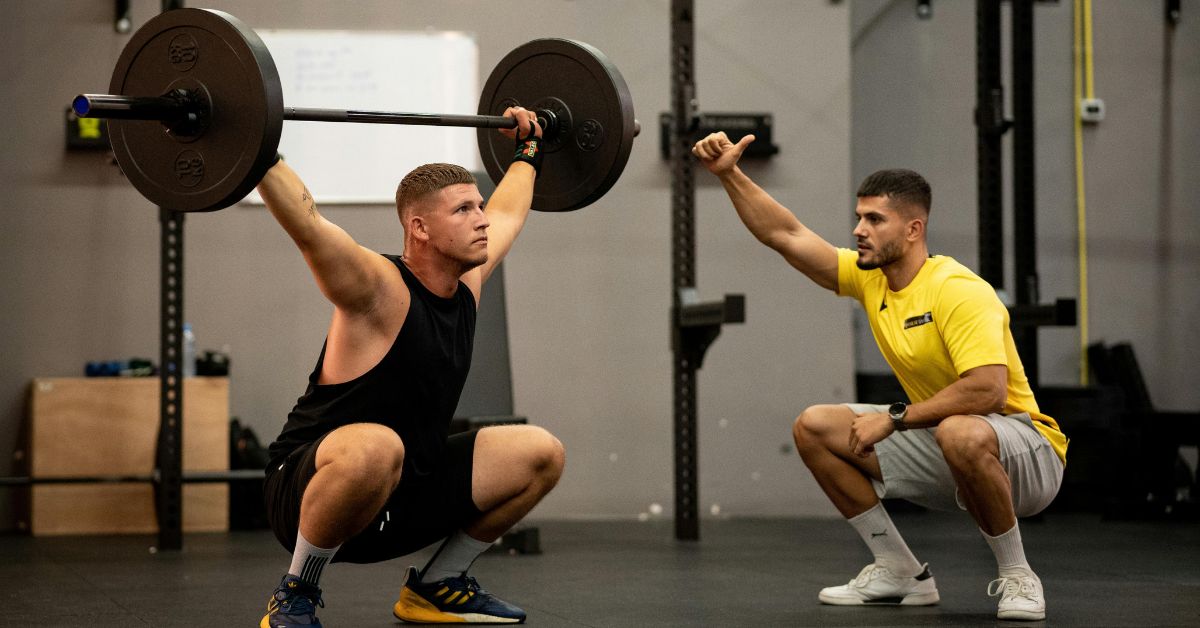
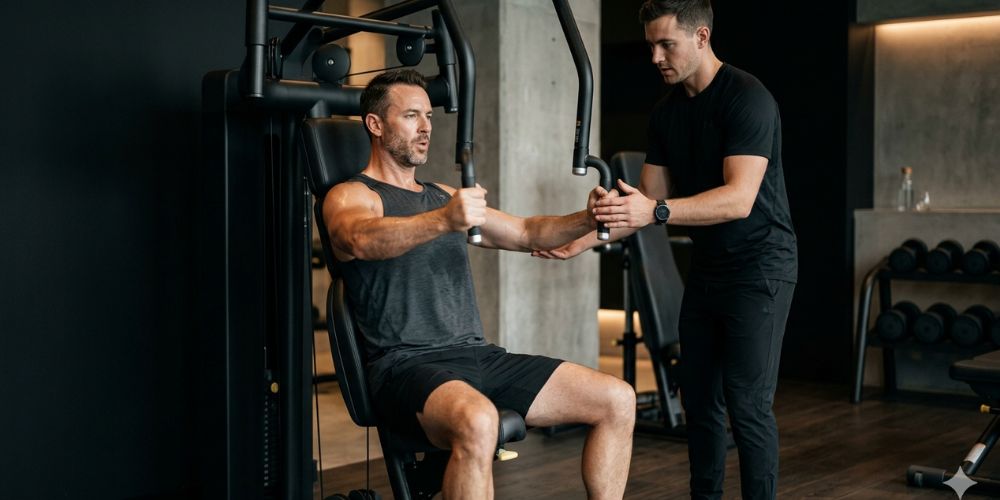
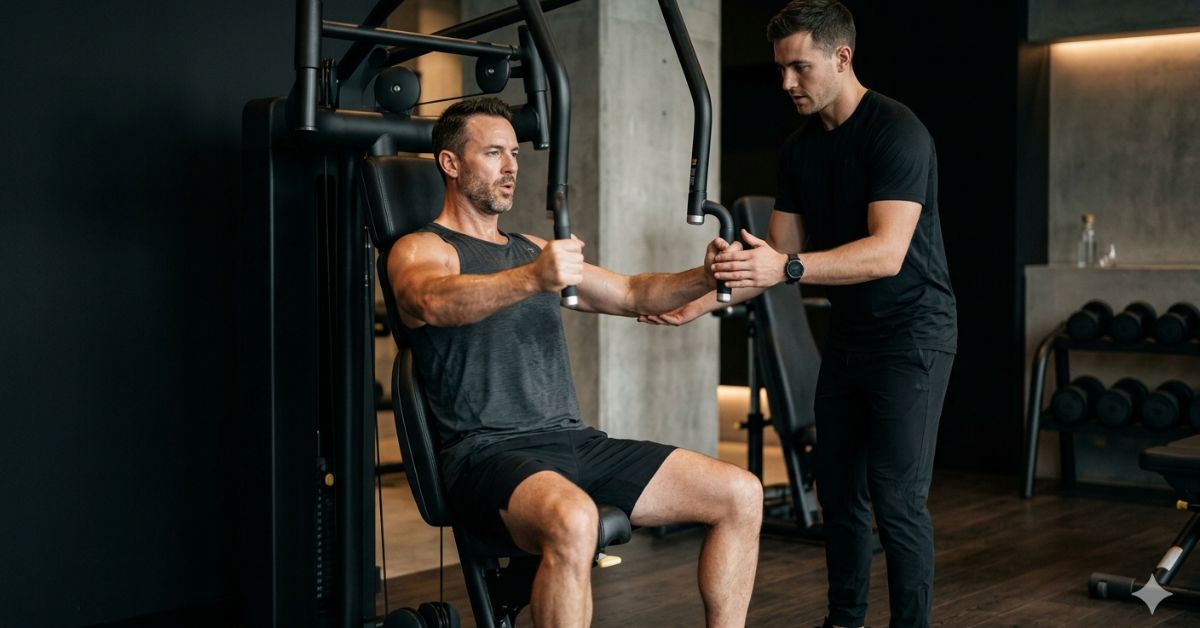
Personal trainer providing one-on-one coaching during a workout

Personal Training vs Group Fitness: Which Actually Gets You Stronger?

It’s 5:45 and the parking lot is already full. Inside, twenty-two people are lined up on mats while someone counts down from ten over a speaker.

You find a spot near the back. The person beside you is half your age and moving twice as fast.

Forty-five minutes later you’re soaked, your heart rate is high, and you have no idea whether you got any stronger. Maybe. Probably? Hard to say.

That uncertainty is what sends most people looking up personal training vs group fitness in the first place. Both formats work for someone. They just don’t work the same way, and the difference matters more than the price gap suggests. Here’s where each format actually wins.

What Actually Separates Personal Training and Group Fitness

The difference isn’t intensity, it’s who the session is designed around.

Group fitness is designed around the room. One session, one plan, delivered to whoever shows up that morning. That isn’t a flaw, it’s the format working as intended, and it’s what keeps the cost down and the energy high.

One-on-one training is designed around one person. The load, the pace, the exercise selection and the stopping point all belong to you.

Most people compare the two on price and intensity, which are the two easiest things to measure and the two least predictive of whether you get stronger. Which one is right for you? It depends less on the format than on what you need from it, so let’s compare attention, load, tracking and control.

Coach explaining personalized strength assessment results to new client

How Much Coaching Attention Do You Actually Get?

In a group, attention gets divided by the number of people in the room.

That’s arithmetic, not criticism. A good instructor is watching form, cueing, scaling on the fly and keeping the session moving. Split across a full room, though, most of what you do goes unwatched. You get corrected when something looks obviously wrong, not when it’s subtly off.

Subtly off is where most progress leaks out. A hip that shifts. A rep that gets fast at the end. Small things a coach standing three feet away catches immediately and a coach managing twenty people simply can’t.

At LUX Fitness, the pattern surfaces within the first few sessions. Someone who has trained in a group setting for years finds out that one side has quietly been doing more of the work than the other.

Is the Load Matched to You or to the Room?

In a group setting, the load is something you pick yourself.

That’s the part nobody says out loud. Whatever the instructor calls out, the actual weight is a guess you make in the moment, usually calibrated to what you did last time or what the person beside you grabbed. Sometimes that guess is good. Often it’s conservative, because nobody wants to stall out a lift in front of a room.

One-on-one, load stops being a guess. On ARX, adaptive resistance technology that pushes back with exactly the force you apply, resistance matches your output on every single rep. Not the average of the room. Yours.

That matters most at the edges. The last few reps, where adaptation tends to happen, are the ones a self-selected weight almost always undersells.

How Does Progress Get Tracked in Each Format?

Group fitness tends to measure the session, while one-on-one measures you.

Calories, heart rate, how tired you felt afterward, those are session metrics. They tell you something happened. They don’t tell you whether you’re stronger than you were in April.

Objective load data does. Force output per rep, session over session, is a straight answer to the only question that really matters, is this working. It also catches plateaus early, while they’re still easy to correct.

Most people are surprised by how much the tracking changes their behaviour. When progress is visible, showing up stops being a discipline problem. If you want to see how that works inside a session, here’s how a coached ARX session actually runs from start to finish.
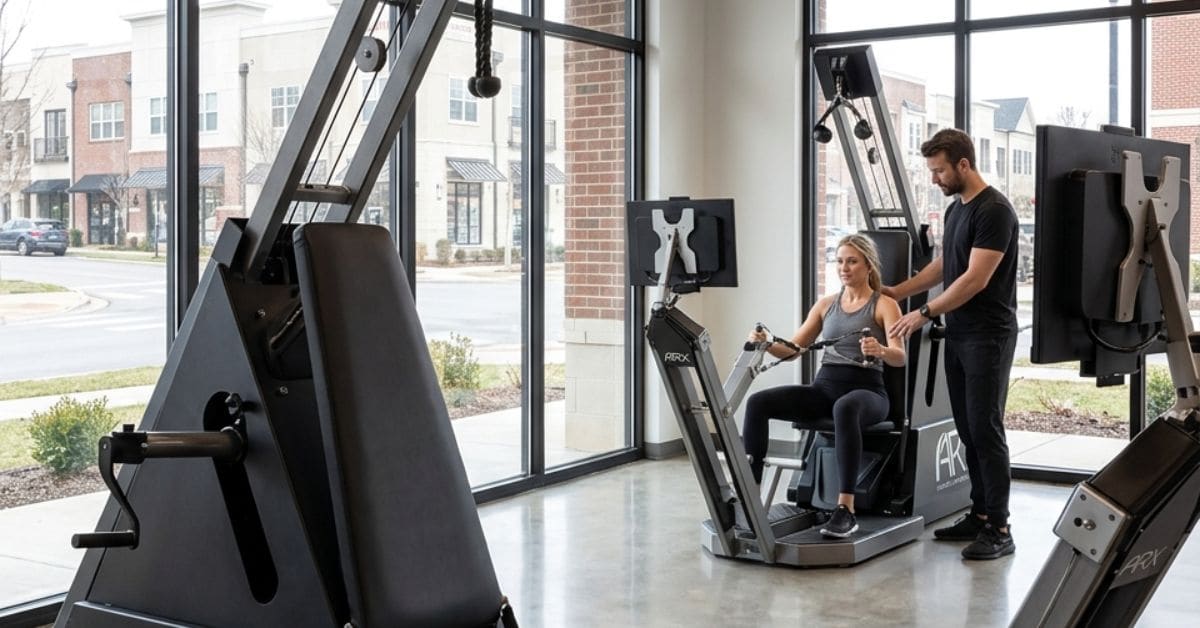
Arx workout training with a coach

Who Controls the Schedule?

A class happens when it happens.

For some people that’s the entire appeal. A fixed time on the calendar, non-negotiable, is the thing that gets them out the door. If that’s what makes you consistent, it’s a real advantage and worth protecting.

For a lot of professionals, though, it’s the exact reason they stop going. The six a.m. slot conflicts with an early call. The evening session starts twenty minutes before you leave the office. Miss enough of them and the membership quietly turns into something you pay for and don’t use.

Appointment-only training moves with you instead. Thirty minutes, booked around your calendar rather than against it, twice a week. Private, by design. No waiting for equipment and no audience.

So Which One Gets You Stronger?

For building measurable strength, one-on-one wins on the four things that decide it.

That isn’t a knock on group fitness. It’s social, it’s usually cheaper, and the fixed schedule is genuinely useful for people who need external structure. If you like the room and it keeps you showing up, keep going.

But if you’re short on time and tired of not knowing whether any of it is working, the calculus changes. You don’t need more energy in the room. You need load matched to you, someone watching every rep, and numbers that tell you where you stand.

That’s the case for one-on-one, and it’s the reason the format exists at all. If you want the full picture, here’s what one-on-one training involves week to week.

Frequently Asked Questions

Should I start strength training if I'm already on hormone therapy?

That’s a question for the doctor managing your care. In general, strength work and medical treatment tend to address different things rather than competing, so most people can do both, but the sequencing should come from whoever knows your history.

Do I need a bone density scan before I start strength training?

That’s a decision for your doctor, not a prerequisite for training. Most people can begin controlled resistance work without one. If you already have a diagnosis affecting your bones, bring it to your coach so loading can be adjusted.

Is it too late to start if I'm already postmenopausal?

No. Meaningful strength gains appear to be possible at every stage of adult life, including well after menopause. Starting later usually means being more deliberate about progression and recovery, not doing less. Your doctor can flag anything specific to your situation.

Do I need to change how I eat for this to work?

Not necessarily, and we don’t coach nutrition here. Most people see progress from the training itself. If food becomes a real question for you, a registered dietitian or your own doctor is the right place to take it.

What if hot flashes or poor sleep make sessions unpredictable?

That’s normal and it’s workable. Because sessions are appointment-only and short, they’re far easier to keep on a rough week than an hour-long commitment. Tell your coach what kind of night you had, and the session gets adjusted to it.

Train Through Menopause at LUX Fitness in Franklin, TN

Nothing about this stage means you’re on the way down. It means the inputs that used to work by default now have to be chosen on purpose, load tracked and recovery respected. If you’re exploring what that looks like, you can book a free intro session and see the process. Many women also ask whether strength training makes women bulky.


Woman using adaptive resistance fitness equipment during a training session.

Strength Training Through Perimenopause and Menopause

You’ve been doing the same things you always did. Same walks, same weekend hikes, same reasonably careful eating.

And somewhere in the last two years, the results stopped matching the effort. The scale moved the wrong way. Your shoulders ache in the morning. Recovery takes longer than it used to.

Most people around you keep suggesting more cardio. More steps. More restriction. None of it moves the needle.

That advice isn’t working, and it isn’t your fault. The rules changed underneath you, quietly, and nobody handed you the new ones.

Strength training for menopause is one of the few things that directly addresses what’s actually shifting. Not as a fix. As a lever. What changes in this window is specific, and so is what you can do about it.

Why Strength Training for Menopause Matters More Than Cardio

Cardio isn’t the problem here, but it isn’t the answer either.

Steady-state cardio does good things for your heart and your head. What it doesn’t do reliably is give your body a reason to keep muscle and defend bone. Those two tissues respond to load, and mostly to load.

Most people in this window already do plenty of cardio and almost no meaningful resistance work. So the input that matters most for body composition is the one that’s missing.

Resistance training asks something specific of you. Move a real load, with control, close to the edge of what you can currently do. That signal is what muscle and bone tend to respond to, in most cases, at any age.

So the goal shifts. Less about burning something off. More about giving your body a reason to hold onto what you’ve already got.

Coach guiding compound movement to rebuild functional strength safely

What Happens to Muscle and Bone as Estrogen Declines?

Estrogen does far more in the body than most of us were ever taught.

Among other roles, it’s involved in how muscle tissue is maintained and how bone remodels itself over time. As levels decline through perimenopause and into menopause, that support tends to thin out. Muscle gets harder to hold. Bone density is often affected too.

This is why body composition can drift even when nothing about your habits changed. The inputs stay the same and the output quietly stops matching them.

Resistance training is one of the more useful inputs during this stage, and it tends to sit alongside whatever else you and your doctor decide is right. Broad clinical guidance generally includes strength work here.

None of that promises an outcome. It just means the lever exists, and most people aren’t pulling it. This is general education, not medical advice, so bring your own history to a doctor who knows it.

Is Perimenopause Strength Training Different From Regular Lifting?

Yes and no, and the difference is smaller than most people expect.

The principles don’t change. You still need real load, progressive over time, applied to the movement patterns that matter, which means pushing, pulling, hinging and squatting.

What changes is the margin for error. Perimenopause strength training rewards precision more than volume, because the recovery cost of sloppy, high-impact work climbs. You can still train hard. You just can’t train carelessly.

At LUX Fitness in Franklin, the correction is almost always subtraction. Someone arrives convinced they need to do more, and what actually helps is doing less of the wrong thing with far more attention on the part that counts.

That’s the whole shift, really. Not a different sport. Just a tighter version of the same one. If you want the wider picture first, here’s how we approach strength training for women in Franklin generally.

Why Recovery Needs Change During This Window

The training is only half of it, and the other half gets harder around now.

Sleep quality often shifts during perimenopause, sometimes considerably. Less deep sleep usually means less complete recovery, so the next session lands on tissue that isn’t ready. Do that repeatedly and training starts to feel like punishment instead of progress.

Most people respond by training more. That’s usually backwards. Two focused sessions a week that you fully recover from tend to beat five you never quite absorb.

This is also why session frequency at LUX is deliberately low. Thirty minutes, roughly twice a week, is enough stimulus for most people without stacking fatigue you can’t clear.

Recovery isn’t the reward for training. In this window, it’s part of the training.

Can You Still Train Hard When Your Joints Ache?

Usually yes, though probably not the way you did at twenty-five.

Aching joints are common at this stage and there can be several reasons for it. Practically, the ache tends to come from impact and from load your body wasn’t braced for, not from effort itself.

Adaptive resistance, the technology we use at LUX, is worth understanding here. ARX matches resistance to the force you produce, rep by rep, so there’s no dropped weight, no momentum, no bar crashing down on a joint at the worst moment. Smooth motion. Low impact. No pounding.

That means you can work at genuinely high effort while the mechanical stress on the joint tends to stay controlled. For a lot of people, that’s the difference between training consistently and quitting after six weeks.

Effort and joint stress aren’t the same thing, and separating them changes what’s possible. If achy joints are your main hesitation, that separation is usually the thing that makes training sustainable again.

What Strength Training for Menopause Looks Like at LUX in Franklin

Active adult performing a glute bridge exercise in a private fitness studio

It looks quieter than you’d guess.

You book a time. You walk into a private studio with no crowd, no waiting, nobody watching. A coach takes you through a short sequence of controlled movements, and the machine records what you produced on every rep.

That last part matters more than it sounds. Instead of guessing whether you’re getting stronger, you have load data. Objective, tracked, session over session. On a week when you feel terrible, the numbers can tell you whether that’s real fatigue or just a rough mood.

Sessions run about thirty minutes, roughly twice a week, on your schedule. No filler. No warmup that quietly becomes the workout.

That’s it. Not a program you have to believe in. A process you can check.

Frequently Asked Questions

Should I start strength training if I'm already on hormone therapy?

That’s a question for the doctor managing your care. In general, strength work and medical treatment tend to address different things rather than competing, so most people can do both, but the sequencing should come from whoever knows your history.

Do I need a bone density scan before I start strength training?

That’s a decision for your doctor, not a prerequisite for training. Most people can begin controlled resistance work without one. If you already have a diagnosis affecting your bones, bring it to your coach so loading can be adjusted.

Is it too late to start if I'm already postmenopausal?

No. Meaningful strength gains appear to be possible at every stage of adult life, including well after menopause. Starting later usually means being more deliberate about progression and recovery, not doing less. Your doctor can flag anything specific to your situation.

Do I need to change how I eat for this to work?

Not necessarily, and we don’t coach nutrition here. Most people see progress from the training itself. If food becomes a real question for you, a registered dietitian or your own doctor is the right place to take it.

What if hot flashes or poor sleep make sessions unpredictable?

That’s normal and it’s workable. Because sessions are appointment-only and short, they’re far easier to keep on a rough week than an hour-long commitment. Tell your coach what kind of night you had, and the session gets adjusted to it.

Train Through Menopause at LUX Fitness in Franklin, TN

Nothing about this stage means you’re on the way down. It means the inputs that used to work by default now have to be chosen on purpose, load tracked and recovery respected. If you’re exploring what that looks like, you can book a free intro session and see the process. Many women also ask whether strength training makes women bulky.

A muscular man performing a weightlifting squat with a coach guiding him indoors.

Strength Training Plateau: Why Your Progress Stalled and How to Start Moving Again

Same session. Same setting on the machine. Same numbers you were hitting back in the spring.

You’re showing up. Twice a week, no missed appointments, no complaints. And somewhere along the way the needle just stopped moving.

That’s a different problem than not training, and honestly a more frustrating one. The effort is real. The return isn’t.

Most people respond by adding. More days. More exercises. More time in the building.

But a strength training plateau is rarely a discipline problem. In most cases it’s a signal that something in the stimulus stopped changing, and piling volume on top of that usually just buys you more fatigue. There are four common causes worth checking, and each one points to a different fix.

What a Strength Training Plateau Actually Is

A plateau isn’t proof you’ve hit your ceiling, it’s usually proof the demand stopped climbing.

Your body adapts to what it’s repeatedly asked to do. Once a demand becomes familiar, there’s no longer much reason to build for it. The session still costs you effort. It just stops producing a reason to change.

Most people misread that as a personal failing. So they train harder, or longer, or more often, and collect more fatigue without more progress. Nothing is actually broken. The signal has simply gone quiet.

The useful question isn’t whether you’re working hard enough. It’s whether the work is meaningfully different from what your body has already handled.

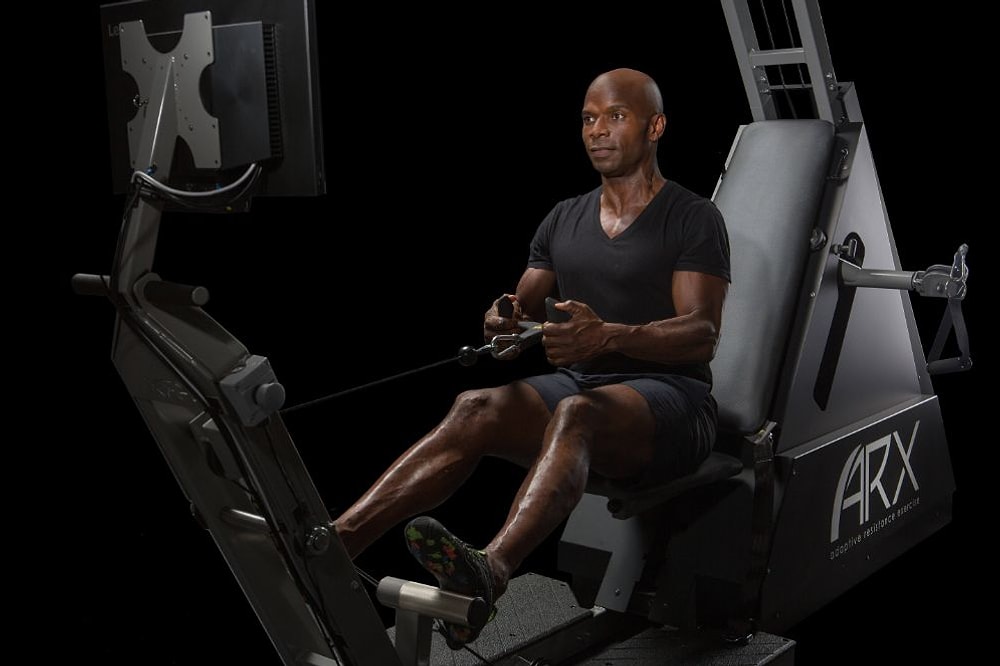
Man doing a seated row on an ARX machine

Is the Load Actually Going Up?

For most people who feel stuck, the honest answer is no.

Progressive overload sits underneath almost every strength gain there is. The demand has to climb, gradually and deliberately, or adaptation has nothing to chase. Increasing resistance as strength improves is one of the least controversial ideas in training, and it is also the one most quietly abandoned.

But it’s easy to believe you’re doing it when you aren’t. The dumbbells haven’t changed in months, the machine setting hasn’t moved, and a few extra reps one week quietly slide back to where you started.

Without a record, load tends to drift sideways rather than up. It feels like progression. It generally isn’t.

How Do You Know You Actually Trained Hard Enough?

Most people have no idea, and that’s the real problem.

Perceived effort is unreliable. It moves with sleep, stress, caffeine, mood, and whatever happened at work an hour earlier. A session that felt brutal can be objectively lighter than one that felt easy. None of that is a character flaw, it is just what happens when the only gauge you have is a feeling.

At LUX Fitness, the numbers regularly disagree with the feeling. Someone finishes a set convinced they emptied the tank, and the output from the back half of that set says something very different.

Without measurement, you’re negotiating with a feeling. And feelings tend to negotiate downward, especially on the days that would have counted most. Want to see how the pieces fit together? Measurement sits at the center of the way our physical fitness program in Franklin is structured.

Why Recovery Debt Quietly Stalls Strength Progress

Training creates the signal, but recovery is where that signal turns into strength.

Under-slept and under-fed, the stimulus often has nowhere to go. You can do everything right inside the session and still stall if the hours around it aren’t supporting the work.

This is the least interesting cause and one of the most common. Busy stretches compress sleep. Meals get skipped or shrunk. Stress stays high for weeks at a time.

Most people in that position add training volume, which tends to deepen the debt rather than clear it. Often the better move is less frequency and more intent, at least until sleep and food settle. This is general education, not medical advice, and persistent fatigue is worth raising with your physician.

When the Plan Quietly Became a Routine

Programs rarely fail loudly, they drift.

You start with a plan. Over months the uncomfortable movements get trimmed, the comfortable ones stay, and what’s left is a routine you’re good at rather than a program that’s still changing you.

It happens gradually. Nobody decides to stop challenging themselves. But the exercises people quietly drop are usually the ones that were doing the most work.

Program drift is obvious from the outside and nearly invisible from the inside. That’s most of the argument for having a coach rather than a routine. Not sure your goal is even shaping the plan anymore? Our guide to strength training for fat loss in Franklin walks through how the objective should change the programming, not just the effort.

Can Measured Resistance Break a Strength Training Plateau?

For most people, measurement is the missing piece.

At LUX Fitness in Franklin, sessions run on ARX, an adaptive resistance system that matches load to the force you produce through every inch of the movement. There’s no fixed weight to negotiate with. It gives you exactly as much resistance as you can handle, rep by rep, and records what you did.

That produces the two things a stalled program usually needs. Objective load data. And per-rep feedback, so effort stops being a guess.

Your coach watches the output while it happens. Where you faded. Where you held. Whether today was genuinely harder than last Tuesday, or only felt that way.

It isn’t magic, and it doesn’t replace consistency, sleep or effort. It removes the guesswork that keeps most plateaus in place.

Frequently Asked Questions

How long should a plateau last before I change something?

Usually a few weeks of genuinely unchanged numbers is enough to act on. One flat session means very little on its own. A repeated pattern with no upward movement in load or output is worth investigating rather than waiting out.

Can taking a lighter week actually help?

Often, yes. A planned lighter stretch can let accumulated fatigue clear so the next block of training lands properly. For most people it works best as a short, deliberate reduction, not an open-ended drop in effort.

Does switching exercises fix a plateau?

Sometimes, but not for the reason people assume. Novelty alone doesn’t drive adaptation. A new movement helps mainly when it lets you load a pattern more effectively than the one you’d been avoiding or performing poorly.

Is a plateau just what getting older feels like?

No, though the two can overlap. Progress does generally slow with age, but a true plateau is usually about stimulus rather than birthdays. Many people keep adding strength well into later decades when the load is measured and progressive.

Should I be sore after every session for it to be working?

No. Soreness reflects novelty more than effectiveness. You can make real progress with very little soreness, and you can finish extremely sore after a session that did almost nothing for your strength.

Start Measuring Your Progress at LUX Fitness in Franklin, TN

A plateau usually isn’t about effort. It’s about a stimulus that stopped changing and a load nobody was tracking. If the numbers have gone quiet, the fix is better measurement, not more volume. You can book a free intro session and see your real output inside one 30-minute appointment. When your calendar gets loud, staying consistent with strength work is the next thing to protect.

Best Time of Day to Workout: Why the Clock Matters Less Than You Think

Your calendar has three openings this week.

One at 5:50 in the morning, before anyone in the house is up. One at noon, wedged between two calls. One at 7:15 at night, when the day has already taken what it wanted.

None of them feels obviously right. So you keep waiting for the version of the week where a cleaner slot appears, and another week goes by.

It’s a fair thing to wonder about, and there’s real physiology underneath it. Your body genuinely doesn’t perform identically at every hour of the day.

But the best time of day to workout is rarely the one people actually end up needing. Here’s what the timing question really turns on, and what tends to matter far more.

What Actually Changes in Your Body Across the Day

Your body runs on a daily rhythm, and strength output rides along with it.

Core body temperature tends to sit at its lowest in the early morning and climb through the afternoon. Warmer muscle is generally more pliable, and coordination often feels sharper later on. That’s a big part of why so many people report feeling more capable after lunch.

Hormones shift too. Cortisol is typically highest shortly after waking and drifts downward as the day goes on. These patterns are generally described as ordinary daily variation rather than something you’re meant to manage.

The differences are real. They’re also smaller than the internet suggests, and they vary quite a bit from person to person.

So the clock does something. It just doesn’t do nearly as much as people hope it will.

Is Morning the Best Time to Lift Weights?

For a lot of busy professionals, yes, and it usually has nothing to do with physiology.

Mornings tend to be the most protected hours in a packed week. Nothing has gone wrong yet. No client emergency, no meeting that ran long, no text asking if you can handle pickup today.

The tradeoff is that you’ll often feel stiffer and slightly weaker right after waking. Joints take longer to loosen. Early sets can feel heavier than the numbers say they are.

Most of that fades with a proper warm-up and a few weeks of repetition. Bodies generally adapt to the hour you consistently train in.

Morning isn’t better because of your hormones. It’s better because it’s harder for the rest of the day to steal it.

Why Afternoon and Evening Often Test Stronger

If you’re chasing your best numbers, later in the day usually gives you a small edge.

By late afternoon you’ve been upright and moving for hours. Temperature is up. Joints have already been loaded, and movement tends to feel more coordinated. For many people the numbers do come in slightly higher later in the day, though the difference is modest and far from universal.

But that edge is small, and it’s easy to overvalue. A slightly better session you attend two-thirds of the time is worth less than a slightly worse one you never miss.

There’s a practical problem too. Evenings are the least defensible part of most calendars. Dinner, kids, one late request, and the plan quietly moves to tomorrow.

A performance edge you can’t reliably show up for isn’t much of an edge.

Does Training in the Evening Hurt Your Sleep?

For most people, no, though it depends on the person and on how close to bed you finish.

The old advice was to avoid anything hard at night. More recent guidance is considerably softer, and many sleep researchers now suggest evening exercise doesn’t disrupt sleep for most adults.

What matters more is intensity and proximity. Finishing a demanding session minutes before bed can leave you wired. Finishing a couple of hours out usually doesn’t.

Some people are genuinely sensitive to it. If you’re one of them, you’ll typically know within a week or two of testing it honestly.

Which is the useful move here anyway. Try the slot, watch what happens, and let your own response settle the argument. This is general education, not medical advice.

Does the Optimal Window Actually Beat Consistency?

It doesn’t, and it isn’t close.

Most people asking about timing aren’t underperforming in their sessions. They’re inconsistent, and they’re hoping a better hour will quietly fix that.

At LUX Fitness, we hear a version of this constantly. Someone tells us they train best in the evening, then their history shows the evening bookings are the ones that get moved.

The pattern is almost always the same. The theoretically optimal hour sits in the least protected part of the day. The slightly worse hour is the one that survives a hard week intact.

Pick the slot your life defends, then let the small physiological differences take care of themselves. If you’re curious what that looks like when the session is built to fit around a real calendar, here’s how 30 minute strength sessions get structured in Franklin.

How a Booked Session Removes the Timing Decision

At LUX Fitness in Franklin, TN, the timing question mostly disappears once the session is on the calendar.

You book a private, appointment-only slot. It’s yours. There’s no class schedule to work around and no crowd to wait out at six o’clock.

Because the studio is appointment-only, the available windows spread across the day. Early. Midday. After work. You choose the one your week actually protects, then you keep choosing it.

The work itself is measured either way. Load data doesn’t care what time it was collected, which makes it straightforward to see whether your chosen slot is genuinely working for you.

The decision stops being “when is best” and starts being “when will I actually show up.” If you’re curious how the training itself gets measured, here’s what happens during an ARX workout for people training in Franklin.

How to Find a Personal Trainer in Franklin

Should you eat before an early morning strength session?

It depends on the person. Some people train perfectly well on an empty stomach early, and others feel flat without something small first. Neither is required. Try both for a couple of weeks and keep whichever leaves you steadier under load.

How long should you warm up if you train first thing?

A little longer than later in the day. Muscles and joints are generally cooler and stiffer after waking, so a few extra minutes of easy movement usually helps. Nothing deep. Just enough to raise temperature and restore range.

Is it a problem to train at different times each week?

Not necessarily, though a fixed slot tends to hold up better. Varying times can work fine as long as the session still happens. For most people, a repeating appointment removes the daily negotiation about when to fit it in.

Does the best time of day to workout change as you get older?

Not really. Older adults often report feeling better a bit later in the morning, once they’ve been moving for a while, but the underlying principle holds. The schedule you can sustain still matters more than the theoretically ideal hour.

How long does it take to adapt to a new training time?

Usually a couple of weeks. Performance at an unfamiliar hour often feels worse at first, then normalizes as your body adjusts to the pattern. Give any new slot a fair trial before deciding it doesn’t suit you.

Find Your Best Workout Time at LUX Fitness in Franklin, TN

The best hour to train is the one your week actually protects. The physiology is real, but small, and consistency beats it almost every time. Choose the slot your calendar defends, then book a free intro session to test it in a private, appointment-only setting. There’s also a look at what training just once a week can realistically do.

A personal trainer guides a woman lifting dumbbells in a gym setting.

How Long Does It Take to Lose Muscle? What Really Happens When You Stop Training

The quarter ran long. Then the trip. Then a week where you got home at eight every night and the idea of doing anything else felt absurd.

Three weeks later you’re standing in the kitchen at six in the morning, coffee in hand, quietly doing the math on how much you’ve undone.

Most people assume the worst here. That the strength is gone. That they’re back at zero.

That’s usually not what happens. Not even close.

How long does it take to lose muscle when you stop training completely? The honest answer is more forgiving than the panic suggests, and it matters, because what you believe about a break tends to decide whether you come back at all. What follows is what actually happens, what fades first, and what holds on longer than you’d expect.

What Actually Happens in the First Weeks Off

For most people, meaningful strength loss takes longer than expected, often a few weeks rather than days. The exact timeline shifts with training history, age and how active you stay, so treat that as a general range rather than a deadline.

The early stretch away from training is a nervous system story before it’s a muscle story. The tissue doesn’t vanish. What fades first is coordination, timing, and the practiced ability to recruit everything at once under load.

That’s why the first session back often feels clumsy before it feels weak. The weight isn’t heavier. You’re just less rehearsed at moving it.

Most people read that clumsiness as proof they’ve lost everything. In most cases what they’ve lost is sharpness, and sharpness tends to return quickly once the work resumes.

Fitness assessment between coach and client

Does Muscle Turn to Fat When You Stop Training?

No, muscle and fat are different tissues, and one does not become the other.

Muscle can get smaller when it isn’t being asked to do much. Fat can increase when you’re eating more than you’re using. Those two things often happen across the same few weeks, which is exactly where the myth comes from.

But there’s no conversion taking place. A muscle cell doesn’t turn into a fat cell any more than bone turns into skin.

What usually shifts during a layoff is the ratio, not the material. And when real resistance work resumes, that ratio generally starts moving back the other way. Not instantly. But steadily.

What You Lose First, and What Holds On Longer

Nothing declines at the same speed.

Neural output tends to fade before muscle size does. Rate of force production. Coordination. The willingness to load a movement without hesitating. Those are trained skills, and skills get rusty faster than tissue disappears.

Size tends to hold on longer, particularly for people who have trained consistently for a while. The longer that base has been built, the more resilient it generally is.

Work capacity usually goes early too. You’ll notice you’re breathing harder at loads that used to feel routine, which reads like weakness and usually isn’t.

Most people panic about the wrong thing. The base is often still there. The sharpness is what needs rebuilding.

Why Does Strength Come Back Faster the Second Time?

Woman using adaptive resistance fitness equipment during a training session.

Because you’re not building from scratch, you’re re-accessing something you already built.

Your body holds on to a lot of the structural work you did the first time. That is roughly what people mean by muscle memory, and the mechanisms behind it are still being worked out. Previously trained bodies tend to regain lost ground faster than untrained bodies gained it initially.

That means the return curve is usually steep. Not overnight. But faster than the first climb.

At LUX Fitness, returning clients tend to underestimate themselves. Someone comes back after a month away, apologizes on the way in, and is sitting near their old output sooner than they expected. Curious what that structure actually looks like week to week? Here’s how our physical fitness program in Franklin is built, and why the structure itself makes a break less costly.

What a Realistic Maintenance Minimum Looks Like

Maintaining is a much lower bar than building.

When work takes over, the goal changes. You’re not chasing progress anymore. You’re protecting the base you already have, and for most people that takes considerably less than they assume.

A small amount of real resistance work, done with intent, generally holds far more than doing nothing at all. One focused session in a busy week isn’t a failure. It’s a placeholder.

The expensive mistake is the all-or-nothing move. Miss one week, decide the month is ruined, miss the next three. That pattern tends to cost far more than the original missed sessions ever did. If your calendar is the real obstacle, our guide to strength training around a demanding schedule covers what to protect and what to let go.

How Does Measured Training Change What a Break Costs You?

When your training is measured, coming back stops being a guessing game.

At LUX Fitness in Franklin, every session is tracked. Load data. Per-rep feedback. Objective output rather than a vague sense of whether “that probably wasn’t heavy enough.”

That matters most after time off. You don’t have to estimate where you stand. The first session back tells you, precisely, and the plan adjusts from there instead of from a hunch.

Guesswork is the real cost of a layoff for most people. Not the lost tissue, but the uncertainty about how hard to push, which usually leads to doing too much and getting wrecked, or doing too little and confirming the fear. Our sessions run 30 minutes, private and appointment-only. Coming back doesn’t need to be dramatic. It needs to be measured.

Frequently Asked Questions

Does age change how quickly you lose muscle?

Generally yes, though not dramatically over a short break. Muscle tends to be a little harder to hold and rebuild with age, which is an argument for returning sooner rather than waiting for a perfect week. This is general education, not medical advice.

Will I be sore again when I come back?

Expect some soreness. Returning after time off reintroduces a stimulus your body hasn’t handled recently, so mild soreness is normal for most people. It typically settles down within a session or two once you’re training on a regular schedule again.

Does a break for injury work the same way as a break for schedule?

Not really. An injury layoff usually involves a specific area that needs deliberate, gradual reloading rather than a straight return to your old program. Check with your physician or physical therapist first, then bring that guidance to your coach.

Does cardio protect muscle while I'm away from lifting?

Cardio helps, but it isn’t a substitute. Conditioning can support recovery, mood and general health during a layoff, though resistance is generally what signals your body to keep the muscle it already has. Some resistance usually beats cardio alone.

How long is too long before I should restart at a lighter load?

There’s no fixed cutoff. For most people the better approach is returning at a load you can control cleanly, letting the first session show you where you actually are, then rebuilding from that data rather than from an assumption.

Jump Back On Training at LUX Fitness in Franklin, TN

A break isn’t a reset. It’s a pause, and the way back is shorter than the story you’ve been telling yourself. If you aren’t sure where you stand, you don’t have to guess. You can book a free intro session and let the numbers answer it. We also have a guide on how to stay consistent with strength training for busy weeks.

Ben Cluff August 28, 2026 Gym Read more
Woman in a focused strength training session in a premium private fitness studio

Personalized Workout Plan: How One Gets Built and Why Templates Stall

You’re standing in the kitchen on a Tuesday, phone open to a workout you downloaded back in March.

Week four, day two. Something about tempo squats.

You skipped week three entirely because of a work trip. Your shoulder has been talking to you since Sunday. The plan doesn’t know any of that.

So you scroll for a minute, close the app, and tell yourself you’ll restart Monday.

Most people don’t stall because they lack discipline. They stall because the plan they’re following was never built for them. A personalized workout plan solves a different problem than most people think it solves. Here’s what actually goes into building one, and why templates tend to fall apart.

What a Personalized Workout Plan Is Actually Built From

A real program starts with four inputs, and none of them are your goal.

Goals matter, but they’re the easy part. Almost everyone wants the same things, more strength, less stiffness, a body that holds up under a long week. What separates one program from the next is the raw material it’s working with.

That raw material is your current strength, your injury history, the schedule you actually keep, and how well you recover between sessions. Change any one of those and the program changes with it. Same goal. Different plan.

At LUX Fitness in Franklin, TN, we build from those four inputs before anyone picks a single exercise. It’s less interesting than a themed training split. It’s also the reason the plan tends to survive contact with a real week.

How Does Your Starting Strength Shape the First Few Weeks?

Where you start decides how fast the program is allowed to move.

Most people either overshoot or undershoot. They copy a load that worked for someone else and either fight through something too heavy or coast through something that never asks much of them. Both feel like training. Only one of them is.

Knowing your actual starting numbers removes the guesswork. It tells your coach how much load the first sessions should carry, how quickly to add, and where the ceiling sits for now. On ARX, adaptive resistance equipment that matches the force you produce rep by rep, that starting picture is measured directly rather than estimated.

None of that comes from a questionnaire. It comes from measuring. If you’re curious what that looks like in practice, here’s what a first strength assessment covers before anything gets written down.

Woman performing bench press exercise with guidance in a gym setting.

Injury History Shapes More Than Exercise Selection

An old injury doesn’t just remove exercises, it changes how the whole program is sequenced.

Most people assume the fix is a swap. Cranky shoulder, skip overhead pressing. That’s part of it, but it’s the shallow part. The deeper question is what that shoulder tolerates today, how it responds two days later, and what needs to get stronger around it before the pattern is worth revisiting at all.

A generic plan can’t ask those questions. It hands you the same sequence it hands everyone, and it has no way to know your knee only complains on the days you sat in meetings for nine hours.

Working around a history is normal, not disqualifying. In most cases the goal isn’t avoidance, it’s finding a version of the movement you can load safely and build from. This is general education, not medical advice.

How Does a Program Fit a Schedule That Keeps Moving?

A plan you can’t run on your worst week isn’t really a plan.

Most people design around their best week. Five sessions. Early mornings. Nothing on the calendar that moves. Then a busy quarter arrives, or a kid gets sick, and the whole structure collapses because there was no slack built into it.

A customized workout plan starts from the other end. Two sessions a week, thirty minutes each, appointment-only, on your schedule. Built so that hitting it is the normal outcome rather than the impressive one.

That’s a design choice, not a compromise. When the volume is honest about your life, consistency stops being a willpower problem. If you want the full picture, here’s how we build customized workout plans around a working calendar.

A 40-year-old woman tying her training shoes in a private gym studio before starting a session.

Recovery Capacity Is the Input Most Plans Skip

Recovery capacity decides how much training you can actually absorb.

Two people can do an identical session and need completely different amounts of time before the next one. Sleep, stress, age, travel, how long you’ve been training. All of it moves the number.

Most templates ignore this because they have to. They assume a standard recovery window for a standard person. Push a real person through a schedule built for that average and one of two things usually happens, you either stall out or you start to feel worn down.

Programming around recovery often means less frequency than people expect, and more intent inside each session. Fewer sessions. Better ones. For most people that trade tends to produce steadier progress, though results always depend on consistency, effort and recovery.

Why Do Downloaded Templates Stall?

A template stalls because it was built for an average person who doesn’t exist.

Every number in it, the sets, the loads, the rest periods, the progression rate, is a compromise across a very broad average. It isn’t wrong exactly. It’s just not aimed at anyone in particular.

So why do they stall? Because a template has no mechanism to notice when the aim is off. It can’t tell that your last session was your best in months, or that you slept four hours, or that the load you moved today says you’re ready for more. It runs the same script either way.

A coach adjusts inside the session. The plan on paper is the starting point, and what actually happens is a response to what your body did that morning.

Frequently Asked Questions

How often does a personalized workout plan actually change?

Less often than most people expect. The movements usually stay stable for weeks, because progress comes from adding load to patterns you already know. What changes session to session is the resistance and the pace, adjusted from what your numbers showed last time.

Do I need to stop running or playing golf while I strength train?

No. For most people, strength work supports the activities they already enjoy rather than competing with them. Two short sessions a week leaves plenty of room. We usually build the program around what you’re doing outside the studio, not instead of it.

Do you need to track anything outside the studio for the plan to work?

No. The programming runs on what gets measured in session, so there’s nothing to log at home. Sleep, travel and stress still matter, and mentioning them lets a coach adjust that day’s loading, but you’re not responsible for maintaining a spreadsheet.

Who decides what goes in the plan, you or the coach?

The coach builds it, but not in isolation. You bring the constraints, your schedule, your history, what you actually enjoy doing, and the coach turns those into loading, sequencing and progression. Preferences get respected. The programming decisions stay with the person reading your data.

Do I need a base level of fitness before starting a customized workout plan?

No. Starting strength is an input, not a requirement. The program gets built from wherever you are today, which is the whole point of individualizing it. Beginning further back usually just means the early loads are lighter.

Build a Personalized Workout Plan at LUX Fitness in Franklin, TN

Certainty is what you’re actually buying here, not a set of workouts. A plan built around your strength, your history, your calendar and your recovery removes the guesswork that stalls templates. When you want to see yours, book a free intro session and we’ll walk through it, no pressure. Once it’s running, how strength progress gets tracked shows what the data looks like.

Woman using adaptive resistance fitness equipment during a training session.

How Long Does It Take to Build Muscle? A Realistic Strength Timeline

It’s week three. You’ve been showing up, twice a week, without missing a session.

You stand in front of the mirror on a Tuesday morning and look for something. Anything. A line that wasn’t there before.

Nothing looks different. Your clothes fit the same. So you start doing the math on whether this is actually working.

Most people hit that exact moment and quietly decide the answer is no. Not because nothing changed, but because the only measuring tool they own is a mirror in bad lighting. Progress rarely announces itself.

That’s the real problem sitting underneath the question. How long does it take to build muscle, and what should you honestly expect to notice along the way? Here’s what usually changes, and when.

How Long Does It Take to Build Muscle?

For most people, measurable strength changes start within two to four weeks, and visible muscle changes usually take closer to eight to twelve.

That gap is what trips everyone up. Strength and size run on different clocks. Early gains tend to come from your nervous system learning the movement, not from new tissue.

Muscle itself is slower. In most cases it builds quietly for weeks before it shows up anywhere you can see it.

So the honest answer has three tracks running at once. What you feel. What you can measure. What eventually shows. They don’t arrive together, and expecting them to is the fastest way to talk yourself out of something that’s already working.

This is general education, not medical advice. Timelines vary with age, training history, sleep, nutrition and how consistently you actually show up.

Adult client exercising at home with resistance bands, dumbbells, and a yoga mat in a clean living room

Weeks Two to Four: What You Feel First

The first thing that changes is usually how a movement feels, not how you look.

Around week two, most people notice the setup gets easier. You know where to put your feet. The first few reps stop feeling like a guessing game.

By week four, that often shows up outside the studio. Stairs. Carrying things in from the car. Getting off the floor without planning it first.

At LUX Fitness in Franklin, TN, this comes up almost every week. Someone walks in for their fourth session and mentions offhand that their lower back stopped complaining on the drive to work. They didn’t come in to report it. It just comes out.

None of that is muscle yet. It’s coordination, control and confidence, which happens to be the part that makes the next eight weeks possible.

Weeks Four to Eight: What You Can Measure

By week four, the numbers usually move well before anything else does.

Measured load is the first genuinely honest signal you get. Not how hard a session felt afterward. Not what the mirror says on a given morning. What you actually produced, rep by rep.

Most people have no objective measure at all. They train, they estimate, they guess, and then they let the mirror settle it. That’s a slow and unreliable feedback loop.

At LUX Fitness, sessions run on ARX, an adaptive resistance system that records force output on every single rep. Which means by week four you can set week one beside it and see the difference in plain numbers, even when nothing visible has changed yet.

That’s usually the point where the guessing stops. If you’re curious what that data actually looks like from session to session, here’s how ARX measures strength progress across a program.

A personal trainer guides a woman lifting dumbbells in a gym setting.

Weeks Eight to Twelve: When Do Results Start to Show?

For most people, week eight to twelve is when other people start to notice.

Visible change tends to arrive last, and it tends to arrive sideways. Not in the mirror. In a shirt that sits differently, or a weekend photo that looks like someone else took it.

In this window, most people report clothes fitting differently before the scale says anything useful. Body composition can shift while total weight stays flat. That surprises people every time.

We’d honestly rather you not measure this stretch by appearance at all. Twelve weeks of consistent, measured work generally produces a strength number you can point at, which is a far better proxy for what’s happening than a Tuesday morning mirror check.

Appearance follows. Usually. But it follows the work, not the other way around.

Six Months In: What Real Strength Looks Like

At around six months, strength training stops being something you’re testing and starts being something you have.

By this point the early nervous system gains have leveled off and the slower structural changes have had time to accumulate. Progress gets less dramatic. It also gets far more durable.

Most people at this stage describe it less as looking different and more as moving differently. Getting up. Reaching overhead. Carrying a case of water in from the driveway without thinking about your back for three days afterward.

This is also where the data earns its keep. Six months of per-rep load records makes it obvious what’s still climbing and what’s flattened out, which is the difference between adjusting on evidence and adjusting on a hunch. If that’s the piece you want to understand, here’s how we handle strength progress tracking over a full program.

What Makes the Timeline Move Faster?

Consistency, not intensity.

Two sessions a week you actually keep will generally outperform four you schedule and skip. That isn’t motivational filler. It’s just how adaptation tends to work, and it’s the single biggest variable most people control and ignore.

After that, the list is short. Enough load to matter. Enough recovery to absorb it. Enough time under one plan that doesn’t get rewritten every three weeks.

What slows it down is guesswork. Starting over. Reinventing the program every month because a Tuesday felt easy. Most people don’t have a training problem, they have a measurement problem, and without a number to argue with, every decision turns into a mood.

Knowing where you’re starting helps more than people expect. If you want a sense of what that opening measurement involves, here’s what a first strength assessment covers before anything gets programmed.

Frequently Asked Questions

Does previous training experience shorten the timeline?

Often, yes. People who trained seriously in the past tend to regain strength faster than they built it the first time, sometimes within weeks rather than months. Complete beginners usually see quicker early gains than anyone expects, so neither group is at a disadvantage.

Does age change how long it takes to build muscle?

It can. Adaptation often takes a little longer after 40, and recovery generally needs more respect. But strength responds at every age, and resistance training is widely recommended for older adults.

Will you lose progress if you take two weeks off?

Usually not much. Short breaks tend to cost less than people fear, and strength often returns quickly once you resume. The bigger risk is that two weeks quietly becomes two months, which is where the real setback happens.

Is it normal for strength to climb while the scale doesn't move?

Yes, and it’s expected. Weight shifts with hydration, sodium, sleep and time of day, none of which reflect training. If you want a second data point, take tape measurements on the same schedule you retest strength, and ignore the daily readings.

How often should you retest your strength numbers?

Every four to six weeks works for most people. Retest too often and normal day-to-day variation looks like a trend. Retest too rarely and you spend months on a plan without knowing whether it’s still doing anything useful.

Start Measuring Real Progress at LUX Fitness in Franklin, TN

The timeline isn’t the problem. Not having anything objective to hold it against is. Strength moves long before size does, and measured sessions show that months before a mirror will. You can book a free intro session and see where your numbers actually start. We also have a guide on what that opening session measures, if you’d rather know what to expect first.

Ben Cluff August 28, 2026 Gym Read more

30 Minute Strength Workout: Is It Enough to Build Real Strength?

It’s 6:40 in the morning, and you’re already doing math in your head.

Twenty minutes of driving and changing. An hour of actual training. The shower, the second commute, the meeting you can’t move. Somewhere in there a call gets pulled forward, and the whole plan collapses.

So you skip it. Again.

Most people don’t stop training because they stopped caring. They stop because the block of time they believe it requires doesn’t exist anywhere in their week.

That’s usually where the question comes from. Can a 30-minute strength workout actually be enough, or is it just a compromise you’ll regret later? So let’s break down what a short session can really do, and what it can’t.

Why the Length of a Workout Became the Wrong Measure

Workout length became the default measuring stick mostly because it was the easiest thing to count.

Most people learned to judge training by the clock. An hour meant you were serious. Ninety minutes meant you were really serious. Thirty minutes sounded like something you did when you weren’t.

But time in a building isn’t the same as time spent working. In a typical commercial gym, a good portion of that hour goes to waiting, scrolling, resetting equipment, and deciding what to do next. Your muscles don’t get credit for any of it.

What the body responds to is the demand you place on it, not the hours you spent nearby. Strip out the filler, and the number that actually matters gets a lot smaller.

So the honest question was never whether 30 minutes is enough. It’s how much of your 30 minutes is real training.

Is 30 Minutes of Strength Training Enough to Build Muscle?

For most people, yes, as long as the effort is high and it repeats.

Strength adaptation generally comes down to a few things. Meaningful load. Enough effort to genuinely challenge the muscle. Recovery in between. Repeated over weeks.

None of those require an hour. National physical activity guidelines commonly recommend muscle-strengthening work on at least two days a week, and they describe how often and how hard, not how long you have to stay in the room.

That distinction matters more than it sounds. The variable most people are missing usually isn’t duration; it’s effort that never quite got high enough to ask anything of the body.

Results still depend on consistency, effort, and recovery. Session length, on its own, tends to be a much weaker predictor than people assume. This is general education, not medical advice.

What Actually Fills a Real 30-Minute Strength Workout

A well-built 30-minute strength workout has almost nothing in it that isn’t training.

There’s a short warm-up to get joints moving and blood flowing. Nothing deep. Nothing forced.

Then the working sets. A handful of movements that cover the big patterns, pushing, pulling, hinging, squatting, each one taken close enough to real effort that the body has a reason to change.

What’s missing is the part nobody actually misses. No wandering between machines. No waiting on equipment. No guesswork about what comes next, because someone already decided that before you walked in.

Thirty focused minutes and sixty distracted ones aren’t the same thing. For most people, the shorter one does more.

A healthy adult's upper back and shoulders showing natural muscle definition

Can Intensity Really Replace Extra Time?

In most cases it can, because effort and duration are two different routes to the same demand.

Think about what makes a set hard. Load. Control. How close you get to the point where the muscle genuinely has nothing left. You can accumulate that slowly across many easy sets, or you can get there faster with fewer hard ones.

The catch is that most people are poor judges of their own effort. At LUX Fitness, we see it all the time. Someone finishes a set convinced they emptied the tank, and the numbers show they left a good bit on the table.

That’s where measurement matters more than minutes. Adaptive resistance, known as ARX, matches the machine’s force to whatever you produce on every single rep, so the resistance meets your actual output instead of a weight you guessed at. Per-rep feedback replaces guesswork.

Effort you can see is far easier to repeat than effort you estimated. If you’re curious how that actually feels in practice, here’s what an ARX workout involves for people training in Franklin.

Does a Shorter Workout Mean Slower Progress?

At LUX Fitness in Franklin, TN, a session runs 30 minutes by design, not as a shortcut.

You book a time. The studio is private and appointment-only, so nothing is occupied and nobody is waiting on you. A coach already knows what you’re doing that day, because it was built from what you did last time.

The work itself is measured. Every rep produces load data, so progress gets tracked instead of remembered. There’s no debating whether last week “probably wasn’t heavy enough.”

Then you leave. No long ritual at the end, no lingering, no reason to stay. For most of our clients, that’s the entire appeal: the session ends and the day just continues.

Short works because everything around the work was removed. If you want the full picture of how the format is structured, here’s how we approach 30-minute strength workouts in Franklin.

Frequently Asked Questions

How long should you rest between sets in a 30-minute session?

Shorter than you’d think. Rest generally needs to be long enough to recover your breathing and hold clean form, often under two minutes. When effort is high, and the work is measured, you usually need less recovery than a long, unfocused session demands.

Is a 30-minute strength workout enough if you've never lifted before?

For most beginners, yes. New lifters tend to respond quickly to almost any consistent, well-coached stimulus, and shorter sessions make the first few months much easier to sustain. Technique matters considerably more than volume at that stage.

What happens if you only have 20 minutes instead of 30?

Shorten the session, not the effort. Dropping a movement or a set while keeping the working sets hard usually preserves most of the benefit. A trimmed session you complete beats a full one you postpone until the calendar clears, which it rarely does.

Do you need to add cardio to a 30-minute strength workout?

It depends on your goals. Strength work supports plenty of health markers on its own, though many people also add easy walking or similar movement across the week. That can happen outside your session rather than inside it.

How soon do most people notice a difference?

Usually within a few weeks. Early changes tend to show up as better control, steadier energy and more confidence under load, generally before anything visible shows. How quickly that happens varies with sleep, effort and how often you train.

Train Efficiently at LUX Fitness in Franklin, TN

The question was never whether 30 minutes is enough. It’s whether those minutes are focused, measured, and repeatable. When you’re ready to try that in Franklin, TN, you can book a free intro session to see the format yourself. If one session a week fits better, one strength workout per week covers what that looks like.

A client performing a strength exercise on ARX equipment while a trainer monitors performance data

What Is Adaptive Resistance Training? How It Differs From Lifting Weights

You’ve probably heard that adaptive resistance training gets remarkable results in a fraction of the time, and wondered whether that’s real or just a clever pitch. It’s a fair question, and it deserves a clear answer.

The short version: adaptive resistance training is a method where the resistance automatically matches the exact force you produce at every point in a movement. That single difference changes almost everything about how a workout feels and what it delivers.

This article explains what adaptive resistance training is, how it works, and where it genuinely differs from lifting traditional weights.

What Adaptive Resistance Training Actually Is

Adaptive resistance training uses technology that pushes back against you in perfect proportion to how hard you’re pushing. Instead of a fixed weight, the resistance adjusts moment to moment to match your effort. That kind of moment-to-moment adjustment is what sets it apart from anything you’d find with a rack of dumbbells or a loaded barbell.

With a traditional dumbbell, the load is the same whether the position is easy or hard for you. Adaptive resistance flips that. It meets you with the ideal challenge at every angle of the movement.

That means every point in the range of motion is fully worked, not just the hardest sticking point. There’s no easy portion of the rep where the muscle gets a break.

The result is a highly efficient stimulus. Your muscles are challenged completely from start to finish, which is why sessions can be so short.

Woman using adaptive resistance fitness equipment during a training session.

How Adaptive Resistance Differs From Lifting Weights

The most important difference is the eccentric, or lowering, phase of a movement. With free weights, you can only ever lower the same load you lifted, even though muscles are far stronger when lowering.

Adaptive resistance can increase the load on that lowering phase to match your true strength. This safely taps into a level of muscle stimulus that traditional weights simply can’t reach.

There’s also the matter of accommodation. A barbell doesn’t know when you’re fatiguing, but an adaptive system adjusts to exactly what you can produce on every single rep. That responsiveness is part of why a short session can still feel demanding.

Finally, there’s safety. Because the resistance only ever matches your effort, there’s no heavy weight to drop and no momentum to lose control of.

Why Adaptive Resistance Training Is So Efficient and Safe

Efficiency is the headline benefit. Because every rep is fully loaded across the whole range of motion, you reach a meaningful training effect quickly rather than through high volume.

For busy professionals, that efficiency is the entire appeal. A short, focused session, just one 30-minute session per week, can deliver what a long, conventional workout aims for. It’s training built around the time you actually have, not the time you wish you had.

Safety is the quieter benefit, and just as important. There are no free weights teetering overhead and no jarring loads on the joints, since the resistance never exceeds what you’re actively producing.

That combination makes adaptive resistance training approachable for a wide range of people. Beginners, returners, and those cautious about their joints can all train hard without the usual risks. It’s part of why the studio setting works for so many different starting points.

Woman in a focused strength training session in a premium private fitness studio

What to Expect During Your First Adaptive Resistance Training Session

Arriving for Your Session

Walking into your first session usually feels less intimidating than people expect. There’s no loading plates, chalking up, or figuring out where the right dumbbells are kept.

A coach works with you one-on-one from the very first rep, explaining how the resistance will respond as you push and pull. You’ll notice it adjusting to your effort almost instantly, which takes a moment to get used to.

What the Workout Itself Looks Like

Sessions move through a small number of exercises, each performed slowly and with full attention to form. That controlled pace means you’re never rushing through reps or bracing for a heavy weight to drop.

Because the resistance responds to you rather than a preset number on a plate, there’s little guesswork involved. You leave knowing you worked as hard as your body allowed that day, and your coach adjusts the plan from there.

What Happens After

Afterward, your coach maps out a simple plan for how often to return based on your goals and schedule. You’re never left guessing how to structure your own training.

Is Adaptive Resistance Training Right for You?

Adaptive resistance suits anyone who wants serious results without spending hours in a gym. It’s especially well matched to people who value their time, want certainty that their effort is working, and prefer a private, appointment-based studio over a crowded gym floor. If consistency has been the hardest part of sticking with a routine in the past, that built-in structure tends to make a real difference.

It’s also a strong fit for those wary of heavy barbells or nursing sensitive joints. The controlled nature of the resistance takes much of that risk off the table. That combination of control and coaching is often what finally makes strength training feel approachable again.

None of this means traditional lifting is useless. It simply means adaptive resistance offers a faster, safer path to many of the same goals, which is why so many busy people in Franklin gravitate toward it.

A 40-year-old man in athletic build training in a private luxury fitness studio with a personal coach.

A Note From Coach Ben Cluff at LUX Fitness

“When people first hear the pitch for adaptive resistance, they’re usually a little skeptical,” says Ben Cluff of LUX Fitness in Franklin. “Then they feel a single session and understand it immediately. The resistance meets them everywhere, so there’s nowhere to coast.”

“What sells them long term isn’t the novelty, it’s the efficiency and how safe it feels,” he adds. “They get a serious training effect in a short session, without ever worrying about dropping a weight on themselves. For busy people, that’s exactly what they’ve been looking for.”

Frequently Asked Questions

What is adaptive resistance training?

Adaptive resistance training is a method where the resistance automatically matches the exact force you produce at every point in a movement. Rather than lifting a fixed weight, you work against a load that adjusts to your effort moment to moment, fully challenging the muscle through the whole range of motion.

How is adaptive resistance training different from lifting weights?

With free weights, the load stays fixed, and you can only lower what you lifted. Adaptive resistance adjusts to your effort on every rep and can load the lowering phase to match your true strength, producing a more complete and efficient stimulus than a static weight can.

Is adaptive resistance training safe?

Yes, it’s considered very safe because the resistance never exceeds the force you’re actively producing. There’s no heavyweight to drop and no momentum to lose control of, which makes it approachable for beginners, returners, and people cautious about their joints.

Is adaptive resistance training effective for building strength?

Yes. Because every rep is fully loaded across the entire range of motion and the lowering phase can be loaded to your true capacity, adaptive resistance delivers a strong training stimulus. Many people build meaningful strength with short, focused sessions.

How long is an adaptive resistance training session?

Sessions are typically short because the resistance fully challenges the muscle throughout every rep, so results don’t depend on high volume. That efficiency is a big part of the appeal for busy professionals who want an effective workout without a long-term commitment.

Ready to Try Adaptive Resistance Training?

Adaptive resistance training isn’t a gimmick; it’s a genuinely different way to challenge your muscles that prioritizes efficiency and safety. For people who want real strength without long hours or heavy risk, it’s a compelling alternative to traditional lifting.

If you’re exploring whether it fits your goals, the adaptive resistance training available in LUX Fitness provides a practical way to experience how the system works.

Ben Cluff July 22, 2026 Gym Read more
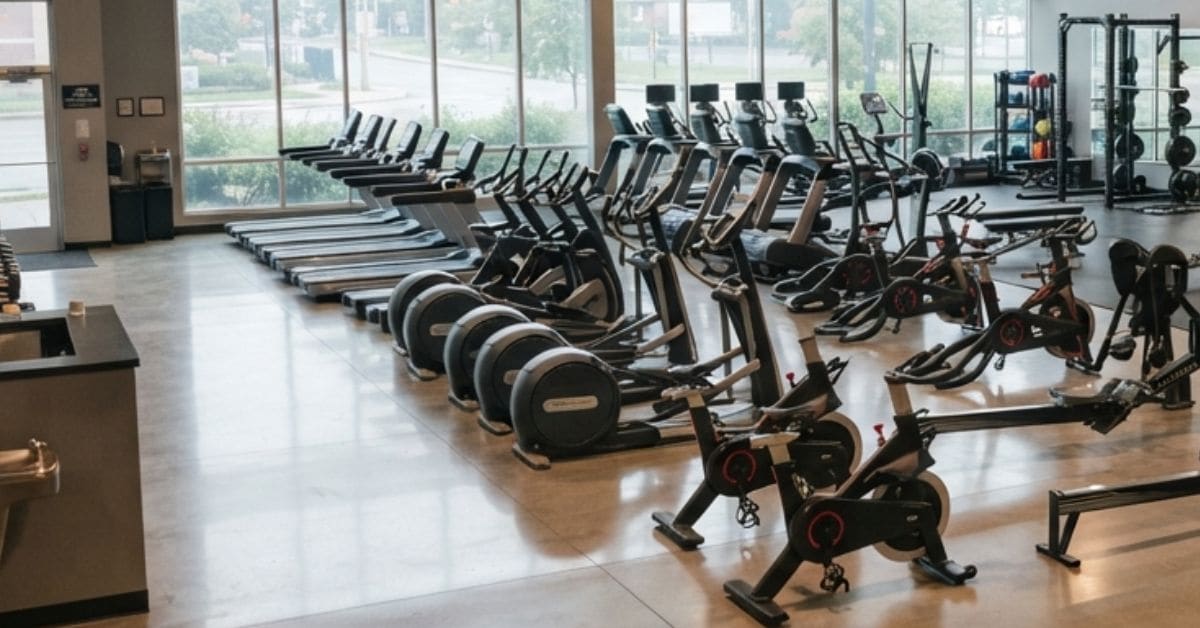
Empty gym with equipment

Private Studio vs. Big-Box Gym in Franklin, TN: What’s Right for a Busy Professional?

You’ve got a Franklin gym membership you barely use and a nagging sense that you should be doing more with it. If that’s exactly the situation you’re in, the problem may not be your discipline.

Plenty of disciplined, motivated people feel exactly the same way.

It may be the environment. A big-box gym and a private studio are built for very different people, and the right fit depends on what you actually value.

This guide compares the two on the things busy professionals care about most: time, crowds, coaching, cost, and results.

What a Big-Box Gym Offers (and Where It Falls Short)

Big-box gyms are built around volume and affordability. For a low monthly fee, you get rows of equipment and the freedom to train whenever you like.

For plenty of people, that combination is exactly what they’re looking for.

That autonomy suits people who already know exactly what they’re doing. If you have a plan and the discipline to follow it, the sheer amount of equipment can be a real advantage.

The trade-offs show up in the details. Peak hours bring crowds and waiting, and expert guidance is something you have to hunt for rather than something built-in.

For a busy professional working around a packed calendar, that unpredictability can turn a quick session into a wasted evening.

For many members, the biggest gap is direction. Without a plan or a coach, the gym becomes a guessing game, and guessing is where consistency quietly dies.

What a Private Studio Offers a Busy Professional

A private studio, or private gym, is built around a different priority: getting the most out of limited time. There’s no waiting for equipment, because when you arrive, everything is ready for you.

That efficiency is the whole reason the model exists.

Coaching isn’t an add-on here; it’s the entire point. Your program is written for you, and a coach adjusts it in real time so every rep counts.

That kind of attention is hard to replicate on a gym floor shared by hundreds of members.

The private setting also removes the audience. Without the crowd and the social comparison, you can focus entirely on your form and your session.

Then there’s accountability. Scheduled sessions and a familiar coach make training much harder to skip, and consistency is what ultimately drives results.

Where Technology Fits Into the Decision

Equipment Ready Before You Arrive

One difference a busy professional notices quickly in a private studio is how session time gets used. Instead of hunting for free weights or waiting on a machine, the equipment is already set and ready before you arrive.

Some private studios, including ours, build sessions around adaptive resistance technology. At LUX, that typically means one 30-minute session per week, with the equipment adjusting to your effort as you move, so every rep stays challenging without you needing to guess the right weight to load.

Precision That Matters When You Only Have One Session a Week

That kind of precision matters most when your schedule only allows for one session a week. A big-box gym can offer plenty of equipment, but none of it adjusts itself to you mid-set the way a coached, technology-driven studio session can.

It also removes a common source of hesitation for people who feel unsure in a weight room. When the equipment and the coach are both doing the calibrating, you can focus on effort instead of second-guessing your form.

The Longevity Payoff

There’s also a longevity angle worth considering. Training that adjusts to your effort and tracks your progress over time tends to be easier on joints and easier to sustain for years, not just weeks.

For professionals who want the shortest path between effort and results, this technology is often the deciding factor. It’s less about more equipment and more about equipment built around the time they actually have.

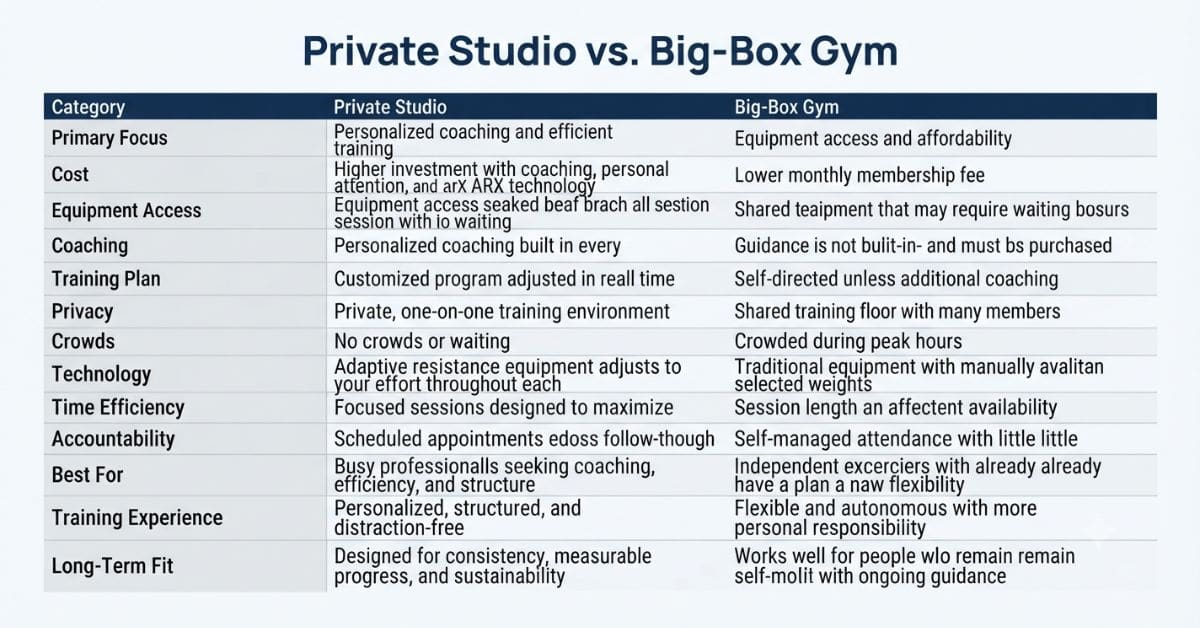
Comparison table

Comparing the Two on What Actually Matters

Cost: Where the Big-Box Gym Wins

On cost, the big-box gym wins outright. A private studio asks for a larger investment in exchange for expertise, personal attention, and ARX (Adaptive Resistance Exercise) technology built into every session.

How you weigh that trade-off comes down to what you’re actually trying to buy, equipment access or a guided outcome.

Time: Where the Private Studio Pulls Ahead

On time, the studio pulls ahead. Zero wait times and focused, efficient sessions respect a schedule that’s already stretched thin.

A session that starts on time and ends on time is easier to actually keep on the calendar.

Results: It Comes Down to How You’re Wired

On results, it comes down to how you’re wired. Self-directed and experienced lifters can thrive in a big-box gym, while those who want structure, coaching, and certainty tend to do far better in a studio.

The honest question isn’t which one is better in the abstract. It’s the one that gives you the outcome you’re actually paying for.

Getting clear on that upfront saves you from switching gyms a year from now out of frustration.

Which Is Right for You in Franklin?

If your priority is a low monthly fee and total autonomy, and you already have a plan you’ll stick to, a big-box gym may serve you well. There’s nothing wrong with wanting flexibility and access above everything else.

If your time is scarce, your goals are specific, and you want expert guidance without the crowd, a private studio is usually the better fit. That’s especially true for busy professionals in Franklin who measure a gym by results rather than square footage.

Neither choice is wrong. The point is to match the environment to what you value, so the money and the hours you invest actually pay off.

Arx workout training with a coach

A Note From Coach Ben Cluff at LUX Fitness

“So many people tell me they had a gym membership for years and just never used it,” says Ben Cluff of LUX Fitness in Franklin. “They blame themselves, but honestly, walking into a crowded room with no plan is a hard way to stay consistent for anyone.”

“What a private studio does is remove the friction,” he adds. “No waiting, no guessing, no audience. When training is efficient, and someone is guiding you, showing up stops being a fight with yourself.”

How to Find a Personal Trainer in Franklin

Is a private studio worth the higher cost compared to a big-box gym?

It depends on what you value. A big-box gym is cheaper, but a private studio includes coaching, zero wait times, and structured accountability. For busy professionals who want results without wasted time, that added value often justifies the higher cost.

What's the difference between a private studio and a big-box gym?

A big-box gym offers low fees, lots of equipment, and total autonomy, but little guidance. A private studio offers personalized coaching, a private setting, and efficient sessions with no waiting. One prioritizes affordability and independence; the other prioritizes expertise and results.

Which is better for a busy professional?

For most busy professionals, a private studio fits better because it removes the friction that derails consistency. No crowds, no waiting, and a coach who guides every session mean your limited training time produces more, which matters most when your schedule is tight.

Do big-box gyms work if you're a beginner?

They can, but beginners often struggle without direction. A big-box gym provides equipment but rarely a plan, so it becomes a guessing game. Beginners tend to progress faster and more safely with the structured coaching a private studio provides.

Why do so many gym memberships go unused?

Many people join with good intentions but struggle to stay consistent without structure. Crowds, no clear plan, and no accountability make it easy to drift. A coached, private setting removes those barriers, which is why it tends to produce far better follow-through.

Ready to Find Your Right Fit in Franklin?

The best gym isn’t the biggest or the cheapest. It’s the one whose environment matches what you’re actually trying to accomplish.

If you’re weighing your options as a busy professional in Franklin, LUX Fitness’ strength progress tracking in Franklin offers a clear example of how data guides improvement

Ben Cluff July 21, 2026 Gym Read more