
Strength Training Plateau: Why Your Progress Stalled and How to Start Moving Again

Ben Cluff
Ben Cluff
Same session. Same setting on the machine. Same numbers you were hitting back in the spring.
You’re showing up. Twice a week, no missed appointments, no complaints. And somewhere along the way the needle just stopped moving.
That’s a different problem than not training, and honestly a more frustrating one. The effort is real. The return isn’t.
Most people respond by adding. More days. More exercises. More time in the building.
But a strength training plateau is rarely a discipline problem. In most cases it’s a signal that something in the stimulus stopped changing, and piling volume on top of that usually just buys you more fatigue. There are four common causes worth checking, and each one points to a different fix.
What a Strength Training Plateau Actually Is
A plateau isn’t proof you’ve hit your ceiling, it’s usually proof the demand stopped climbing.
Your body adapts to what it’s repeatedly asked to do. Once a demand becomes familiar, there’s no longer much reason to build for it. The session still costs you effort. It just stops producing a reason to change.
Most people misread that as a personal failing. So they train harder, or longer, or more often, and collect more fatigue without more progress. Nothing is actually broken. The signal has simply gone quiet.
The useful question isn’t whether you’re working hard enough. It’s whether the work is meaningfully different from what your body has already handled.
Is the Load Actually Going Up?
For most people who feel stuck, the honest answer is no.
Progressive overload sits underneath almost every strength gain there is. The demand has to climb, gradually and deliberately, or adaptation has nothing to chase. Increasing resistance as strength improves is one of the least controversial ideas in training, and it is also the one most quietly abandoned.
But it’s easy to believe you’re doing it when you aren’t. The dumbbells haven’t changed in months, the machine setting hasn’t moved, and a few extra reps one week quietly slide back to where you started.
Without a record, load tends to drift sideways rather than up. It feels like progression. It generally isn’t.
How Do You Know You Actually Trained Hard Enough?
Most people have no idea, and that’s the real problem.
Perceived effort is unreliable. It moves with sleep, stress, caffeine, mood, and whatever happened at work an hour earlier. A session that felt brutal can be objectively lighter than one that felt easy. None of that is a character flaw, it is just what happens when the only gauge you have is a feeling.
At LUX Fitness, the numbers regularly disagree with the feeling. Someone finishes a set convinced they emptied the tank, and the output from the back half of that set says something very different.
Without measurement, you’re negotiating with a feeling. And feelings tend to negotiate downward, especially on the days that would have counted most. Want to see how the pieces fit together? Measurement sits at the center of the way our physical fitness program in Franklin is structured.

Why Recovery Debt Quietly Stalls Strength Progress
Training creates the signal, but recovery is where that signal turns into strength.
Under-slept and under-fed, the stimulus often has nowhere to go. You can do everything right inside the session and still stall if the hours around it aren’t supporting the work.
This is the least interesting cause and one of the most common. Busy stretches compress sleep. Meals get skipped or shrunk. Stress stays high for weeks at a time.
Most people in that position add training volume, which tends to deepen the debt rather than clear it. Often the better move is less frequency and more intent, at least until sleep and food settle. This is general education, not medical advice, and persistent fatigue is worth raising with your physician.
When the Plan Quietly Became a Routine
Programs rarely fail loudly, they drift.
You start with a plan. Over months the uncomfortable movements get trimmed, the comfortable ones stay, and what’s left is a routine you’re good at rather than a program that’s still changing you.
It happens gradually. Nobody decides to stop challenging themselves. But the exercises people quietly drop are usually the ones that were doing the most work.
Program drift is obvious from the outside and nearly invisible from the inside. That’s most of the argument for having a coach rather than a routine. Not sure your goal is even shaping the plan anymore? Our guide to strength training for fat loss in Franklin walks through how the objective should change the programming, not just the effort.
Can Measured Resistance Break a Strength Training Plateau?
For most people, measurement is the missing piece.
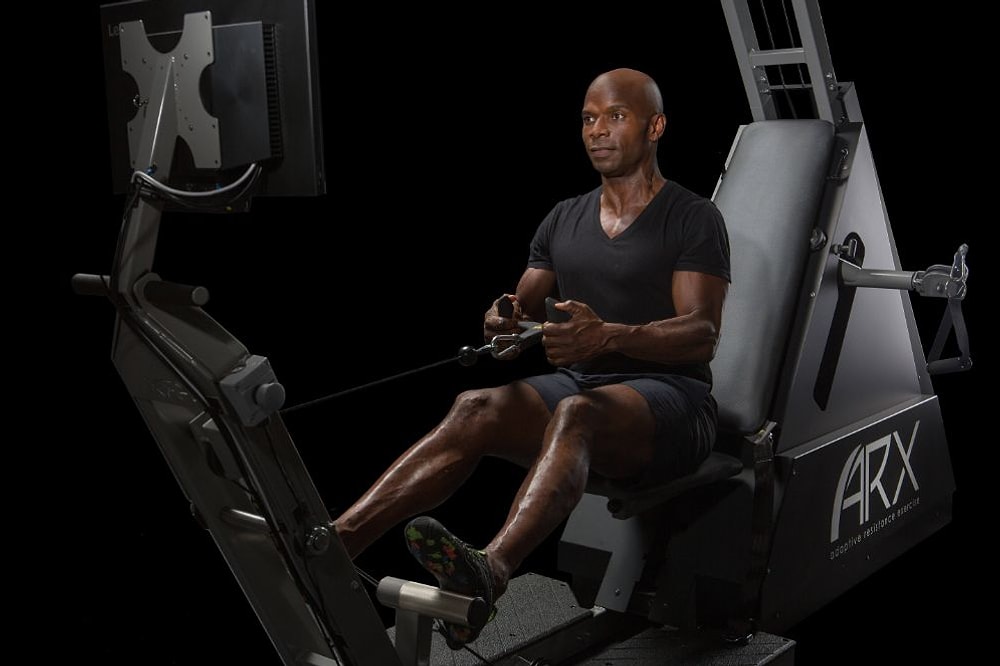
At LUX Fitness in Franklin, sessions run on ARX, an adaptive resistance system that matches load to the force you produce through every inch of the movement. There’s no fixed weight to negotiate with. It gives you exactly as much resistance as you can handle, rep by rep, and records what you did.
That produces the two things a stalled program usually needs. Objective load data. And per-rep feedback, so effort stops being a guess.
Your coach watches the output while it happens. Where you faded. Where you held. Whether today was genuinely harder than last Tuesday, or only felt that way.
It isn’t magic, and it doesn’t replace consistency, sleep or effort. It removes the guesswork that keeps most plateaus in place.
Frequently Asked Questions
How long should a plateau last before I change something?
Usually a few weeks of genuinely unchanged numbers is enough to act on. One flat session means very little on its own. A repeated pattern with no upward movement in load or output is worth investigating rather than waiting out.
Can taking a lighter week actually help?
Often, yes. A planned lighter stretch can let accumulated fatigue clear so the next block of training lands properly. For most people it works best as a short, deliberate reduction, not an open-ended drop in effort.
Does switching exercises fix a plateau?
Sometimes, but not for the reason people assume. Novelty alone doesn’t drive adaptation. A new movement helps mainly when it lets you load a pattern more effectively than the one you’d been avoiding or performing poorly.
Is a plateau just what getting older feels like?
No, though the two can overlap. Progress does generally slow with age, but a true plateau is usually about stimulus rather than birthdays. Many people keep adding strength well into later decades when the load is measured and progressive.
Should I be sore after every session for it to be working?
No. Soreness reflects novelty more than effectiveness. You can make real progress with very little soreness, and you can finish extremely sore after a session that did almost nothing for your strength.
Start Measuring Your Progress at LUX Fitness in Franklin, TN
A plateau usually isn’t about effort. It’s about a stimulus that stopped changing and a load nobody was tracking. If the numbers have gone quiet, the fix is better measurement, not more volume. You can book a free intro session and see your real output inside one 30-minute appointment. When your calendar gets loud, staying consistent with strength work is the next thing to protect.