
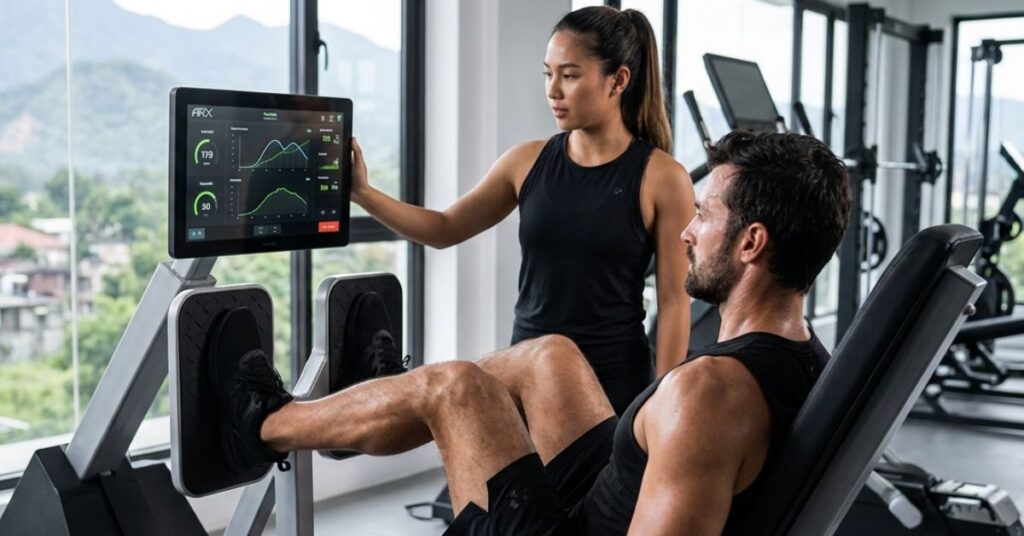

You’ve probably heard that adaptive resistance training gets remarkable results in a fraction of the time, and wondered whether that’s real or just a clever pitch. It’s a fair question, and it deserves a clear answer.
The short version: adaptive resistance training is a method where the resistance automatically matches the exact force you produce at every point in a movement. That single difference changes almost everything about how a workout feels and what it delivers.
This article explains what adaptive resistance training is, how it works, and where it genuinely differs from lifting traditional weights.
What Adaptive Resistance Training Actually Is
Adaptive resistance training uses technology that pushes back against you in perfect proportion to how hard you’re pushing. Instead of a fixed weight, the resistance adjusts moment to moment to match your effort. That kind of moment-to-moment adjustment is what sets it apart from anything you’d find with a rack of dumbbells or a loaded barbell.
With a traditional dumbbell, the load is the same whether the position is easy or hard for you. Adaptive resistance flips that. It meets you with the ideal challenge at every angle of the movement.
That means every point in the range of motion is fully worked, not just the hardest sticking point. There’s no easy portion of the rep where the muscle gets a break.
The result is a highly efficient stimulus. Your muscles are challenged completely from start to finish, which is why sessions can be so short.

How Adaptive Resistance Differs From Lifting Weights
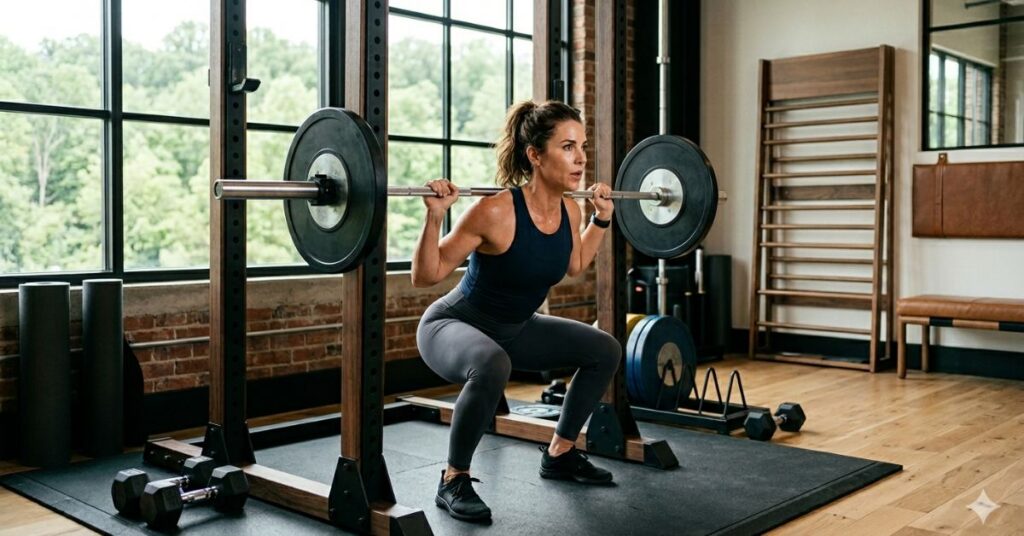
The most important difference is the eccentric, or lowering, phase of a movement. With free weights, you can only ever lower the same load you lifted, even though muscles are far stronger when lowering.
Adaptive resistance can increase the load on that lowering phase to match your true strength. This safely taps into a level of muscle stimulus that traditional weights simply can’t reach.
There’s also the matter of accommodation. A barbell doesn’t know when you’re fatiguing, but an adaptive system adjusts to exactly what you can produce on every single rep. That responsiveness is part of why a short session can still feel demanding.
Finally, there’s safety. Because the resistance only ever matches your effort, there’s no heavy weight to drop and no momentum to lose control of.
Why Adaptive Resistance Training Is So Efficient and Safe
Efficiency is the headline benefit. Because every rep is fully loaded across the whole range of motion, you reach a meaningful training effect quickly rather than through high volume.
For busy professionals, that efficiency is the entire appeal. A short, focused session, just one 30-minute session per week, can deliver what a long, conventional workout aims for. It’s training built around the time you actually have, not the time you wish you had.
Safety is the quieter benefit, and just as important. There are no free weights teetering overhead and no jarring loads on the joints, since the resistance never exceeds what you’re actively producing.
That combination makes adaptive resistance training approachable for a wide range of people. Beginners, returners, and those cautious about their joints can all train hard without the usual risks. It’s part of why the studio setting works for so many different starting points.
What to Expect During Your First Adaptive Resistance Training Session
Arriving for Your Session
Walking into your first session usually feels less intimidating than people expect. There’s no loading plates, chalking up, or figuring out where the right dumbbells are kept.
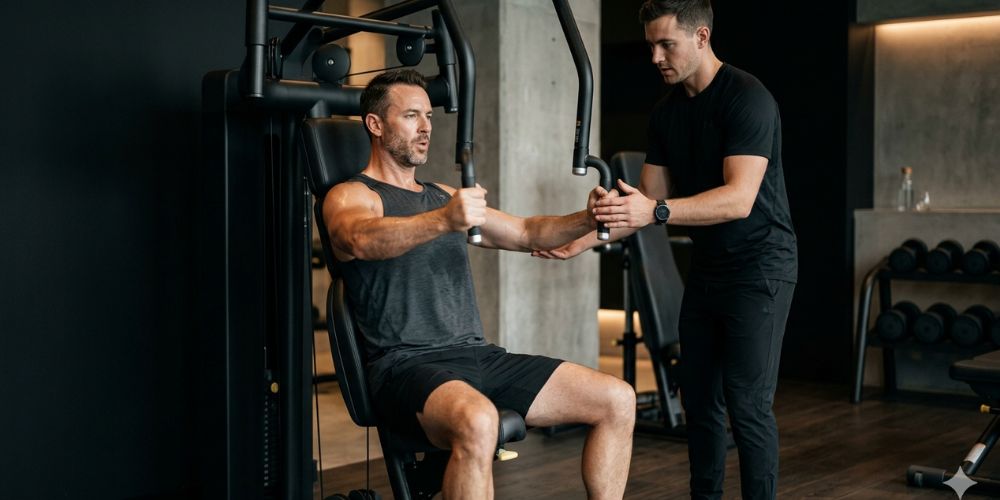
A coach works with you one-on-one from the very first rep, explaining how the resistance will respond as you push and pull. You’ll notice it adjusting to your effort almost instantly, which takes a moment to get used to.
What the Workout Itself Looks Like
Sessions move through a small number of exercises, each performed slowly and with full attention to form. That controlled pace means you’re never rushing through reps or bracing for a heavy weight to drop.
Because the resistance responds to you rather than a preset number on a plate, there’s little guesswork involved. You leave knowing you worked as hard as your body allowed that day, and your coach adjusts the plan from there.
What Happens After
Afterward, your coach maps out a simple plan for how often to return based on your goals and schedule. You’re never left guessing how to structure your own training.
Is Adaptive Resistance Training Right for You?
Adaptive resistance suits anyone who wants serious results without spending hours in a gym. It’s especially well matched to people who value their time, want certainty that their effort is working, and prefer a private, appointment-based studio over a crowded gym floor. If consistency has been the hardest part of sticking with a routine in the past, that built-in structure tends to make a real difference.
It’s also a strong fit for those wary of heavy barbells or nursing sensitive joints. The controlled nature of the resistance takes much of that risk off the table. That combination of control and coaching is often what finally makes strength training feel approachable again.
None of this means traditional lifting is useless. It simply means adaptive resistance offers a faster, safer path to many of the same goals, which is why so many busy people in Franklin gravitate toward it.
A Note From Coach Ben Cluff at LUX Fitness
“When people first hear the pitch for adaptive resistance, they’re usually a little skeptical,” says Ben Cluff of LUX Fitness in Franklin. “Then they feel a single session and understand it immediately. The resistance meets them everywhere, so there’s nowhere to coast.”
“What sells them long term isn’t the novelty, it’s the efficiency and how safe it feels,” he adds. “They get a serious training effect in a short session, without ever worrying about dropping a weight on themselves. For busy people, that’s exactly what they’ve been looking for.”
Frequently Asked Questions
What is adaptive resistance training?
Adaptive resistance training is a method where the resistance automatically matches the exact force you produce at every point in a movement. Rather than lifting a fixed weight, you work against a load that adjusts to your effort moment to moment, fully challenging the muscle through the whole range of motion.
How is adaptive resistance training different from lifting weights?
With free weights, the load stays fixed, and you can only lower what you lifted. Adaptive resistance adjusts to your effort on every rep and can load the lowering phase to match your true strength, producing a more complete and efficient stimulus than a static weight can.
Is adaptive resistance training safe?
Yes, it’s considered very safe because the resistance never exceeds the force you’re actively producing. There’s no heavyweight to drop and no momentum to lose control of, which makes it approachable for beginners, returners, and people cautious about their joints.
Is adaptive resistance training effective for building strength?
Yes. Because every rep is fully loaded across the entire range of motion and the lowering phase can be loaded to your true capacity, adaptive resistance delivers a strong training stimulus. Many people build meaningful strength with short, focused sessions.
How long is an adaptive resistance training session?
Sessions are typically short because the resistance fully challenges the muscle throughout every rep, so results don’t depend on high volume. That efficiency is a big part of the appeal for busy professionals who want an effective workout without a long-term commitment.
Ready to Try Adaptive Resistance Training?
Adaptive resistance training isn’t a gimmick; it’s a genuinely different way to challenge your muscles that prioritizes efficiency and safety. For people who want real strength without long hours or heavy risk, it’s a compelling alternative to traditional lifting.
If you’re exploring whether it fits your goals, the adaptive resistance training available in LUX Fitness provides a practical way to experience how the system works.