
Category : strength training

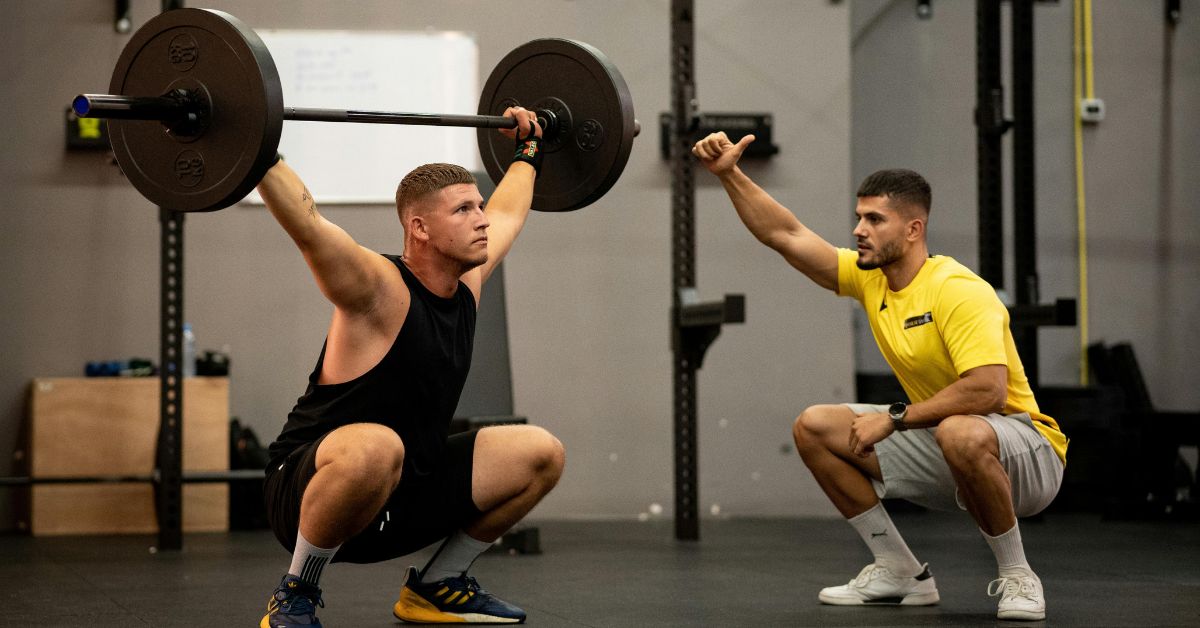
A muscular man performing a weightlifting squat with a coach guiding him indoors.

Strength Training Plateau: Why Your Progress Stalled and How to Start Moving Again

Same session. Same setting on the machine. Same numbers you were hitting back in the spring.

You’re showing up. Twice a week, no missed appointments, no complaints. And somewhere along the way the needle just stopped moving.

That’s a different problem than not training, and honestly a more frustrating one. The effort is real. The return isn’t.

Most people respond by adding. More days. More exercises. More time in the building.

But a strength training plateau is rarely a discipline problem. In most cases it’s a signal that something in the stimulus stopped changing, and piling volume on top of that usually just buys you more fatigue. There are four common causes worth checking, and each one points to a different fix.

What a Strength Training Plateau Actually Is

A plateau isn’t proof you’ve hit your ceiling, it’s usually proof the demand stopped climbing.

Your body adapts to what it’s repeatedly asked to do. Once a demand becomes familiar, there’s no longer much reason to build for it. The session still costs you effort. It just stops producing a reason to change.

Most people misread that as a personal failing. So they train harder, or longer, or more often, and collect more fatigue without more progress. Nothing is actually broken. The signal has simply gone quiet.

The useful question isn’t whether you’re working hard enough. It’s whether the work is meaningfully different from what your body has already handled.
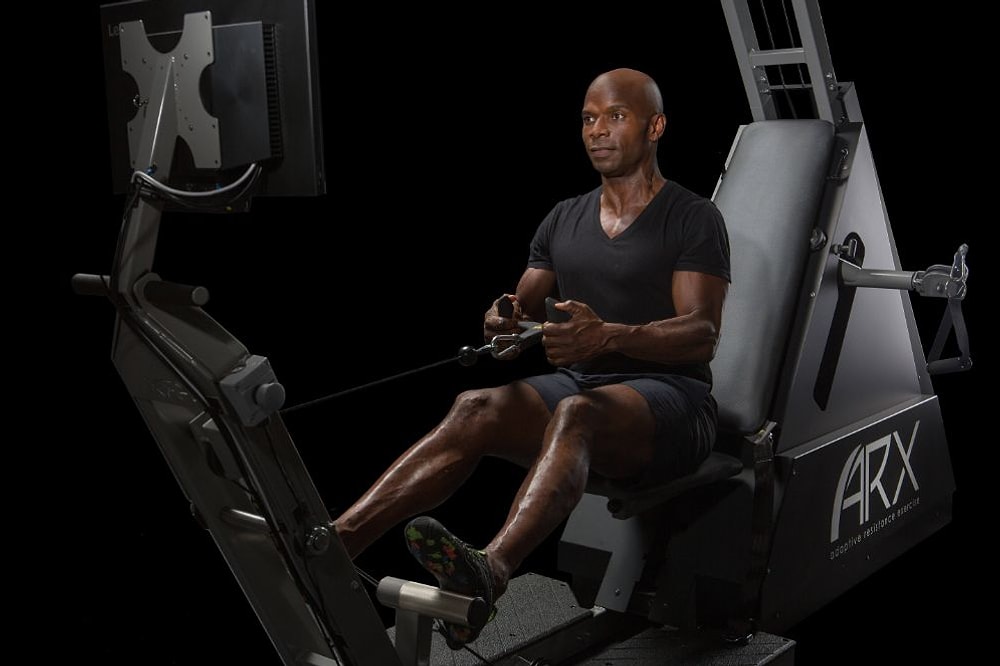
Man doing a seated row on an ARX machine

Is the Load Actually Going Up?

For most people who feel stuck, the honest answer is no.

Progressive overload sits underneath almost every strength gain there is. The demand has to climb, gradually and deliberately, or adaptation has nothing to chase. Increasing resistance as strength improves is one of the least controversial ideas in training, and it is also the one most quietly abandoned.

But it’s easy to believe you’re doing it when you aren’t. The dumbbells haven’t changed in months, the machine setting hasn’t moved, and a few extra reps one week quietly slide back to where you started.

Without a record, load tends to drift sideways rather than up. It feels like progression. It generally isn’t.

How Do You Know You Actually Trained Hard Enough?

Most people have no idea, and that’s the real problem.

Perceived effort is unreliable. It moves with sleep, stress, caffeine, mood, and whatever happened at work an hour earlier. A session that felt brutal can be objectively lighter than one that felt easy. None of that is a character flaw, it is just what happens when the only gauge you have is a feeling.

At LUX Fitness, the numbers regularly disagree with the feeling. Someone finishes a set convinced they emptied the tank, and the output from the back half of that set says something very different.

Without measurement, you’re negotiating with a feeling. And feelings tend to negotiate downward, especially on the days that would have counted most. Want to see how the pieces fit together? Measurement sits at the center of the way our physical fitness program in Franklin is structured.

Why Recovery Debt Quietly Stalls Strength Progress

Training creates the signal, but recovery is where that signal turns into strength.

Under-slept and under-fed, the stimulus often has nowhere to go. You can do everything right inside the session and still stall if the hours around it aren’t supporting the work.

This is the least interesting cause and one of the most common. Busy stretches compress sleep. Meals get skipped or shrunk. Stress stays high for weeks at a time.

Most people in that position add training volume, which tends to deepen the debt rather than clear it. Often the better move is less frequency and more intent, at least until sleep and food settle. This is general education, not medical advice, and persistent fatigue is worth raising with your physician.

When the Plan Quietly Became a Routine

Programs rarely fail loudly, they drift.

You start with a plan. Over months the uncomfortable movements get trimmed, the comfortable ones stay, and what’s left is a routine you’re good at rather than a program that’s still changing you.

It happens gradually. Nobody decides to stop challenging themselves. But the exercises people quietly drop are usually the ones that were doing the most work.

Program drift is obvious from the outside and nearly invisible from the inside. That’s most of the argument for having a coach rather than a routine. Not sure your goal is even shaping the plan anymore? Our guide to strength training for fat loss in Franklin walks through how the objective should change the programming, not just the effort.

Can Measured Resistance Break a Strength Training Plateau?

For most people, measurement is the missing piece.

At LUX Fitness in Franklin, sessions run on ARX, an adaptive resistance system that matches load to the force you produce through every inch of the movement. There’s no fixed weight to negotiate with. It gives you exactly as much resistance as you can handle, rep by rep, and records what you did.

That produces the two things a stalled program usually needs. Objective load data. And per-rep feedback, so effort stops being a guess.

Your coach watches the output while it happens. Where you faded. Where you held. Whether today was genuinely harder than last Tuesday, or only felt that way.

It isn’t magic, and it doesn’t replace consistency, sleep or effort. It removes the guesswork that keeps most plateaus in place.

Frequently Asked Questions

How long should a plateau last before I change something?

Usually a few weeks of genuinely unchanged numbers is enough to act on. One flat session means very little on its own. A repeated pattern with no upward movement in load or output is worth investigating rather than waiting out.

Can taking a lighter week actually help?

Often, yes. A planned lighter stretch can let accumulated fatigue clear so the next block of training lands properly. For most people it works best as a short, deliberate reduction, not an open-ended drop in effort.

Does switching exercises fix a plateau?

Sometimes, but not for the reason people assume. Novelty alone doesn’t drive adaptation. A new movement helps mainly when it lets you load a pattern more effectively than the one you’d been avoiding or performing poorly.

Is a plateau just what getting older feels like?

No, though the two can overlap. Progress does generally slow with age, but a true plateau is usually about stimulus rather than birthdays. Many people keep adding strength well into later decades when the load is measured and progressive.

Should I be sore after every session for it to be working?

No. Soreness reflects novelty more than effectiveness. You can make real progress with very little soreness, and you can finish extremely sore after a session that did almost nothing for your strength.

Start Measuring Your Progress at LUX Fitness in Franklin, TN

A plateau usually isn’t about effort. It’s about a stimulus that stopped changing and a load nobody was tracking. If the numbers have gone quiet, the fix is better measurement, not more volume. You can book a free intro session and see your real output inside one 30-minute appointment. When your calendar gets loud, staying consistent with strength work is the next thing to protect.


30 Minute Strength Workout: Is It Enough to Build Real Strength?

It’s 6:40 in the morning, and you’re already doing math in your head.

Twenty minutes of driving and changing. An hour of actual training. The shower, the second commute, the meeting you can’t move. Somewhere in there a call gets pulled forward, and the whole plan collapses.

So you skip it. Again.

Most people don’t stop training because they stopped caring. They stop because the block of time they believe it requires doesn’t exist anywhere in their week.

That’s usually where the question comes from. Can a 30-minute strength workout actually be enough, or is it just a compromise you’ll regret later? So let’s break down what a short session can really do, and what it can’t.

Why the Length of a Workout Became the Wrong Measure

Workout length became the default measuring stick mostly because it was the easiest thing to count.

Most people learned to judge training by the clock. An hour meant you were serious. Ninety minutes meant you were really serious. Thirty minutes sounded like something you did when you weren’t.

But time in a building isn’t the same as time spent working. In a typical commercial gym, a good portion of that hour goes to waiting, scrolling, resetting equipment, and deciding what to do next. Your muscles don’t get credit for any of it.

What the body responds to is the demand you place on it, not the hours you spent nearby. Strip out the filler, and the number that actually matters gets a lot smaller.

So the honest question was never whether 30 minutes is enough. It’s how much of your 30 minutes is real training.

Is 30 Minutes of Strength Training Enough to Build Muscle?

For most people, yes, as long as the effort is high and it repeats.

Strength adaptation generally comes down to a few things. Meaningful load. Enough effort to genuinely challenge the muscle. Recovery in between. Repeated over weeks.

None of those require an hour. National physical activity guidelines commonly recommend muscle-strengthening work on at least two days a week, and they describe how often and how hard, not how long you have to stay in the room.

That distinction matters more than it sounds. The variable most people are missing usually isn’t duration; it’s effort that never quite got high enough to ask anything of the body.

Results still depend on consistency, effort, and recovery. Session length, on its own, tends to be a much weaker predictor than people assume. This is general education, not medical advice.

What Actually Fills a Real 30-Minute Strength Workout

A well-built 30-minute strength workout has almost nothing in it that isn’t training.

There’s a short warm-up to get joints moving and blood flowing. Nothing deep. Nothing forced.

Then the working sets. A handful of movements that cover the big patterns, pushing, pulling, hinging, squatting, each one taken close enough to real effort that the body has a reason to change.

What’s missing is the part nobody actually misses. No wandering between machines. No waiting on equipment. No guesswork about what comes next, because someone already decided that before you walked in.

Thirty focused minutes and sixty distracted ones aren’t the same thing. For most people, the shorter one does more.

A healthy adult's upper back and shoulders showing natural muscle definition

Can Intensity Really Replace Extra Time?

In most cases it can, because effort and duration are two different routes to the same demand.

Think about what makes a set hard. Load. Control. How close you get to the point where the muscle genuinely has nothing left. You can accumulate that slowly across many easy sets, or you can get there faster with fewer hard ones.

The catch is that most people are poor judges of their own effort. At LUX Fitness, we see it all the time. Someone finishes a set convinced they emptied the tank, and the numbers show they left a good bit on the table.

That’s where measurement matters more than minutes. Adaptive resistance, known as ARX, matches the machine’s force to whatever you produce on every single rep, so the resistance meets your actual output instead of a weight you guessed at. Per-rep feedback replaces guesswork.

Effort you can see is far easier to repeat than effort you estimated. If you’re curious how that actually feels in practice, here’s what an ARX workout involves for people training in Franklin.

Does a Shorter Workout Mean Slower Progress?

At LUX Fitness in Franklin, TN, a session runs 30 minutes by design, not as a shortcut.

You book a time. The studio is private and appointment-only, so nothing is occupied and nobody is waiting on you. A coach already knows what you’re doing that day, because it was built from what you did last time.

The work itself is measured. Every rep produces load data, so progress gets tracked instead of remembered. There’s no debating whether last week “probably wasn’t heavy enough.”

Then you leave. No long ritual at the end, no lingering, no reason to stay. For most of our clients, that’s the entire appeal: the session ends and the day just continues.

Short works because everything around the work was removed. If you want the full picture of how the format is structured, here’s how we approach 30-minute strength workouts in Franklin.

Frequently Asked Questions

How long should you rest between sets in a 30-minute session?

Shorter than you’d think. Rest generally needs to be long enough to recover your breathing and hold clean form, often under two minutes. When effort is high, and the work is measured, you usually need less recovery than a long, unfocused session demands.

Is a 30-minute strength workout enough if you've never lifted before?

For most beginners, yes. New lifters tend to respond quickly to almost any consistent, well-coached stimulus, and shorter sessions make the first few months much easier to sustain. Technique matters considerably more than volume at that stage.

What happens if you only have 20 minutes instead of 30?

Shorten the session, not the effort. Dropping a movement or a set while keeping the working sets hard usually preserves most of the benefit. A trimmed session you complete beats a full one you postpone until the calendar clears, which it rarely does.

Do you need to add cardio to a 30-minute strength workout?

It depends on your goals. Strength work supports plenty of health markers on its own, though many people also add easy walking or similar movement across the week. That can happen outside your session rather than inside it.

How soon do most people notice a difference?

Usually within a few weeks. Early changes tend to show up as better control, steadier energy and more confidence under load, generally before anything visible shows. How quickly that happens varies with sleep, effort and how often you train.

Train Efficiently at LUX Fitness in Franklin, TN

The question was never whether 30 minutes is enough. It’s whether those minutes are focused, measured, and repeatable. When you’re ready to try that in Franklin, TN, you can book a free intro session to see the format yourself. If one session a week fits better, one strength workout per week covers what that looks like.