
Training to Failure in Franklin, TN: What It Means and How Coaching Keeps It Safe

Ben Cluff
Ben Cluff
Picture the free-weight corner of a big gym on a weeknight.
A guy is under a bar with his face going red, and his buddy is hovering over him, yelling that he’s got one more in him. Maybe he does.
If you’ve watched that and wondered whether you’re supposed to train that way, you’re not alone. Plenty of busy people in Franklin figure a set only counts when the arms shake, and then decide that sounds like too much.
You have a job, a family, and no room in the calendar for feeling wrecked on Thursday.
So what is it, really?
Training to failure means working a set until your muscles can’t finish another clean rep. At LUX Fitness we use it sparingly, as a coached tool and never as the point of a session.

What Does Training to Failure Mean?
It’s a set you carry on until you start a rep and can’t finish it the way you began, with the same range and control. That’s the whole definition.
Coaches split it into two kinds. Technical failure is the moment your form starts to go: a knee wanders, your back arches, you start twisting around to cheat the weight up.
Absolute failure comes later, when the muscle flat-out can’t move the load, clean or sloppy.
For most people only the first kind matters, because once form goes, the work slides off the muscle you meant to train and onto joints and little helper muscles that never signed up for it.
What Are Reps in Reserve?
Reps in reserve, or RIR, is a plain count of how many good reps you still had when you stopped. Stop with two in reserve and you could have squeezed out two more.
Everyone guesses badly at first. It gets sharper once a coach tells you how close you were.
Do You Need Training to Failure to Get Stronger?
No. Plenty of people assume a set only counts if it ended with a grunt and a shake.
A muscle gets stronger when you ask it for a bit more than it’s used to, week after week, and a set that stops two reps shy of failure asks just fine.
So why does the myth hang on? Failure looks like work.
A shaky arm, a red face, somebody counting you down from the side. We figure the suffering did the job, when it was the ordinary sessions behind it.
Soreness gets the same credit. Some people decide a workout was wasted because they could still walk downstairs the next morning, and we’ve written about whether you have to be sore for a strength workout to count.
What helps more is simple: can you come back Thursday? Somebody who recovers and shows up again will beat the once-a-month hero over a year, and that’s what we care about at LUX.
Go to failure on every set and recovery gets harder, and then skipping starts to look pretty tempting.

When Does Training to Failure Make Sense?
Now and then, in small planned doses, and mostly when somebody experienced is watching.
A coach might take the last set of one exercise a little closer to the edge, or use a set to see how much stronger you’ve gotten since last month.
Who you are matters. Somebody still learning a movement gets more out of five clean reps than from chasing a sixth, while a client with a solid base can take the odd push nearer the limit.
Your day matters too, since short sleep or a deadline week shifts the right amount of effort, and that’s easier to judge with another person watching.
How Does LUX Keep Training to Failure Safe?
A coach makes the call, one set at a time. At LUX Fitness your coach decides whether a set stops with a rep or two in reserve or goes closer, depending on your goals, your experience, and how you’re moving that day.
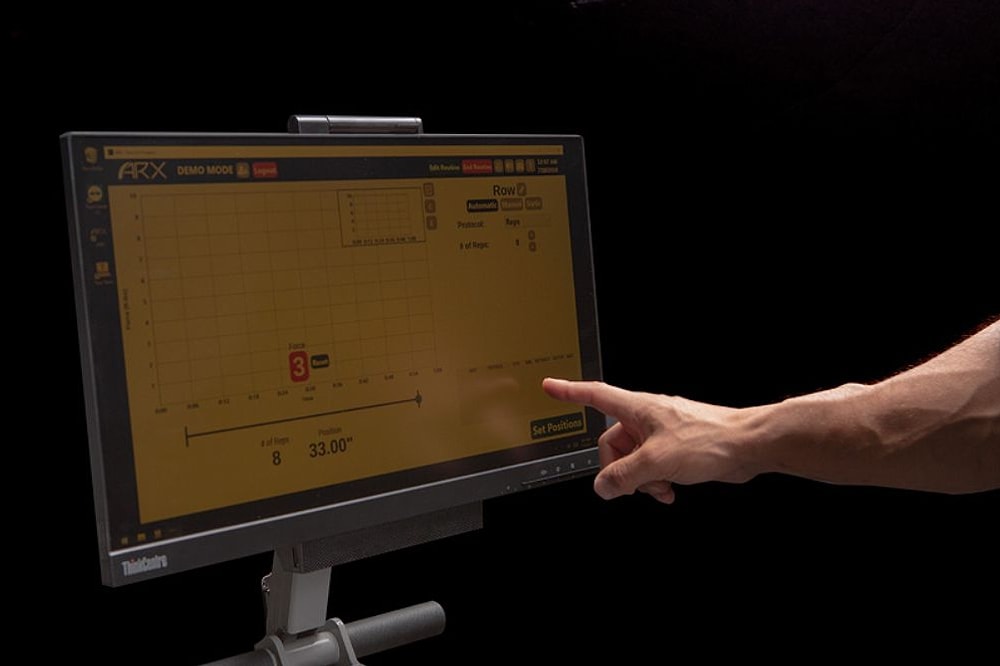
That judgment is baked into our trainer-guided ARX sessions. Everything’s one-on-one and by appointment, so your coach is watching your form on every rep.
What Does ARX Change?
Think about the last rep of a hard set on a regular machine. The weight’s the same as it was at rep one, you’re fading, and the stack doesn’t care.
ARX works the other way round. It reads what you’re pushing and gives back about that much, so when you fade it fades with you, and nothing heavy is left hanging over you.
(The letters stand for Adaptive Resistance Exercise, if you’re wondering.)
The machine keeps a record of your output too, which lets your coach watch the number slide instead of squinting at your face.
What Does a Coach Watch For Near the End of a Set?
Mostly small things. The range of motion shrinks.
A knee wobbles in, or an elbow flares out, or maybe you’ve stopped breathing and don’t know it. Any of those and your coach calls the set or changes a cue, so you leave with a hard effort that still looks like the movement you started.
Frequently Asked Questions About Training to Failure in Franklin
Should beginners train to failure?
Usually not. A beginner’s first job is getting each movement to feel right, and a set that stops a rep or two early builds strength just fine while that happens.
Your coach at LUX Fitness will tell you when you’re ready for harder sets, so you aren’t left guessing.
Is training to failure the same as testing your max?
Nope, they’re different. A max test is a hunt for the heaviest single rep you’ve got in you, while failure is what happens at a load you could move several times, once the good reps run out.
You don’t need either to get stronger, and your coach decides whether you’d ever do one.
Is training to failure bad for your joints?
Not by itself. What causes trouble is grinding out reps after your form has already gone, since that loads parts of you that weren’t built for it, and that’s why coaches tend to call the set at technical failure.
Got a joint condition or an old injury? Run it by your doctor first.
Is it normal to feel shaky after training to failure?
Yes, a little shaky is common. The muscle has just used up what it could give for the moment, and a short rest usually settles it down.
If you feel dizzy or sick, or you’ve got actual pain instead of plain tiredness, stop and tell your coach right away.
Is training to failure the same as working hard?
No. You can work hard, and work well, and still stop a rep or two shy of failure.
Hard work is showing up and giving a real effort session after session, and failure is just one of several ways a single set can end.
Is Training to Failure Worth It for You?
Sometimes, in small doses, with a coach beside you. Strength comes from effort you can recover from and repeat, and that’s how our fitness center in Franklin approaches every session.
If you’re curious where your own hard-but-repeatable line sits, a free intro session is an easy way to find out. We’ll show you around the studio, talk through your goals, and explain how sessions work, no pressure.
None of this is medical advice. If you have a health condition or an old injury, check with your doctor before pushing hard sets.
LUX Fitness, 330 Mayfield Dr., Franklin, TN 37067. Phone: 615-282-5882.