
Cracking Knees and Popping Shoulders: What Joint Noise Means During Strength Training in Franklin, TN

Ben Cluff
Ben Cluff
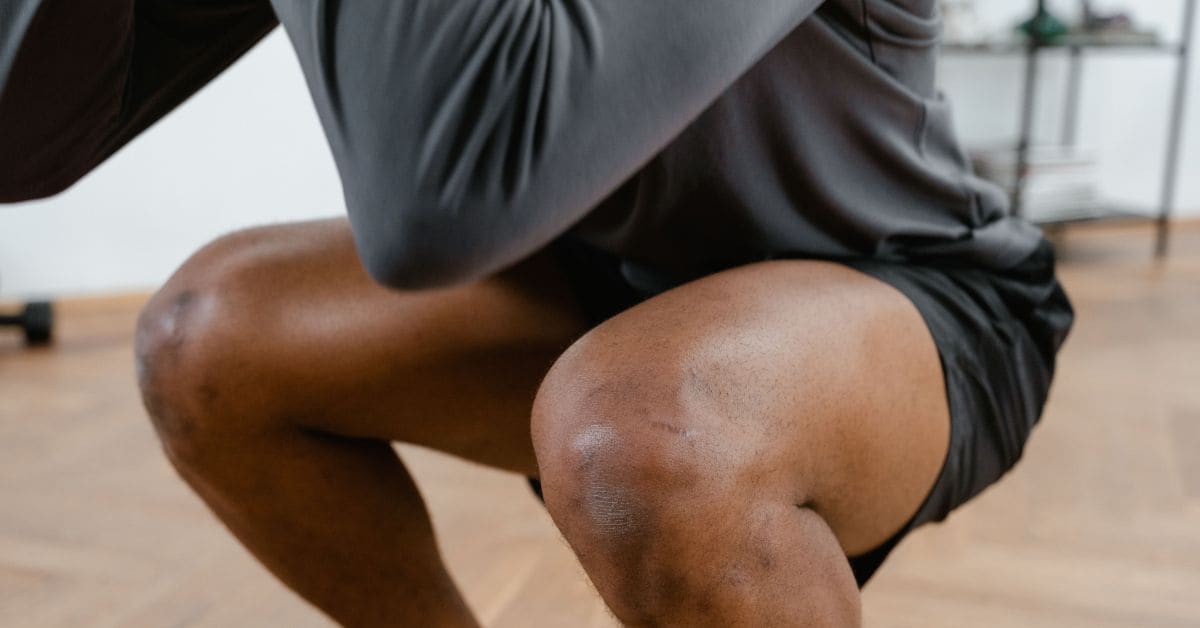
Third rep of a squat, near the bottom, and your knee goes crack. Loud enough that you hear it over the music.
You stop. Half a second, maybe less, but long enough to think, okay, what did I just do?
Nothing hurts. Your coach hasn’t even blinked.
And still the thought sticks around until the next set.
Here’s what we tell people at LUX. Joint cracking during exercise is really common, and a pop with no pain doesn’t say much on its own.
What counts is whatever shows up alongside it. If something feels off, ask your doctor, not us, because we run a strength studio and nobody here is a medical provider.

Why Do Joints Crack During Exercise?
Usually for one of two ordinary reasons: gas in the joint fluid, or a tendon sliding over a bony edge.
Take the fluid one first. Your joints sit in a little capsule of the stuff, and when you move one through a bigger range the pressure shifts, a bubble forms or collapses, and you get a single sharp pop.
The tendon version sounds different. More of a click or a snap, and it loves to happen in the exact same spot, rep after rep.
There’s also a softer, crunchier noise called crepitus. Knees and shoulders do it the most.
Why Some People Seem Noisier Than Others
Some people are just louder. Your build, what you’ve done with your body over the years, even how long you sat in the car before you walked in.
Two people can feel equally fine and sound nothing alike.
And the noise comes and goes. A knee that was silent for months might start chattering after a long flight and then go quiet again, no explanation.
Why Do My Knees Crack During Squats and Lunges?
Because a deep bend sends the kneecap a long way up and down the thighbone, so a click isn’t a shock. It’s a lot of moving parts in a small space.
The loud ones usually come early. First few reps, particularly if you’ve been parked at a desk all morning or you just sat through a drive across town.
A few reps in, things warm up and the racket calms down. Not every time, though.
Some knees just stay chatty.
Honestly, your coach isn’t listening for the noise. They’re watching the knee.
Is it tracking over your foot, or drifting in? Does it feel solid under you, or wobbly?
That’s what gets their attention.
Try this at home. Lower yourself into a chair really slowly and see where the sound happens.
Same spot every time, nothing hurts? Mention it at your next session.
And if it keeps bugging you, mention it to your doctor too.
Why Do My Shoulders Pop During Presses and Rows?
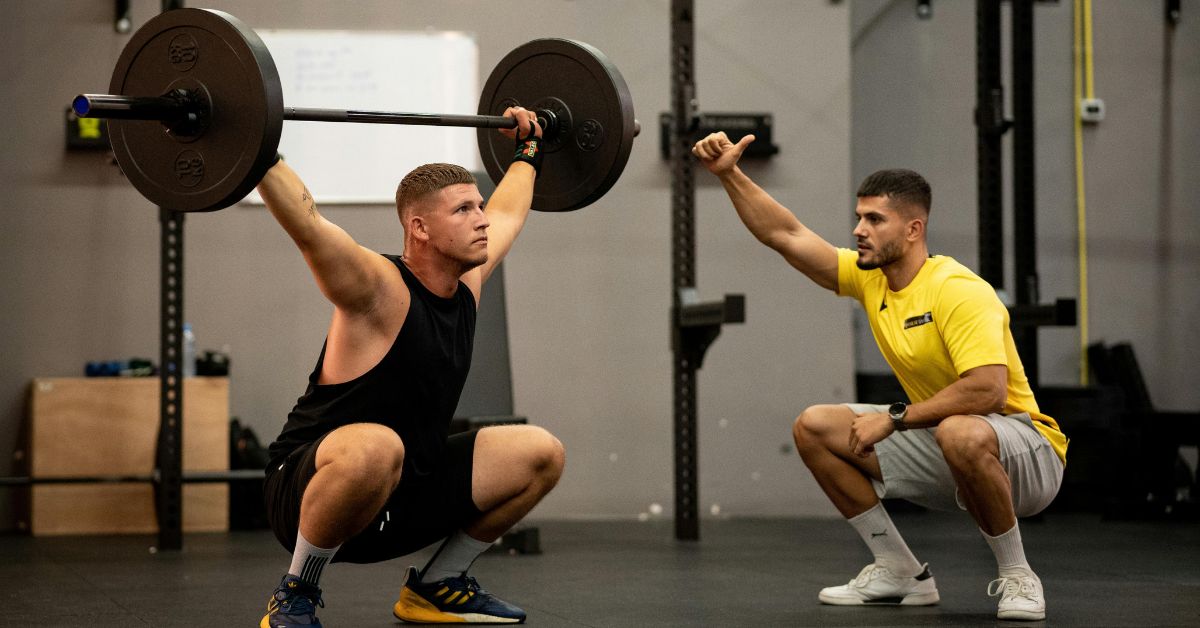
Because the shoulder is shallow, goes in every direction, and has a bunch of tendons running around it. When your arm goes overhead or reaches back behind you, something can shift and click.
Pops tend to show up at the end of the range. Top of a press, bottom of a row, that kind of spot.
When that happens your coach might shorten the movement a little or tilt your arm angle, and often that smooths it out.
Hips, ankles, even the upper back can do it. Same advice for all of them, really.
Pay attention to how it feels, not how it sounds.
When Is Joint Noise During Exercise Worth a Doctor’s Visit?
When it’s got company. The sound alone isn’t the warning sign.
We’re a strength studio, not a medical provider, so this is the point where we hand it to someone who is.
So what counts as company? Pain with the noise, either right then or later in the day.
Swelling or warmth around the joint after a workout. A joint that catches, or locks up halfway through a rep.
A knee or shoulder that feels like it might give out. Any new sound that started after a fall, a twist, or a hit.
Any of those, check in with your doctor or a physical therapist.
We don’t diagnose joint problems, and our coaches won’t try. If one of those signs shows up during a session, tell your coach, skip that movement for the day, and get it looked at before you try it again.
How a LUX Coach Handles Joint Cracking During a Session
Sessions here are one-on-one, by appointment. So when a knee clicks or a shoulder pops, your coach is standing right there.
No guessing.
First question, every time: does it hurt? If not, and the joint is moving fine, you keep going.
Maybe with a little cue to slow down or shift your stance. Honestly, we’d rather hear about a new sound than have you stewing over it through a whole set.
Warming up helps, and plenty of people wonder how much. We wrote a guide on whether you need to stretch before lifting if you want the short version of what a warm-up does.
The machine matters too. We train on ARX, and it pushes back as hard as you push.
So the rep stays smooth, no jerk at the bottom, and your coach can keep it slow and controlled. That’s a big piece of our joint-friendly strength training approach.
Frequently Asked Questions About Joint Cracking During Exercise in Franklin
Should I stop exercising if my knees crack?
No. Not if the cracking doesn’t hurt and nothing else has changed.
Knee noise during squats and lunges is really common. If it does hurt, or the knee feels unsteady, stop that movement and run it by your doctor before you try it again.
Does joint cracking mean I have arthritis?
No, cracking by itself doesn’t mean arthritis, and only a doctor can say what’s going on in a joint. Plenty of people with perfectly comfortable joints are noisy movers.
It’s the pain, the swelling, or the stiffness that won’t go away that’s worth getting looked at.
Is it bad to crack my joints on purpose?
That’s a question for your doctor. We coach strength, we’re not a medical provider.
What we can say is that the sound isn’t the thing to watch. If you keep wanting to crack a joint because it feels tight or off, tell your doctor, and tell your coach too.
Can strength training make joint noise go away?
Not necessarily. Some people say their joints feel steadier once the muscles around them get stronger.
Plenty of joints stay noisy for life and feel totally fine, though. Our goal is comfortable, controlled movement.
If the joint goes quiet too, great, that’s a bonus.
Does joint cracking mean I should lift lighter?
Not on its own. A crack with no pain doesn’t mean the weight is wrong.
Joint feels steady, moves well? The weight can usually stay put.
Once the noise starts showing up with discomfort, that’s when a coach may lighten it or shorten the range.
Training With Confidence at LUX Fitness
Most of the time a cracking knee or a popping shoulder is just a sound you happen to notice. How the joint feels matters way more.
And a coach watching every rep is there to notice the stuff that needs a second look.
If joint cracking during exercise has made you hesitate, come in for a free intro session at our wellness center in Franklin. Come look around, tell us what you’re after, and we’ll explain how sessions work.
That’s all.
No pressure.
None of this is medical advice. If a joint worries you, check with your physician first.
LUX Fitness, 330 Mayfield Dr., Franklin, TN 37067. Phone: 615-282-5882.