

Rebuilding Strength After Years Behind a Desk

Ben Cluff
Ben Cluff
You used to be strong. Then a decade behind a desk quietly chipped away at it, and now the stairs, the yard work, and the end of a long day all feel heavier than they should.
You’re not imagining it, and you’re not alone in feeling it.
If that’s exactly where you are, the situation is far more fixable than it feels. The strength you’ve lost to sitting is the kind that comes back.
This guide covers what desk work does to the body, how to rebuild what it took, and how to start again without repeating whatever caused your last attempt to fall apart.
What Years at a Desk Do to Your Strength
Sitting for most of the day gradually weakens the muscles that keep you powerful and upright. The glutes stop firing, the hips tighten, and the upper back rounds forward.
You may not notice it happening in the moment. It tends to show up later, as a stiff lower back or shoulders that feel locked up by mid-afternoon.
That combination is the quiet driver behind a lot of nagging lower-back and posture problems. It’s not age doing the damage so much as inactivity.
The afternoon energy crash is part of the same story. Muscles that rarely get challenged stop contributing to your daily stamina.
None of this is permanent. The body responds to training at any point, and the muscles dulled by sitting are the first to wake back up.

How to Rebuild Strength After a Desk Job
Rebuilding starts with compound movements that train the patterns desk work erodes. Hip hinges and squats reactivate the glutes, while rows restore the upper back and pull the shoulders out of that hunched position.
Carries and core work rebuild the stability that keeps you strong and pain-free under load. These are the movements that translate directly into real life.
Even a few minutes of focused core and carry work each session adds up to a noticeably steadier midsection over time, especially when it’s paired with the bigger compound lifts.
The point isn’t to chase a number on a bar. It’s to make everyday effort feel easy again, from lifting a bag into an overhead bin to keeping up with your kids.
At LUX, that work happens in one focused 30-minute session a week on ARX equipment, which adjusts resistance to match your effort through every rep. That single weekly session is enough to keep driving progress, since consistency matters far more than intensity when you’re just getting back into training.
Progress tends to arrive faster than people expect. Many notice steadier energy within the first few weeks and meaningful strength gains over the following couple of months.
Why Recovery Matters When You're Rebuilding Strength
Rebuilding strength after years of sitting puts real demands on a body that hasn’t moved much in a while. Recovery is what allows those demands to actually turn into progress instead of extra fatigue.
Sleep Is the Biggest Lever
Sleep is the biggest lever most people overlook. A body that’s under-rested struggles to repair the muscle it just trained, no matter how well-designed the workout was.
Movement Between Sessions
Movement on the days between sessions matters too. A short walk or some light stretching keeps the joints and muscles you’re rebuilding from stiffening back up, rather than tightening further between visits, and it doesn’t need to be structured to count.
Pacing and the Long Game
This is also why pacing matters more than pushing hard early on. A body that’s spent years sitting needs a gradual ramp, not a sudden jump back into intensity, especially in the first few weeks of a new routine.
Give the process a little time before judging it. Strength tends to return in a fairly predictable order, with energy and mobility improving first and visible strength following as consistency builds week over week.
None of this means training has to feel fragile or overly cautious. It means the plan accounts for recovery the same way it accounts for the workout itself, so the two work together instead of against each other. Rebuilding strength now also pays off well beyond the next few months. The stronger, more resilient body you build today is the same one that carries you comfortably through the decades ahead, which is really the point of doing this in the first place.

Why Efficient Training Is Easier to Sustain
Most people who fell off a fitness routine didn’t lack discipline. They lacked a plan that fit a demanding schedule.
Hour-long sessions five days a week rarely survive contact with a busy career. That’s precisely why so many good intentions quietly fade by February.
A focused, efficient approach solves that. One structured weekly session delivers the results without demanding hours you don’t have.
That’s also why LUX runs on an appointment-based model rather than a walk-in gym. Your weekly session is reserved in advance, so it’s protected on the calendar like any other commitment.
When training respects your time, it stops being the thing you cut when work gets loud. Sustainability, not intensity, is what separates lasting strength from another false start.
Starting Again After You've Failed Before
Plenty of people hesitate to restart because they’ve quit before. That history isn’t a character flaw, and it isn’t a reason to expect the same outcome.
In fact, learning what didn’t work last time is often the most useful information you can bring into a new plan.
Most past attempts collapsed for practical reasons: no guidance, too much volume, or a program that ignored a busy life. Fix those, and the story changes.
Coaching removes the guesswork that derails beginners and returners alike. A private setting removes the crowd and the ego, leaving you free to focus on rebuilding.
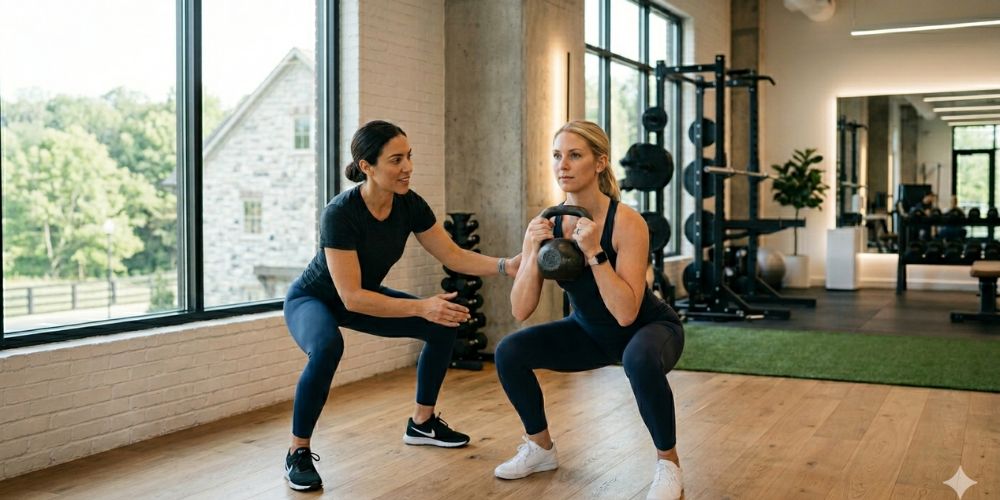
A Note From Coach Ben Cluff at LUX Fitness
“A lot of the people I work with walk in a little frustrated with themselves,” says Ben Cluff of LUX Fitness in Franklin. “They remember being strong, and they can’t figure out where it went. Almost always, the answer is a desk and a schedule, not their body giving up on them.”
“Once we build training around their real life instead of some ideal version of it, they stick with it,” he adds. “And when they stick with it, the strength comes back. It’s honestly one of the most satisfying things to watch.”
Frequently Asked Questions
How do you choose the right personal trainer in Franklin?
The exercises matter less than showing up consistently. One structured weekly session, built around compound movements like hip hinges, rows, and carries, is enough. What separates people who successfully rebuild strength from those who don’t is rarely intensity. It’s simply keeping that one session every single week.
Is it too late to rebuild strength after a sedentary job?
No. Muscle responds to training at any age, and the strength lost to a desk job tends to return quickly once you start. How long you’ve been inactive matters far less than simply beginning and staying consistent.
How often should I train to rebuild lost strength?
One focused 30-minute session per week is enough for most people to rebuild strength lost to a sedentary routine. That single session, done consistently, challenges the muscles enough to drive progress while leaving plenty of time to recover, which is when strength is actually built.
How long until I feel stronger after starting?
Consistency drives the timeline more than anything else, including age or how long you’ve been inactive. Someone who keeps every weekly session tends to feel the difference faster than someone with a more sporadic schedule, even if the workouts themselves are identical. Missing sessions, not the program, is what slows results down.
Why do my past attempts at getting fit never last?
Most past attempts weren’t abandoned from a lack of discipline. They were abandoned too early, often within the first few weeks, right before consistency would have started paying off. A single manageable weekly session removes the burnout that usually causes people to quit early, so there’s less to walk away from in the first place.
Ready to Start Rebuilding Your Strength?
The strength you built years ago didn’t vanish for good. It’s waiting for a plan that fits the life you actually have.
If you’re ready to rebuild it, our strength training for men in Franklin program helps you start in a way that lasts, and our guide to strength training for seniors shows how these same habits keep paying off for decades.